
News On Japan

From “Existential Crisis” to Nuclear Ambitions: What Is Japanese Prime Minister Sanae Takaichi Trying to Do?

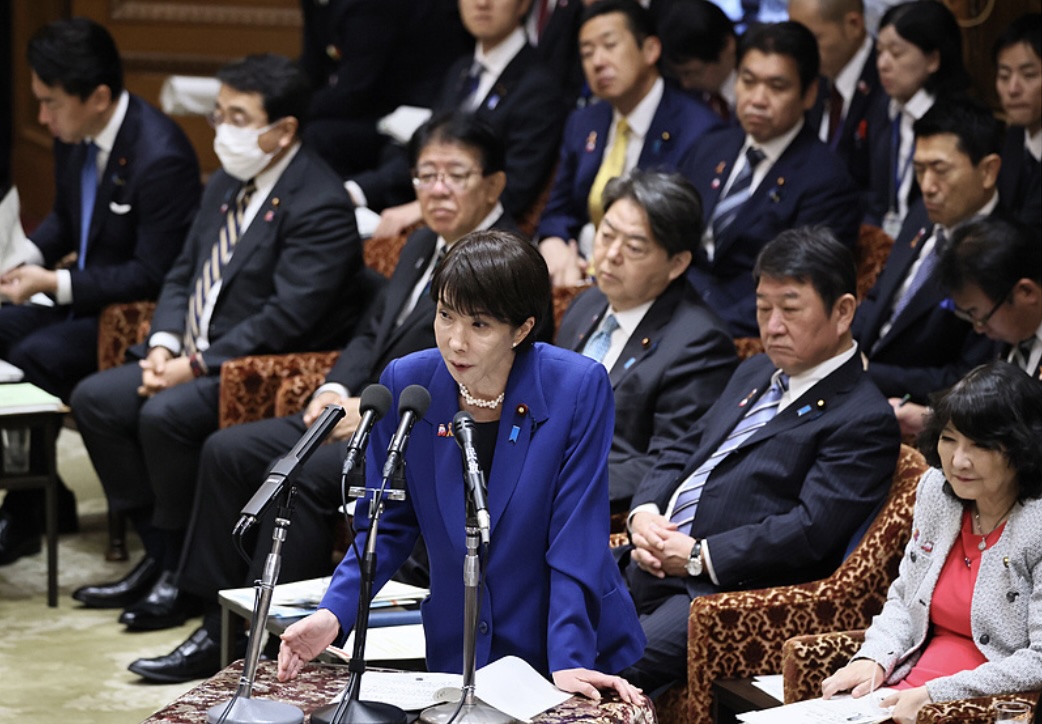
Nov 24 (News On Japan) - Japanese Prime Minister Sanae Takaichi has sparked uproar after declaring in parliament that a conflict in the Taiwan Strait could qualify as a “survival-threatening situation” for Japan—language that would allow Tokyo to exercise collective self-defense, including potential military action.
It is the first time since World War II that a sitting Japanese leader has openly suggested armed involvement in the Taiwan issue.

What Is a “Survival-Threatening Situation”?

The term was created under the 2015 security laws championed by the late Shinzo Abe. It allows Japan to use collective self-defense if an attack on a closely related country threatens Japan’s survival.

Most constitutional scholars argue this reinterpretation contradicts Article 9, which renounces war. Critics say it was designed to loosen postwar limits on Japan’s military activities and pave the way for wider overseas operations.

Takaichi Links Taiwan to Japan’s Security Doctrine

During a Diet session on November 7, 2025, Takaichi claimed a Taiwan crisis could fall under this category, implying that Japan might intervene militarily. Experts widely criticized the logic, noting that Taiwan is considered part of China, making the claim legally dubious.

Analysts warn that Japan has historically invoked similar “crisis” narratives to justify expansion in the early 20th century—raising concerns about echoes of past militarism.
A Broader Defense Shift Underway

Since taking office, Takaichi has pushed an assertive agenda:

Sharp increases in defense spending,

Relaxation of arms-export rules,

Expansion of pre-emptive strike capabilities.

The ruling LDP is preparing to revise three key security documents. Reported topics include raising defense spending to 2% of GDP, easing lethal-weapons exports, considering nuclear-powered submarines, and debating the Three Non-Nuclear Principles.

Nuclear Policy Debate

Japanese media report that Takaichi is exploring changes to the ban on “introducing” nuclear weapons, arguing it could strengthen U.S. deterrence. Asahi Shimbun warned that the principles—central to Japan’s identity as the only nation bombed with nuclear weapons—should not be altered lightly.

Domestic Backlash and Protests

Takaichi’s remarks triggered swift condemnation.

Former prime ministers Shigeru Ishiba, Yukio Hatoyama, and Yoshihiko Noda criticized the comments as reckless and unprecedented. Opposition parties said her reasoning was “illogical” and risked worsening relations with China.

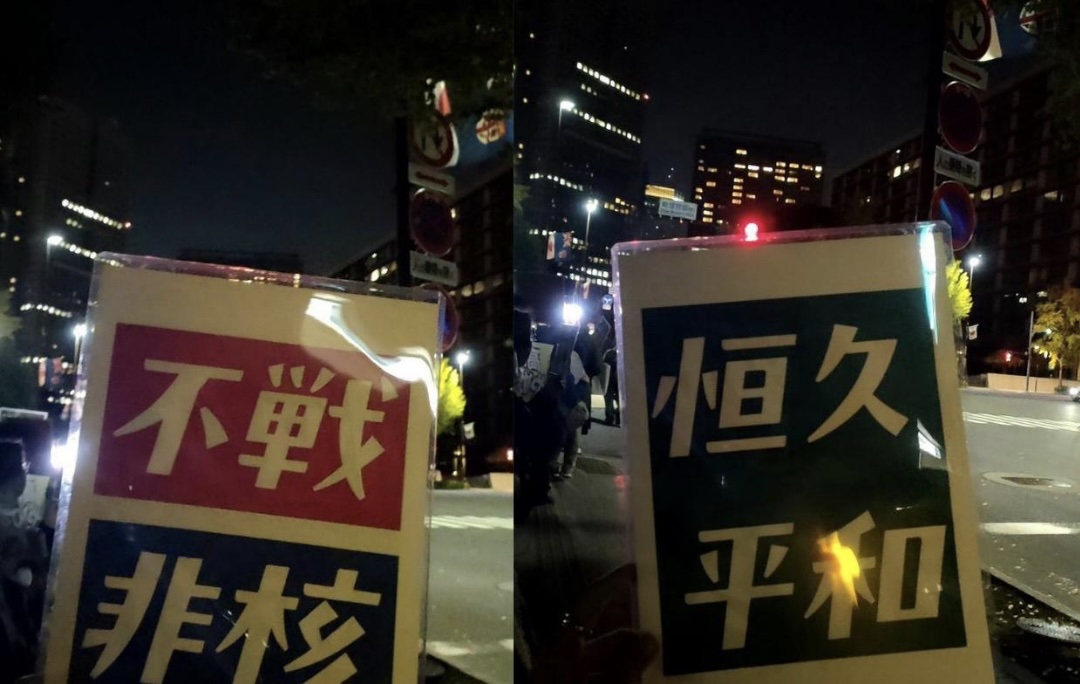
Public protests soon followed. On November 14 and 15, demonstrators—particularly from Okinawa—rallied in Tokyo, calling for Takaichi’s resignation and urging her to retract her statements.

Analysts: A Shift in Japan’s Postwar Identity

Observers say Takaichi’s rhetoric reflects the rise of right-wing nationalism and attempts to reshape Japan’s postwar pacifist identity. By amplifying narratives such as “China threat” and “Taiwan contingency equals Japan contingency,” critics argue she aims to justify broader military normalization and a potential break with Japan’s status as a defeated nation bound by post-1945 constraints.

News On Japan
POPULAR NEWS

Police have arrested a man in his 30s after he allegedly entered a banquet hall at Hotel MiraCosta inside Tokyo DisneySea on December 1st while carrying what appeared to be a knife before fleeing the scene, with authorities locating him the following day in Kawasaki City.

A bear was caught on camera intruding into a residential property in Yamagata on November 30th, underscoring how reports of bear damage continue even as the winter season takes hold and conditions grow colder.

As Matcha’s popularity continues to climb, with overseas shipments expanding sharply and exports increasing more than tenfold over the past 15 years as global demand strengthens. Japan is encouraging tea growers to shift production to tencha, the raw material used to make matcha. While it may seem logical that farmers should simply increase production if matcha is selling so well, growers say the reality is far more complex.

Princess Aiko, the eldest daughter of the Emperor and Empress, celebrated her 24th birthday on December 1st after a year marked by a series of first-time imperial events, public duties and her inaugural overseas official visit, according to the Imperial Household Agency.

A fire broke out on the night of November 29th in Kyoto’s busy Pontocho entertainment district, prompting a large-scale evacuation as flames spread from one restaurant to neighboring buildings.

MEDIA CHANNELS
         

MORE Politics NEWS

The Liberal Democratic Party and Nippon Ishin have agreed on a framework to ensure the effectiveness of legislation aimed at reducing the number of seats in the House of Representatives, deciding that if no conclusion is reached within one year, roughly 10 percent of seats across both single-member districts and proportional representation blocs will be cut.

Komeito leader Saito told senior members of the party’s regional organizations that, following the party’s departure from its coalition with the Liberal Democratic Party, he intends to establish a new party vision centered on centrist reform by the time of the party convention next autumn, saying in the meeting that he is determined to raise the banner of centrist reform high within Japanese politics and open up a new horizon by serving as a unifying axis across the ruling and opposition blocs.

"For many years, criticizing politicians for being 'soft on China' has been an effective tactic.

The Chinese Embassy in Japan reiterated its call for citizens to refrain from traveling to the country after issuing a renewed advisory on November 26th, warning on social media that those already in Japan should take extra precautions to stay safe as embassy officials report a rise in requests for assistance from Chinese nationals who say they have faced discrimination since July.

China’s Communist Party–affiliated media has sharply criticized Prime Minister Takai’s stated willingness to continue dialogue with Beijing, calling the approach “hypocritical and meaningless.”

Japanese Prime Minister Sanae Takaichi has sparked uproar after declaring in parliament that a conflict in the Taiwan Strait could qualify as a “survival-threatening situation” for Japan—language that would allow Tokyo to exercise collective self-defense, including potential military action.

Tensions between Japan and China have escalated rapidly following remarks by Prime Minister Takaichi in the Diet regarding a potential contingency involving Taiwan, prompting Beijing to introduce a series of countermeasures including a call for citizens to refrain from traveling to Japan, with the impact already spreading across the Kansai region’s economy.

China’s backlash to Prime Minister Takaichi’s comments on a Taiwan contingency has intensified day by day, with the Chinese military now uploading a series of satirical illustrations to social media depicting a figure believed to be Takaichi.