KYOTO, Nov 26 (News On Japan) - Japan’s sleeper trains are enjoying a resurgence as overnight rail travel evolves from simple transportation to a form of tourism. One of the most popular services is JR West’s WEST EXPRESS Ginga, which made its debut in September 2020 and is priced at 12,950 yen, yet has become so sought after that reservations are now extremely difficult to obtain.
The Ginga departs Kyoto at 9:15 p.m. and arrives in Shimonoseki, Yamaguchi Prefecture, at 10:50 a.m., traveling through the night for more than 13 hours. The most affordable option costs 12,950 yen, which includes a standard one-way ticket and limited express reserved-seat surcharge. The reclining seats are wider than those found in standard Green Car sections, with deeper angles for more comfortable rest. For the same price, passengers may also opt for a “Nobinobi” seat, which allows travelers to stretch out and lie down.
A 17,820-yen “First Seat,” designed for single passengers, offers a box-style arrangement that is not a private compartment but can be converted into a bed by folding down the seat surface. The 20,870-yen “Premium Room” provides a fully private compartment with a sofa facing the window, which transforms into a bed, allowing passengers to relax, sleep comfortably, and enjoy the passing scenery in solitude.
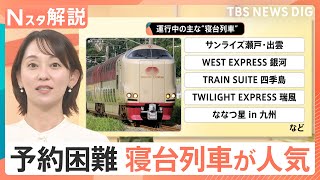
These sleeper services can now be found across Japan, with multi-day luxury tours that circle regional areas also proving highly popular. Among the major overnight trains currently operating are Sunrise Seto/Izumo, WEST EXPRESS Ginga, Train Suite Shiki-Shima, Twilight Express Mizukaze, and Seven Stars in Kyushu.
To understand why sleeper trains have become so difficult to book, the program interviewed Shioneru, a railway-focused YouTuber who traveled on the Sunrise Seto/Izumo from Tokyo to Izumo. One highlight is the coupling separation performed at Okayama Station at 6:30 a.m., when the Sunrise Seto bound for Takamatsu and the Sunrise Izumo bound for Izumo City are uncoupled. Many passengers find a sense of nostalgia in watching the two trains part ways under the dim pre-dawn light. Another highlight is the morning view of Lake Shinji in Shimane Prefecture, where the tracks run close enough to the water that the train appears to glide across the lake’s surface.
The prospect of such scenery and experiences leaves many travelers feeling they would like to ride at least once. However, the reality is that some services sell out on the very day reservations open, making it difficult for many to secure a seat.
Beyond scenic views and unique moments, sleeper trains are winning attention for offering a level of comfort comparable to long-haul first-class air travel. A fully flat seat in a quiet private space can feel similar to the premium cabins of international flights. Panasonic outside director Harold George May noted that sleeper trains offer a rare and special travel experience, where comfort and space are paramount, and added that onboard meals are another point of interest, drawing comparisons to overseas services that operate dedicated restaurant cars.
He also emphasized that the primary purpose of these trains is sleep; since passengers cannot enjoy night views continuously, the true value lies in whether they can rest well during the journey.
Many travelers bring meals purchased at stations, while some services include amenities such as shower booths or spaces dedicated to audio enjoyment. According to Daishi Fukuoka, a former Shinkansen driver and senior director at N-Sta, sleeper trains were once considered expensive compared with buses and declined as a mode of transport. Recently, however, sightseeing-oriented sleeper trains have entered service, and sharply rising hotel prices may also be contributing to renewed demand.
As sleeper trains continue evolving from simple overnight transport to immersive travel experiences, their blend of comfort, nostalgia, and convenience appears to be resonating with a growing number of passengers.