SAPPORO, Dec 02 (News On Japan) - A bear was caught on camera intruding into a residential property in Yamagata on November 30th, underscoring how reports of bear damage continue even as the winter season takes hold and conditions grow colder.
Security footage from a home in the prefecture showed a bear crossing the road and entering the property without hesitation, leaving residents wondering whether it had been searching for something specific. One resident said they noticed “a black object about 60 to 70 centimeters long” passing beside the wooden deck when they happened to glance out the window. Although the bear did not enter the house and no one was harmed, it reportedly knocked down a fence and left what appeared to be droppings in three locations across the yard.
The resident said they now feel the need to check their surroundings carefully whenever stepping outside or getting in and out of their car.
In Sapporo, where the number of brown bear sightings has reached a record high this year, another bear was spotted along a major road on November 29th. The person who filmed the scene described it as “the size of a kei car,” adding that they were shocked and that it was their first time seeing one up close, remarking that it hardly seemed ready to hibernate.
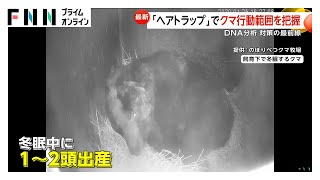
Despite the arrival of winter, bears continue to move actively, prompting officials to emphasize the importance of new countermeasures. One such measure is the “hair trap,” a device that uses barbed wire to collect strands of bear hair for DNA analysis. By examining the DNA caught in the wire, authorities can estimate population numbers and better understand the animals’ movement ranges.
Sakata Kazuto of the Sapporo Environmental Urban Promotion Department said the city has installed hair traps at around 30 locations this year. If the same individual bear is identified at multiple sites, it becomes easier to determine suitable areas for capture based on its movement patterns. Should DNA from a bear that appears in an urban district be obtained, comparing it with past data may help streamline response efforts.
Experts say many bears have already begun hibernating, but those that struggled to gain sufficient fat due to poor food availability in the mountains may continue to venture into inhabited areas in search of nourishment. Footage of a newborn cub nestled against its mother inside a winter den highlights how female bears give birth during hibernation and raise their young without eating or drinking in the wild.
With sightings expected to persist even in deep snow, concerns are growing that the unusual patterns seen this year could continue into 2025. For now, authorities and residents remain on alert.
Source: FNN