News On Japan

Japan Weighs 1% Food Tax Cut

TOKYO - A proposal to eliminate Japan’s consumption tax on food for two years, long promoted by Prime Minister Sanae Takaichi, is facing complications, with a reduced 1% tax option now gaining traction within the government due to technical constraints that could delay full implementation.

Takaichi had pledged during the election campaign to accelerate consideration of a temporary zero-percent consumption tax on food items as a bridge toward introducing a tax credit system, outlining a timeline that would see legislation submitted during an extraordinary Diet session this autumn and implementation targeted around spring next year.

However, the plan has encountered an unexpected obstacle: the time required to modify retail systems. Industry experts say updating point-of-sale (POS) systems across major supermarkets to accommodate a 0% tax rate could take up to a year, while a reduction to 1% could be implemented in roughly five to six months after finalizing system specifications.

The issue stems from the design of existing systems, which were built on the assumption that a consumption tax would always apply. Introducing a zero rate requires additional modifications, including changes to receipt displays and backend processes, increasing both complexity and development time. By contrast, maintaining a non-zero figure, even as low as 1%, allows for quicker adjustments within existing frameworks.

The 1% option reportedly gained attention after system vendors indicated during a policy meeting on April 8th that implementation could be completed in as little as three months in some cases, with other firms suggesting timelines of around five months, prompting policymakers to consider the alternative as a way to shorten the rollout period.

The shift has sparked political debate. Nippon Ishin co-leader Hirofumi Yoshimura expressed openness to the 1% proposal, suggesting that strict adherence to a zero rate may not be necessary, while Democratic Party for the People leader Yuichiro Tamaki criticized the move as a reversal of campaign promises, arguing that promoting a 0% tax during elections only to settle for 1% undermines public trust.

Critics have also questioned why the government did not fully assess system limitations before including the zero-tax proposal in its platform, noting that similar concerns had already been raised in parliamentary discussions during the previous administration.

Estimates suggest that the financial impact on households would differ modestly between the two options. According to calculations by Nomura Research Institute, a four-person household would see an annual reduction in food-related tax burdens of approximately 67,000 yen under a 0% rate, compared with about 59,000 yen under a 1% rate—a difference of roughly 8,000 yen per year.

Despite the relatively small gap, the debate highlights a broader dilemma between speed and policy ambition, as the government weighs whether to prioritize rapid relief for households facing rising prices or adhere to its original pledge of eliminating the tax entirely.

Takaichi has reiterated her commitment to the 0% goal, stating that the government will continue exploring ways to implement system changes as quickly as possible while maintaining a strong determination to realize the policy.

Source: KTV NEWS

News On Japan
POPULAR NEWS

A newly formed tropical depression near Taiwan on June 9th is expected to intensify the seasonal rain front lingering over southwestern Japan, raising the risk of warning-level rainfall across Okinawa and the Amami Islands through around June 11th.

Japan's national soccer team arrived in Nashville, Tennessee, on June 8th from Monterrey, Mexico, where it had been conducting a pre-World Cup training camp, and held its first practice session at its base camp for the FIFA World Cup in North America.

A prolonged eruption at Sakurajima on June 7th blanketed parts of Kagoshima City in volcanic ash, turning roads gray and prompting long lines of vehicles seeking car washes after a plume of smoke rose 1,300 meters above the crater.

A powerful earthquake struck off Mindanao Island in the southern Philippines at 8:38 a.m. (Japan time) on June 8th, generating tsunami waves across parts of the Pacific, causing building collapses and casualties near the epicenter, and prompting the Japan Meteorological Agency to issue tsunami advisories along a wide stretch of Japan's Pacific coastline before lifting all of them at 4:50 p.m.

A clinic director and a former Peruvian staff member have been referred to prosecutors after the man allegedly performed medical procedures without a license, including an external cephalic version—a procedure used to manually turn a baby into the correct position before birth—at an obstetrics and gynecology clinic in Fukuoka City, raising concerns about patient safety and oversight in maternity care.

MEDIA CHANNELS
         

MORE Business NEWS

The Bank of Japan is increasingly expected to raise its policy interest rate to 1.0% at next week's monetary policy meeting, responding to growing concerns that inflation could rise faster than previously anticipated due to soaring oil prices and other cost pressures.

The number of restaurant bankruptcies in Japan reached a record high for the January–May period, highlighting mounting pressures from rising costs, labor shortages, and increasingly cautious consumer spending.

Casio Computer, the company behind some of Japan’s most iconic consumer electronics including calculators, digital cameras, electronic musical instruments, and the G-SHOCK watch, is pursuing a new strategy aimed at reviving its tradition of product innovation.

Nippon Steel plans to invest up to $2.5 billion, or approximately 400 billion yen, over the next three years in the Mon Valley Works steel complex in Pennsylvania, one of the key facilities operated by U.S. Steel, the American steelmaker it acquired in 2025.

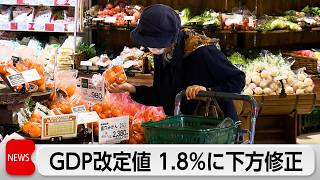
Japan's economy grew at an annualized rate of 1.8% in the January–March quarter of 2026, according to revised gross domestic product (GDP) data released by the Cabinet Office, with the figure marked down from the preliminary estimate due largely to weaker-than-expected capital investment.

Japanese stocks suffered a sharp sell-off on June 8th as weakness in U.S. technology shares and growing concerns over higher global interest rates triggered widespread selling, sending the Nikkei Stock Average down 2,563.52 points, or about 3.8%, to close at 64,024.60.

Japan's current account surplus expanded 64.9% from a year earlier to 3.9078 trillion yen in April, marking the 15th consecutive month of positive balance, according to balance of payments data released by the Finance Ministry on June 8th.

Rapid inflation and the weakening yen continue to squeeze household budgets across Japan, prompting renewed debate over the country's economic policies. Former Bank of Japan Governor Haruhiko Kuroda, who spearheaded the central bank's aggressive monetary easing campaign under Abenomics, argues that the overall economy remains on a positive trajectory and that wage growth is now exceeding inflation.