News On Japan

Japan's Diet to Debate Optional Surnames for First Time in 28 Years

TOKYO, May 31 (News On Japan) - Opposition parties submitted three bills to the Diet on May 30th seeking to introduce a system allowing married couples to retain separate surnames—a topic that returned to parliamentary deliberation for the first time in 28 years.

Representative Kuroiwa of the Constitutional Democratic Party noted, "It has been 29 years since the Legislative Council submitted its report, and 28 years since the last Diet deliberation on the separate surname system."

Both the Constitutional Democratic Party and the Democratic Party for the People submitted bills supporting the introduction of a selective separate surname system, but they differ on how to determine the surname of children. The Constitutional Democratic Party’s proposal stipulates that the surname of children born to such couples be determined at the time of marriage. In contrast, the Democratic Party for the People’s version designates one spouse as the head of household on the family register, with the child’s surname following that of the designated head.

Meanwhile, the Japan Innovation Party submitted a separate bill that maintains the current same-surname requirement but grants legal validity to the use of pre-marriage surnames as common-use aliases.

The ruling Liberal Democratic Party, which remains divided on the issue, has refrained from submitting any legislation.

Although these developments mark the first committee-level discussion on the matter since 1997, none of the proposed bills appear likely to secure a majority, making passage during the current Diet session uncertain.

Source: TBS

News On Japan
POPULAR NEWS

Japan plans to release petroleum reserves as early as March 16 in response to surging crude oil prices driven by escalating tensions in the Middle East, with the government also aiming to keep the nationwide average gasoline price at around 170 yen per liter.

Women in their 20s to 50s—the so-called child-rearing and working-age generation—have significantly shorter exercise times than other age groups, according to a survey by Japan’s Sports Agency.

The Japanese government approved a bill on March 10th to revise the Immigration Control and Refugee Recognition Act to establish an electronic travel authorization system called JESTA that would screen foreign visitors before they arrive in Japan.

A blast of midwinter-like cold returned to the Kanto region, bringing rare March snowfall as Utsunomiya recorded its heaviest snow in 21 years for the month, while snow also fell in central Tokyo.

Two men fell while climbing Mount Fuji shortly before 3 p.m. on March 9th near the New Seventh Station, as authorities launched a rescue operation on the mountain where summit routes remain closed for the winter season.

MEDIA CHANNELS
         

MORE Politics NEWS

A container ship owned by Mitsui O.S.K. Lines that had remained in the Persian Gulf following the closure of the Strait of Hormuz was found to have sustained damage, although no injuries were reported among the crew.

The Japanese government has approved a bill to revise the Immigration Control Act that would raise the maximum fee for foreigners applying for permanent residency from 10,000 yen to 300,000 yen, while under the current law the maximum fee charged for residence-related procedures is capped at 10,000 yen.

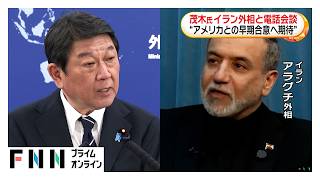
Japan’s Foreign Minister Motegi held a telephone conversation with Iranian Foreign Minister Araghchi and condemned attacks on civilian facilities in Gulf countries as well as actions threatening navigation through the Strait of Hormuz, urging Iran to halt such activities.

Prime Minister Takaichi met with UAE Minister of Industry and Advanced Technology Sultan Ahmed Al Jaber and conveyed Japan’s condemnation of Iran over attacks targeting civilian facilities in neighboring countries.

The Japanese government is considering the use of chartered aircraft to evacuate its citizens from the Middle East as tensions in the region escalate, with around 8,000 Japanese nationals currently staying across several countries.

Prime Minister Sanae Takaichi called on Iran to exercise restraint during a Lower House Budget Committee session on March 2nd, as tensions escalated following attacks on Iran by the United States and Israel, underscoring Japan’s commitment to diplomatic efforts aimed at calming the situation in the Middle East.

The name of a Japanese figure involved in a national government project has appeared more than 8,000 times in investigative records related to the late American financier Jeffrey Epstein, who was charged with sex trafficking and other crimes, sparking controversy and raising concerns over the future of the state-backed initiative.

The Tokyo Metropolitan Government has submitted to the metropolitan assembly Japan’s first ordinance proposal that would in principle ban the installation of new utility poles, but how far has the effort to remove poles from above ground across the capital actually progressed?