News On Japan

Ruling Party Pushes Through Record 122 Trillion Yen Budget in 44 Hours

TOKYO, Feb 20 (News On Japan) - Prime Minister Sanae Takaichi, who launched the second Takaichi Cabinet on February 18th, signaled strong determination to secure passage of next fiscal year’s budget within the current fiscal year, even as a proposal to drastically shorten parliamentary deliberations has triggered backlash from opposition parties accusing the government of disregarding the Diet.

Although deliberations on the record budget of more than 122 trillion yen have been delayed by about one month due to the dissolution of the House of Representatives, Takaichi has made clear she has not abandoned the goal of enacting the budget before the fiscal year ends. She said the government intends to aim for passage of both the fiscal 2026 budget and bills that must be enacted by the end of the current fiscal year.

Ordinarily, it takes just under 20 days for the initial budget bill to clear the House of Representatives, and with deliberations also required in the House of Councillors, passage within the fiscal year is widely seen as difficult. Against that backdrop, some within the ruling coalition have begun floating a proposal to shorten deliberation time.

A senior Liberal Democratic Party official said that if deliberations in the lower house were limited to 44 hours, passage within the fiscal year would be possible. However, the benchmark for deliberation time on an initial budget is typically 70 to 80 hours in the House of Representatives, and in 2025, when the ruling bloc was in a minority, deliberations lasted 92 hours. Since 2000, the shortest deliberation period was 66 hours and 30 minutes in 2007.

Within the ruling party, there are calls to significantly reduce the amount of questioning time allocated to the ruling bloc while maintaining time for opposition questioning in order to secure passage of next year’s budget within the fiscal year. Junichi Ishii, the LDP’s secretary-general in the House of Councillors, said he had confirmed during a recent meeting at the Prime Minister’s Office that achieving passage within the fiscal year was a strong priority for Takaichi, adding that he had offered advice on the timeline required if the lower house were to complete its work by the end of March.

Opposition parties, however, have strongly criticized the idea of shortening deliberations, calling it a sign of disrespect toward the Diet. Takahiro Yasuno, leader of Team Mirai, said that if necessary deliberation were skipped, it would be putting the cart before the horse, stressing that while there is shared recognition of the need for passage, thorough debate must be ensured. Yoshitaka Saito, chair of the Constitutional Democratic Party’s upper house Diet affairs committee, said the legislature could not avoid accusations of being disregarded and called for substantial deliberations.

The debate over how to handle deliberations on next year’s budget has raised broader questions about the functioning of the Diet itself. Commentators noted that even if the ruling bloc pushes the bill through the lower house by compressing schedules, it still lacks a majority in the upper house, casting doubt on whether the budget can be enacted in time. Normally it takes around 20 days for the budget to pass the lower house, leaving little time for the upper house to deliberate, and the government will need to strike a balance between pushing the bill forward and avoiding a backlash from the opposition.

Source: TBS

News On Japan
POPULAR NEWS

Rising land prices are making it increasingly difficult for people to live in their preferred locations, prompting a growing trend of choosing homes a few stations away from major hubs as a way to reduce rent.

A farewell ceremony for Masashi Ozaki, a legendary figure in Japanese golf affectionately known as “Jumbo,” who died at the age of 78 last December, was held at a hotel in Tokyo on March 16th, drawing many figures from the golf world and related industries to pay their respects.

Two weeks after attacks on Iran triggered the closure of the Strait of Hormuz, turmoil has spread through the global economy, with rising gasoline prices already hitting consumers while a looming shortage of petrochemical materials threatens to drive up the cost of everyday goods.

JR East raised fares across all of its service areas on March 14th, marking the first fare hike since the company’s privatization and the first major increase in about 40 years, excluding adjustments tied to consumption tax increases.

Kyoto Prefecture recorded more than 30 million overnight visitors last year, reinforcing its status as one of Japan’s most popular travel destinations.

MEDIA CHANNELS
         

MORE Politics NEWS

A container ship owned by Mitsui O.S.K. Lines that had remained in the Persian Gulf following the closure of the Strait of Hormuz was found to have sustained damage, although no injuries were reported among the crew.

The Japanese government has approved a bill to revise the Immigration Control Act that would raise the maximum fee for foreigners applying for permanent residency from 10,000 yen to 300,000 yen, while under the current law the maximum fee charged for residence-related procedures is capped at 10,000 yen.

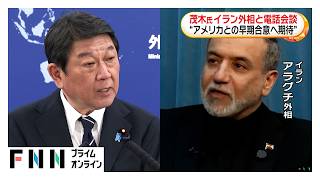
Japan’s Foreign Minister Motegi held a telephone conversation with Iranian Foreign Minister Araghchi and condemned attacks on civilian facilities in Gulf countries as well as actions threatening navigation through the Strait of Hormuz, urging Iran to halt such activities.

Prime Minister Takaichi met with UAE Minister of Industry and Advanced Technology Sultan Ahmed Al Jaber and conveyed Japan’s condemnation of Iran over attacks targeting civilian facilities in neighboring countries.

The Japanese government is considering the use of chartered aircraft to evacuate its citizens from the Middle East as tensions in the region escalate, with around 8,000 Japanese nationals currently staying across several countries.

Prime Minister Sanae Takaichi called on Iran to exercise restraint during a Lower House Budget Committee session on March 2nd, as tensions escalated following attacks on Iran by the United States and Israel, underscoring Japan’s commitment to diplomatic efforts aimed at calming the situation in the Middle East.

The name of a Japanese figure involved in a national government project has appeared more than 8,000 times in investigative records related to the late American financier Jeffrey Epstein, who was charged with sex trafficking and other crimes, sparking controversy and raising concerns over the future of the state-backed initiative.

The Tokyo Metropolitan Government has submitted to the metropolitan assembly Japan’s first ordinance proposal that would in principle ban the installation of new utility poles, but how far has the effort to remove poles from above ground across the capital actually progressed?