TOKYO, Apr 23 (News On Japan) - Japan is turning to foreign workers to address a deepening shortage of bus drivers that has led to route suspensions and reduced services nationwide, including in Tokyo. With the industry projected to face a shortfall of 36,000 drivers by 2030, operators are beginning to recruit and train overseas talent as a short-term solution to keep public transport running.
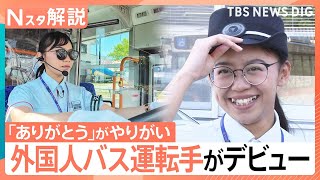
In Kanagawa Prefecture, an Indonesian woman, Mahatmi Rismartanti, has begun work as a bus driver, marking a first for Japan. She reportedly started the job in March.
Management at the bus depot is said to have high expectations for Mahatmi. Asked whether she felt lonely working far from home, she said she had not become homesick and felt reassured by the strong support system in place.
Even so, she acknowledged challenges in adapting to work in a different country.
One of them is Japan’s strict emphasis on punctuality. Bus drivers must balance keeping to schedules while ensuring safe driving, following traffic rules and attending to passengers. The company has therefore provided detailed on-road training to help her manage all of these demands.
Another notable part of the program is walking certain routes on foot. This is intended to build familiarity with local geography and teach differences in pedestrian behavior from country to country.
Mahatmi said she found it difficult at first but had gradually become accustomed to the work.
She has also struggled with the polite language required in customer service. Expressions such as asking to inspect a commuter pass again involve highly formal Japanese that can be difficult even for advanced learners.
The training program aims not only to improve language ability, but also to teach the nuanced expressions needed when dealing with passengers.
Passengers interviewed about the initiative were largely supportive.
Many said buses are essential in areas without rail services, and welcomed foreign workers helping maintain operations. Some added they felt no anxiety and were grateful that workers were coming from countries such as Indonesia to keep services running.
Behind the push to hire foreign drivers is a worsening shortage of applicants.
Japan had around 133,000 bus drivers nationwide in 2017, but that figure is projected to fall to 93,000 by 2030. Demand that year is estimated at 129,000 drivers, implying a shortfall of 36,000, according to calculations by the Japan Bus Association.
The issue is often associated with regional cities, but the impact is already being felt in central Tokyo.
The Tokyo Metropolitan Government’s Toei Bus network has suspended five routes over the past four years as of March, while many other routes have seen reduced services.
The matter has also been discussed at the Tokyo metropolitan assembly and government offices, where countermeasures are being considered. There is a growing shared sense of urgency among those involved.
Although Tokyo’s population has not declined, fewer people now hold the licenses needed to operate buses, shrinking the pool of potential recruits.
Even if operators improve wages and working conditions, it does not immediately increase driver numbers because training qualified drivers takes time.
The problem is seen as part of a broader shortage of skilled labor.
Experts say industries facing labor shortages generally have two options: secure workers or introduce technology such as autonomous driving.
While driverless technology continues to advance in Japan and overseas, Level 4 autonomous driving — fully self-driving operation under specific conditions — is not expected to be widely practical until around 2030.
That makes the recruitment of foreign drivers an effective short-term measure.
At the same time, analysts warn that short- and long-term perspectives must be separated.
In the short term, making use of foreign workers is a positive step. However, Europe has faced issues after actively accepting overseas labor, including workers remaining permanently or struggling to integrate because of language, cultural and religious barriers.
Japan must therefore think carefully about long-term policy as well.
Another issue is visa duration. Mahatmi is working under the Specified Skilled Worker No. 1 status, which generally allows residence for up to five years. Even after acquiring valuable skills, workers may have to leave Japan once that period ends.
Source: TBS