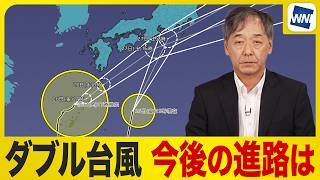

Wakayama, Jun 03, 2026 - As Typhoon Jangmi (Typhoon No. 6) struck Wakayama Prefecture on June 3rd, the storm became the first major test of Japan's newly introduced disaster weather warning system, revealing both the benefits of earlier evacuation calls and the challenges local authorities faced in helping residents understand and respond to the new alerts.
The storm marked the first large-scale use of the Japan Meteorological Agency's new disaster weather information system, introduced only a week earlier as part of a major overhaul of the country's warning framework.
The revised system assigns warning levels to four major hazards—river flooding, heavy rain, landslides, and storm surges—with the aim of making evacuation decisions easier for both local governments and residents.
In Nachikatsuura, officials began monitoring forecasts hours before the storm's arrival, relying not only on current warnings but also on newly introduced timeline-based projections that estimate conditions several hours ahead.
Using those forecasts, the town decided to issue a Level 3 evacuation advisory for elderly residents and others requiring additional time to reach safety before the Meteorological Agency had formally issued a corresponding warning.
The decision reflected a growing emphasis on early action.
"Once it gets dark, evacuation becomes even more dangerous. Even if it turns out to be a false alarm, we want to move people in the safer direction," Mayor Junichiro Hori said.
Town employees immediately began preparing emergency broadcasts and opening evacuation shelters. By mid-afternoon, evacuation centers were ready to receive residents, and elderly residents began arriving shortly afterward.
Many said they preferred to evacuate before conditions deteriorated further, while others noted that the new warning system appeared to encourage earlier action than in the past.
The response was proceeding smoothly when local authorities received notice of a technical problem involving a newly introduced forecasting tool designed to predict the formation of linear rainbands. Although a rainband later developed in southern Wakayama, officials were able to obtain the necessary information directly from the Meteorological Agency.
Conditions worsened after midnight when the agency issued a Level 4 landslide disaster warning for the area. Nachikatsuura responded by issuing evacuation orders for residents in two particularly vulnerable districts and activating its disaster response headquarters.
As officials assessed conditions across the town, an emergency call was received from a resident who reported being unable to reach a shelter because floodwaters had blocked access routes.
Firefighters were dispatched immediately and coordinated with the resident to determine the safest evacuation route. Approximately 30 minutes later, emergency personnel successfully guided the individual to safety.
Officials said the incident underscored the importance of evacuating before roads become impassable.
Typhoon Jangmi later made landfall in Wakayama, and municipal employees remained on duty throughout the night monitoring rainfall, landslide risks, and evacuation operations.
By the following morning, authorities reported that no major damage had been confirmed within the town.
Reflecting on the experience, officials said one of the biggest challenges was ensuring residents understood the meaning of the new warning levels and the actions expected at each stage.
Municipal leaders said further public education would be needed through disaster drills, community outreach programs, and local government websites to help residents better understand the relationship between warning levels and evacuation decisions.
Experts noted that while forecasting technology continues to improve, the effectiveness of any warning system ultimately depends on whether residents receive the information and act on it. They also argued that evacuation orders should not be viewed as mistakes when severe damage fails to materialize, describing such situations as valuable opportunities to test procedures and confirm readiness before a major disaster occurs.
The experience in Nachikatsuura suggested that the new warning system may help encourage earlier evacuations, but it also highlighted the continuing challenge of translating increasingly sophisticated forecasts into timely action by the public.
Source: KTV NEWS