
News On Japan

Recycling Metal With Electromagnetic Waves

TOKYO, Jan 12 (News On Japan) - The steel industry has long supported the backbone of global industry and economic growth, but at the same time it accounts for more than 10 percent of worldwide CO2 emissions, making decarbonization an urgent challenge.

Taking aim at that problem is Kazuhiko Nishioka, CEO of Sun Metalon. The company has developed a proprietary heating technology that uses electromagnetic waves to recycle what it calls “metal waste.” The compact furnace can regenerate even high-value and rare metals using relatively little electricity, a breakthrough that could significantly reduce energy consumption in metal processing.

Nishioka is now expanding the business beyond the steel sector, working to integrate the technology directly into manufacturing production lines. The approach could transform how metals are reused across industries, with the potential to trigger a broader industrial revolution.

Major manufacturers are already paying close attention to the technology, which has helped push the startup’s valuation to 1.5 trillion yen. Nishioka, however, dismisses the “decacorn” label as merely a stepping stone.

Source: テレ東BIZ

News On Japan
POPULAR NEWS

The admission fee for the World Heritage-listed Himeji Castle in Himeji, Hyogo Prefecture, was revised on March 1st for the first time in 11 years, introducing a dual pricing system that significantly raises costs for visitors from outside the city.

An avalanche struck an advanced-level course at Madarao Kogen Ski Resort, which spans Niigata and Nagano prefectures, on February 28th, leaving four people injured, including two family members.

An eight-year-old Australian girl died after a snowmobile overturned in Hakuba Village, Nagano Prefecture, at around 11 a.m. on February 28th, with authorities investigating the cause of the accident.

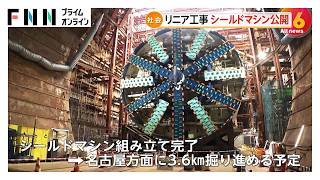
The assembly of a massive shield machine for tunnel construction at the Kanagawa Station site of the Linear Chuo Shinkansen has been completed, with the site opened to the media as excavation prepares to move forward toward Nagoya.

Although February is typically the height of the hibernation season, bears have already been sighted across Japan, raising concerns of another wave of deadly encounters.

MEDIA CHANNELS
         

MORE Sci-Tech NEWS

Motors are embedded in countless electronic devices, from home appliances and robots to automobiles, quietly generating the power that underpins modern life, and now a Japanese startup is challenging long-held assumptions by developing a next-generation motor that delivers both high efficiency and high output while eliminating the need for rare earth materials.

The assembly of a massive shield machine for tunnel construction at the Kanagawa Station site of the Linear Chuo Shinkansen has been completed, with the site opened to the media as excavation prepares to move forward toward Nagoya.

Tsurui Village in Hokkaido is moving to purchase land designated for a large-scale solar power project near the Kushiro Wetland from an Osaka-based developer, in a bid to protect the surrounding landscape.

Water shortages are worsening across Japan amid what meteorologists describe as 'once-in-30-years' low rainfall, with riverbeds exposed, reservoirs falling to record lows, and dry conditions fueling a renewed surge in influenza infections.

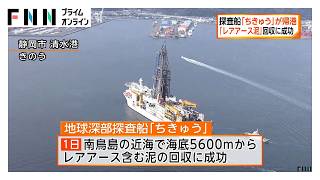
A deep-sea exploration vessel that successfully recovered mud containing rare earth elements from a depth of 5,600 meters for the first time in the world has returned to Shimizu Port in Shizuoka City.

A startup is working to curb global warming by feeding seaweed to cattle in an effort to reduce methane emissions from their burps, with plans to commercialize the technology in the coming years.

The arrival of pollen season has once again begun to affect large parts of Japan, but new research aimed at preventing cedar pollen from dispersing is raising hopes that the future could bring relief for millions of sufferers, with scientists working on a method to wither only the male flowers of cedar trees and stop pollen at its source.

Tokyo Electric Power announced that it has restarted the reactor at Unit 6 of the Kashiwazaki-Kariwa nuclear power plant in Niigata Prefecture, which had been halted shortly after its initial restart due to equipment problems.