News On Japan

Bear Alerts Issued at Record Pace

TOHOKU, Apr 26 (News On Japan) - Bear sightings are surging across northeastern Japan in an unusually early spring trend, prompting the fastest issuance on record of bear alerts in multiple prefectures including Aomori and Iwate. Incidents have already left a police officer seriously injured and a member of the Self-Defense Forces attacked.

Although it is still only April, bears have been repeatedly spotted wandering through residential gardens and moving openly through urban neighborhoods.

In Akita Prefecture, sightings this month alone have reached 260 cases, the highest monthly total on record. Human injuries have also been reported.

A Ground Self-Defense Force member in his 30s was attacked by a bear two days ago at a training ground in Fukushima Prefecture, according to emergency reports. He suffered bites to his arm and left wrist, but his injuries were not life-threatening. The man had reportedly been involved in extinguishing a forest fire before the attack.

In Shiwa, Iwate Prefecture, a police officer taking part in a search for a missing person sustained serious injuries in a separate bear encounter. Just a few dozen meters away, authorities later found the body of a woman. Police said it was highly likely she had been attacked by a bear.

According to the Environment Ministry, there have been no fatal cases involving Asiatic black bear attacks in April during the past decade.

In response, Iwate Prefecture issued a formal bear alert two days ago. It marked the first time such a warning had ever been issued in April. Aomori and Akita prefectures have also announced alerts at the earliest dates on record.

Why are bears emerging near populated areas so early after hibernation?

Takayoshi Yamauchi, associate professor at Iwate University, said a significant number of bears may have learned to feed on human-related food sources.

'These bears have become quite accustomed to people,' Yamauchi said.

He also noted that bear dens may increasingly be located closer to populated areas.

Video filmed by hunters from the Iwate hunting association showed a bear inside a hollow tree several meters above ground. Bears are known to hibernate in naturally formed spaces such as cavities in old trees or gaps between rocks, rather than digging their own dens.

'They prefer entrances that are narrow but wider spaces inside,' Yamauchi said. 'If the gap is around 30 centimeters, they may still enter.'

Claw marks could also be seen inside some dens.

Another den is believed to have sheltered a mother bear and cubs through the winter. Yamauchi warned that around Japan's Golden Week holiday period in early May, mother bears emerging with cubs can become aggressive.

'If people encounter such bears, they should not approach,' he said.

With travel and outdoor activity set to increase during Golden Week, authorities are urging heightened caution.

Source: YOMIURI

News On Japan
POPULAR NEWS

An Idemitsu Kosan crude oil tanker has safely passed through the Strait of Hormuz, becoming the first vessel bound for Japan to do so since attacks on Iran heightened tensions in the region and effectively disrupted maritime traffic.

Japan’s Golden Week holiday period got fully underway on April 29, drawing large crowds to major tourist destinations and airports, where long lines formed as overseas travel surged.

A series of sightings involving unusually large brown bears in Hokkaido has heightened concerns among local residents, with one 330-kilogram animal captured in Tomamae and another 280-kilogram bear attacking a hunter in Shimamaki.

Full-scale Golden Week travel began on April 29, with Chubu Centrair International Airport experiencing its busiest outbound travel day of the holiday period. The airport was crowded from the morning with vacationers heading overseas.

Electricity and gas bills for usage in May will rise slightly in Japan, with the impact of tensions involving Iran expected to appear in utility charges from June onward. Larger increases could follow in subsequent months.

MEDIA CHANNELS
         

MORE Travel NEWS

A long-standing hot spring facility in Kagoshima brought down the curtain on nearly six decades of history on April 29, Showa Day, as a cameraman documented its final day, capturing memories of an era shaped by Japan’s postwar growth.

International passenger traffic at Kansai Airport reached a record high of 27.08 million in fiscal 2025, up around 2 million from the previous year and highlighting strong demand for overseas travel across western Japan.

Residents of Okinawa were given an early preview on April 27 of a new thrill ride at theme park JUNGLIA OKINAWA in Nakijin Village, Okinawa Prefecture.

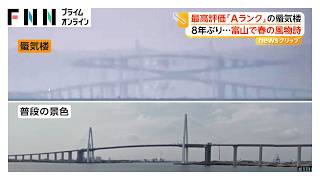
A rare spring mirage appeared over Toyama Bay on April 26, creating a striking optical illusion in which a bridge seemed to transform into a flattened diamond shape floating above the water.

Regular service by an electric passenger ferry linking Tokyo's Nihonbashi and Toyosu began on April 26. It marks Japan's first scheduled service using a fully electric passenger vessel operated by a private company.

A new sightseeing train operated by Nankai Electric Railway began service on April 24, connecting Osaka's Namba Station with Koyasan, a World Heritage site, raising expectations for regional tourism growth.

Bear sightings are surging across northeastern Japan in an unusually early spring trend, prompting the fastest issuance on record of bear alerts in multiple prefectures including Aomori and Iwate. Incidents have already left a police officer seriously injured and a member of the Self-Defense Forces attacked.

The planned extension of the Hokkaido Shinkansen to Sapporo has come under renewed scrutiny after Japan's Finance Ministry said the project had reached a level at which it should, in principle, be canceled.