



Kyoto is stepping up efforts to capture Japan's growing nighttime economy, with Toei Kyoto Studio Park extending its hours to 9 p.m., a new theater drawing visitors near Kyoto Station and nighttime tours expanding in Gion as the city seeks to encourage tourists to stay out longer and explore more areas after dark.

The whistle of a steam locomotive still echoes through the mountains of Engaru in northeastern Hokkaido, where the historic Amemiya No. 21 continues to run through a region once sustained by forestry.

A foreign tourist was injured after being attacked by a bear near an observation deck on the shore of Lake Towada in Towada, Aomori Prefecture, on August 22, suffering a bite to his right arm and a bruised right shoulder.

A 56-year-old woman who was swept away by a flash flood while climbing a mountain stream in Minakami, Gunma Prefecture, was rescued alive on August 17 after surviving eight days in the remote mountains with a broken heel, relying on food she had brought with her, stream water and her knowledge of the area until anglers found her sitting on a forest road.
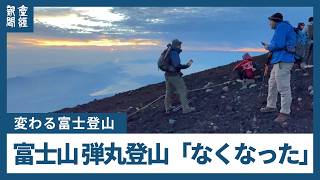
The measures were introduced in response to concerns over reckless climbing, including attempts to reach the summit without staying overnight at a mountain hut or taking sufficient rest. Under the current system, climbers who do not have reservations are restricted from beginning their ascent after 2 p.m., helping discourage people from climbing through the night without adequate preparation.

A pond at Inokashira Park, a popular destination in Tokyo's Kichijoji area, has turned a striking matcha-like green, a phenomenon that has become particularly noticeable in 2026 and is believed to be caused by an accumulation of phytoplankton.

Japan welcomed a record 3.44 million foreign visitors in July, the highest figure ever recorded for the month, even as the number of travelers from China fell sharply from a year earlier.

Plans to bring Shinkansen service to Shikoku have taken a significant step forward for the first time in 53 years, with the transport ministry beginning preliminary studies that could eventually cut travel times from Osaka to major cities including Tokushima, Takamatsu and Matsuyama to around 90 minutes.