
OSAKA - Uncertainty surrounding the situation in the Middle East is beginning to affect daily life in Japan, as concerns over crude oil supplies spread to restaurants, cleaning services and even household garbage disposal systems across the Kansai region.
Prime Minister Sanae Takaichi said the government would respond swiftly if necessary to prevent disruptions to economic activity and daily life, while instructing officials to consider compiling a supplementary budget aimed at minimizing risks.
Although the government has continued to stress that necessary crude oil supplies have been secured, businesses on the ground say economic disruptions have already started to emerge.
"We've seen cooking oil prices rise since about two weeks ago," said Kenichi Kawai, manager of Dashimakino Shibahan, a restaurant in Kyoto City.
The restaurant purchases around 16 kilograms of cooking oil each week, but prices have climbed by roughly 500 yen from the previous level of about 5,000 yen beginning around two weeks before the interview.
The impact is also spreading to food containers.
"Our supplier told us it's not just prices going up, but that the containers themselves are becoming harder to obtain," Kawai said.
The plastic containers used for bento meals are petroleum-derived products, and suppliers have warned that procurement itself could become difficult.
Because hygiene requirements make substitutions difficult and the outlook remains uncertain, the restaurant has decided to raise bento prices by 100 yen starting in June.
"It's frightening. I think there's a possibility that one day we could suddenly be told we can't continue business from today," Kawai said.
Dry-cleaning factories, currently entering the busy seasonal clothing-change period, are also feeling the pressure.
"This is our dry-cleaning machine. We use petroleum-based solvents derived from oil," said Tamotsu Yoshihara, president of Yoshihara Systems.
About 90 percent of the factory's work relies on dry cleaning, but the petroleum-based solvents used in the process suddenly surged in price beginning in May.
"The sudden price hike this month has created a very difficult situation," Yoshihara said.
Procurement costs have risen by around 120 yen per liter compared with April. With the factory consuming around 10,000 liters of solvent per month, costs have increased by more than 1.2 million yen monthly.
The factory also uses around 3,000 plastic hangers each day, along with petroleum-derived packaging bags.
"Even a 10 or 20 percent increase has a major impact," Yoshihara said.
To avoid passing costs directly onto customers, the company has introduced measures such as refunding customers who return hangers and shortening packaging bags by one centimeter per item in an effort to reduce material usage.
"We're doing everything we can to cut costs, but if raw material prices rise further, price increases may become unavoidable," Yoshihara said.
The effects are also appearing in services directly tied to daily life.
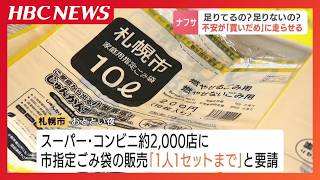
Municipally designated garbage bags have become scarce in some areas, with supermarkets posting notices limiting purchases to one set per family.
"It feels like we've finally reached this point," one shopper said.
At an A-Coop supermarket in Hyogo Prefecture, store manager Shinjiro Fujita said the city had instructed retailers to limit sales quantities.
"Until now there were no restrictions on orders, but we've been told to limit quantities," Fujita said.
In Kato City, delays in shipments of designated garbage bags for burnable and plastic waste have occurred partly because of oil shortages affecting suppliers.
To address the shortage, the city has begun selling temporary garbage bag sets consisting of plain bags accompanied by special stickers.
Interestingly, the stickers label the waste not as "burnable garbage," but as "garbage that can only be burned."
Officials hope the wording will also encourage residents to reduce waste volumes while the shortage continues.
Other municipalities are facing similar concerns.
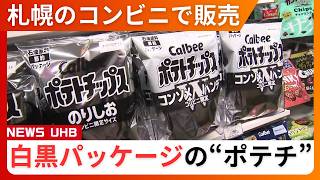
Ryo Harada, mayor of Minoh City in Osaka Prefecture, said suppliers warned as early as April that shortages of raw materials used in printing ink for garbage bags could lead to supply problems.
As a result, the city plans to switch garbage bag printing to black ink, which remains more readily available.
"Garbage collection is essential infrastructure that supports citizens' lives, so it absolutely cannot stop," Harada said. "This situation has reminded us once again of the risks involved in relying on materials affected by global events. We hope the national government will ensure stable supplies of petroleum-derived naphtha and address supply bottlenecks properly."
With disruptions already beginning to affect daily life, concerns are growing over how far the impact of oil supply instability could spread.
Source: YOMIURI