News On Japan

Takaichi Urges BOJ to Take Appropriate Steps on Inflation

TOKYO - Prime Minister Sanae Takaichi met with Bank of Japan Governor Kazuo Ueda at the Prime Minister’s Office on May 22nd, urging the central bank to implement appropriate monetary policies while taking into account the government’s efforts to combat rising prices and promote crisis-management and growth-related investment.

Following the meeting, Ueda explained that the talks were part of their regular discussions held every few months, adding that the two exchanged views on the economy, prices, and financial markets in light of the worsening situation in the Middle East. He also said he explained the BOJ’s current approach to monetary policy.

According to Ueda, Takaichi requested that the central bank fully understand the economic measures being advanced by the administration, including policies aimed at easing the burden of inflation on households and supporting strategic investment.

Ueda described the meeting as “a useful exchange of opinions on various issues,” while noting that no specific discussion took place regarding further interest rate hikes.

The meeting came as concerns continue to grow over inflationary pressures linked to instability in the Middle East, with indicators released on May 23rd showing that inflation is once again outpacing wage growth in Japan.

Economists appearing on a television discussion program said the current inflation rate may understate the actual burden facing households because government subsidies on gasoline, electricity, and education costs are temporarily suppressing headline consumer prices.

Professor Takeo Nodo of Keio University of Technology said April’s inflation data, which showed price growth slowing to 1.4%, may not accurately reflect underlying inflation trends because of policies such as gasoline subsidies, free high school tuition programs, and free school lunches.

Nodo warned that inflationary pressure could intensify again later this year as the effects of higher energy prices tied to Middle East tensions spread through the economy. He also pointed to sharp increases in corporate prices, saying those costs are likely to be passed on to consumers over time.

The government plans to subsidize electricity and gas bills from July through September, with support for a standard household expected to amount to roughly 1,000 yen per month. The fiscal 2026 reserve fund budget is scheduled to be approved on May 26th, with additional funding expected to be secured through a supplementary budget.

Some experts questioned whether the current subsidy-focused approach is sustainable, arguing that direct support should instead be concentrated on low- and middle-income households that are suffering most from rising living costs.

Criticism was also raised over gasoline subsidies, with some economists arguing that the policy merely masks higher fuel prices rather than lowering them fundamentally, while also reducing incentives for energy conservation.

Finance Minister Katayama said the government hopes to avoid relying on additional deficit-financing bonds when preparing future supplementary budgets, suggesting unused surplus funds from previous fiscal years may instead be utilized.

Source: FNN

News On Japan
POPULAR NEWS

As of 9 p.m. on May 30th, Typhoon No. 6 (Chanthu) was continuing to strengthen as it moved northwest over waters east of the Philippines, with Okinawa expected to face the worst conditions from June 1st to June 2nd as the storm passes nearby at strong intensity, while heavy rain is also forecast across western and eastern Japan, particularly along Pacific coastal regions.

A social media dispute between a 17-year-old high school student from Tokyo's Itabashi Ward and a 16-year-old boy from Edogawa Ward escalated into a planned group fight involving around 30 youths, some of whom allegedly brought weapons including a rusty saw, iron pipes, a special baton and even a shovel.

Japan's population stood at 123.05 million in 2025, according to preliminary results from the national census released by the Ministry of Internal Affairs and Communications, marking a decline of 3.097 million people over the past five years.

Volleyball player Shunichiro Sato, a member of Japan’s men’s national team, was arrested by the Tokyo Metropolitan Police Department on suspicion of possessing marijuana after allegedly leaving a bag containing the drug at a pachinko parlor in Tokyo.

The “naphtha shortage” triggered by escalating tensions in the Middle East is now spreading into Japan’s housing industry, with shortages of paint, thinner, insulation materials and other building products forcing construction delays across the country.

MEDIA CHANNELS
         

MORE Politics NEWS

Japan's Defense Minister Shinji Koizumi held the first-ever trilateral meeting with his counterparts from Australia and New Zealand, where the three sides exchanged views on defense cooperation, including the potential export of the Maritime Self-Defense Force's latest frigate design.

Japan has enacted legislation allowing a sharp increase in fees charged to foreign residents for immigration procedures, with the cost of applying for permanent residence expected to rise from the current 10,000 yen to around 200,000 yen once the new system is implemented.

Japan's declining population is set to trigger another review of single-seat electoral districts for the House of Representatives, with new census data highlighting widening disparities in voter representation and adding momentum to discussions over reducing the number of lawmakers.

Health Minister Kenichiro Ueno apologized on May 29th after confusion spread over a new policy that will allow some medical institutions to charge cancellation fees for missed appointments from June, stressing that the fees will apply only in limited cases.

Prime Minister Sanae Takaichi met Philippine President Ferdinand Marcos Jr. on May 28th, agreeing to upgrade bilateral ties as the two countries deepen security cooperation in response to growing regional and global challenges.

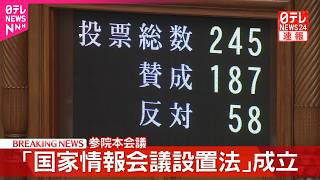
A law creating the National Intelligence Council to strengthen the Japanese government's intelligence-gathering and analysis capabilities was passed and enacted at a plenary session of the House of Councillors on May 27th.

Philippine President Ferdinand Marcos Jr. and First Lady Liza Araneta-Marcos, who are visiting Japan as state guests, were welcomed by Emperor Naruhito and Empress Masako at the Imperial Palace at around 9:30 a.m. on May 27th during an official welcoming ceremony.

Japan is preparing to rename the Air Self-Defense Force the "Air and Space Self-Defense Force" for the first time since the Self-Defense Forces were established 72 years ago, reflecting growing concern over space debris, satellite security, and military developments by countries such as China and North Korea.