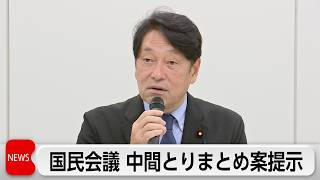

TOKYO - Japan's parliament is expected to formally adopt a proposal on June 10th aimed at maintaining a stable number of Imperial Family members, endorsing measures that would allow female royals to retain their status after marriage and permit the adoption of male-line descendants from former imperial branches, while leaving the current line of succession unchanged.
The proposal was presented to ruling and opposition parties on June 8th by the speakers and vice speakers of both houses of parliament following months of discussions over how to address the steadily shrinking size of the Imperial Family.
Lawmakers have increasingly expressed concern about the future of the Imperial Household as the number of working royals continues to decline. Under current law, only males descended through the paternal line are eligible to inherit the throne, and only three people presently remain in the line of succession: Crown Prince Akishino, Prince Hisahito, and Prince Hitachi, the 90-year-old younger brother of former Emperor Akihito.
The proposal reaffirms that the current succession framework will remain intact. It specifically emphasizes preserving the line of succession from Emperor Naruhito to Crown Prince Akishino and then to Prince Hisahito, a point that lawmakers placed at the beginning of the draft to underscore its importance.
As a result, the proposal would not make Princess Aiko or any other female member of the Imperial Family eligible to inherit the throne. While public support for allowing Princess Aiko to become emperor has been discussed in recent years, lawmakers deliberately avoided addressing succession reform in the current proposal.
Instead, the focus is on maintaining the size of the Imperial Family and ensuring that official duties can continue to be carried out in the coming decades.
The first measure would allow female members of the Imperial Family to retain their royal status after marriage. Under existing rules, female royals lose their imperial status and become commoners when they marry.
The change would likely affect members such as Princess Aiko, the daughter of Emperor Naruhito, and Princess Kako, the younger daughter of Crown Prince Akishino, both of whom are approaching ages at which marriage could become a possibility. The measure is also expected to apply to female members of other imperial branches, including the Mikasa family.
However, the proposal would apply only to future marriages. Former Princess Mako, who left the Imperial Family after marrying Kei Komuro in 2021, would not be eligible to return under the new framework.
One of the most difficult questions remains unresolved: the status of the spouses and children of female royals who remain in the Imperial Family after marriage.
If, for example, Princess Aiko were to marry and have children, those children would belong to a maternal line rather than the paternal male line required for imperial succession under current law. The proposal does not specify whether husbands or children of female royals would themselves be granted imperial status or participate in official imperial activities.
The issue has divided lawmakers. Conservative politicians and members of the ruling coalition have emphasized the importance of preserving Japan's traditional male-line imperial system, which supporters say stretches back more than 2,000 years to Emperor Jimmu. Others, including some lawmakers from the Constitutional Democratic Party, have argued that families should be treated as a unit and that spouses and children should not be separated institutionally from female royals who remain in the Imperial Family.
Because no consensus has been reached, a decision on the issue has been postponed.
The second pillar of the proposal would allow the adoption of male-line descendants from former imperial branches known as the old princely houses.
The proposal focuses on descendants of the 11 former princely houses that lost their imperial status during postwar reforms in 1947. Under the plan, only male-line male descendants from those families would be eligible for adoption into the Imperial Family.
While the adopted individuals would become members of the Imperial Family, the proposal is being coordinated on the assumption that they would not immediately gain the right to inherit the throne. The status of their future descendants remains unclear and is expected to become a subject of further debate.
Some lawmakers within the Liberal Democratic Party and Nippon Ishin have expressed interest in preserving the possibility that future generations of adopted descendants could eventually become eligible for succession, although the current proposal does not address that question.
According to lawmakers involved in the discussions, there may be around 10 people of suitable age among the descendants of the former princely houses who could potentially qualify for adoption, though no official figure has been confirmed.
The proposal also acknowledges that numerous practical issues remain unresolved if female royals continue to hold imperial status after marriage. These include questions surrounding family registration, surnames, voting rights, and the legal status of households in which a female royal remains a member of the Imperial Family while her spouse and children may remain private citizens.
Members of the Imperial Family do not possess family registers, creating additional legal and administrative challenges that lawmakers say will require careful institutional design.
The draft calls for periodic reviews of the system in the future, allowing lawmakers to reassess whether additional measures may be needed based on the size and composition of the Imperial Family.
Following the June 8th discussions, parliamentary leaders hope to formally adopt the proposal on June 10th as the legislature's unified position and begin the process of drafting legislation to implement the reforms.
Source: FNN