
SHIZUOKA - Shizuoka Prefecture has launched a working group to consider enforceable restrictions on off-season climbing of Mount Fuji, after a series of reckless ascents during the mountain’s closure period led local leaders to demand tighter entry controls and a system requiring climbers to pay rescue costs.
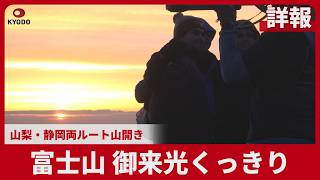
More than 20 days remain before the official opening of the Fujinomiya Route, but climbers were already visible on Mount Fuji on June 19. At the Fujinomiya fifth station that morning, people were seen entering the mountain from a bulldozer road despite the route being under winter closure.
A man who said he began climbing on the night of June 18 and descended on the morning of June 19 said off-season climbs should be placed under a permit system. "I really understand what the local mayor is saying," he said. "Mount Fuji is very accessible, easy to come to, it is a mountain over 3,000 meters, and there is snow on it."
The mayor he referred to is Fujinomiya Mayor Hidetada Sudo, who has repeatedly spoken out against off-season climbing. "I think we need to create a rule banning climbing Mount Fuji during the winter period," Sudo said on April 10.
Mount Fuji during the closure period is dangerous because weather conditions are severe and mountain huts are not operating, yet people continue to become stranded after reckless climbs. According to prefectural police, 46 people were involved in mountain distress incidents during the closure periods over the five years from 2021 through 2025, with no sign that the situation is improving.
The prefectural working group held its first meeting on June 19 to discuss ways to curb reckless off-season climbing. "It is necessary to consider this from a wide range of perspectives, so I hope to hear frank opinions today," said Fumihiko Oshima, a senior official in the prefecture’s crisis management department.
The group plans to examine whether measures with legal force can be introduced, including entry restrictions and charging climbers for rescue operations.
At the same time, the heads of municipalities around Mount Fuji submitted a request to the prefectural government calling for an effective system to restrict climbing during the closure period and to require climbers to bear the costs of rescue helicopters and other operations.
"We do not want people to become stranded, and we do not want secondary disasters to occur," Sudo said. "The very act of breaking the rules and climbing is what causes all of these problems, so we want steps taken to prevent that from happening."
Shizuoka Prefecture, however, says introducing paid rescues would be difficult. Saitama Prefecture has already introduced charges for mountain rescues, but its system relies on separating the roles of helicopters. Saitama has three prefectural disaster prevention helicopters and three prefectural police helicopters. Because the prefectural police helicopters cannot legally charge rescue fees, they are assigned to searches, while an ordinance was revised so that disaster prevention helicopters handle rescues and can collect fees.
The average rescue charge in Saitama has been slightly under 100,000 yen per operation.
Shizuoka, by contrast, has only one prefectural disaster prevention helicopter and currently conducts rescue operations in coordination with two prefectural police helicopters. Because rescues by police helicopters are free, adopting the Saitama model would mean that whether a climber is charged could depend on which helicopter arrives to help.
That would leave Shizuoka facing a choice between increasing the number of prefectural disaster prevention helicopters or changing laws governing police operations. A prefectural official said the hurdle for introducing paid rescues is high.
Source: SBSnews6