
News On Japan

Russian Bomber Flies Over Sea of Japan for More Than 11 Hours

TOKYO - A Russian nuclear-capable long-range strategic bomber flew over international waters in the Sea of Japan for more than 11 hours, accompanied by an escort that included Sukhoi Su-35 fighter jets, Russia's Defense Ministry said on July 21 as it released footage of the flight.

It said Russian bomber pilots also regularly operate over international waters in the Arctic Ocean, North Atlantic, Pacific Ocean and Baltic Sea, claiming that all such flights are conducted in accordance with international rules.

The announcement marked the first time since January that Russia has publicized a solo Russian bomber flight over the Sea of Japan.

Russia conducts such missions regularly, and the latest flight is believed to be intended as a warning to Japan by demonstrating its ability to deploy strategic bombers capable of carrying nuclear weapons near the country.

Source: TBS

News On Japan
POPULAR NEWS

A large new typhoon formed near the Ogasawara Islands on August 12 and could approach Honshu around the end of the Obon holiday period, while the remnants of Typhoon No. 15 continue to bring unstable weather and a risk of heavy rain across a wide area of Japan.

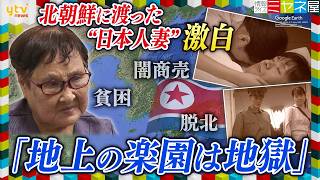
Hiroko Saito was 19 years old when she left Japan for North Korea in June 1961 with her Korean husband and their one-year-old daughter, persuaded by assurances that they were heading to a "paradise on earth" and that she could return to Japan after three years. Instead, she would spend four decades in North Korea, enduring chronic hunger, the deaths of her husband and children and a desperate struggle to survive before finally escaping and returning home in 2001.

Transport disruption caused by Typhoon No. 15 was easing across eastern Japan on the morning of August 12, with most major railway and airline services returning to normal after dozens of flight cancellations and widespread rail disruption during the storm's landfall in Ibaraki Prefecture the previous evening.

Japan's H3 Rocket No. 9 successfully placed the Michibiki No. 7 navigation satellite into its planned orbit after lifting off from the Tanegashima Space Center in Kagoshima Prefecture at 4:23 a.m. on August 11, marking the country's second consecutive successful H3 launch.

The Tokaido Shinkansen operated its first overnight service ahead of the Obon holiday period, offering travelers a 15,000 yen trip from the Tokyo area to Kyoto and Shin-Osaka while allowing them to save on hotel costs and arrive earlier than the first regular morning trains.

MEDIA CHANNELS
         

MORE Politics NEWS

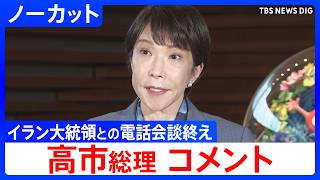
Prime Minister Sanae Takaichi held a telephone call with Iranian President Masoud Pezeshkian on August 12, urging an early easing of military tensions in the Middle East while stressing the importance of free and safe navigation through the Strait of Hormuz without additional costs.

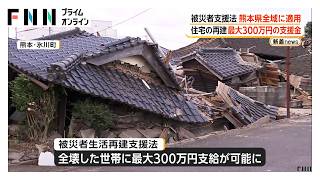
Prime Minister Takaichi said on August 10 that the government expects to apply the Disaster Victims' Livelihood Recovery Support Act across all of Kumamoto Prefecture, allowing households whose homes were completely destroyed in the Kumamoto earthquake to receive up to 3 million yen in assistance.

Nagasaki marked the 81st anniversary of the U.S. atomic bombing on August 9 with a memorial ceremony near the hypocenter, where Mayor Shiro Suzuki declared nuclear weapons an "absolute evil" and called on the Japanese government to uphold its Three Non-Nuclear Principles.

Prime Minister Sanae Takaichi’s economic strategy faced renewed pressure on August 7 as attention shifted toward the Bank of Japan’s September policy meeting, with central bank officials preparing a series of public appearances that could signal whether another interest-rate hike is becoming likely after recent yen turmoil and fiscal concerns.

Hiroshima marked the 81st anniversary of the atomic bombing on August 6 with a peace memorial ceremony at Peace Memorial Park, where Mayor Kazumi Matsui warned of the growing danger that nuclear weapons could be used and called for renewed action toward their abolition.

Prime Minister Sanae Takaichi’s government formally approved a plan on August 5 to reduce the consumption tax rate on food and nonalcoholic beverages from 8% to 1% for two years beginning in April 2027, setting the stage for a difficult parliamentary battle over how to cover an estimated 10 trillion yen revenue shortfall and whether the politically sensitive tax can be restored afterward.

Japan’s latest defense white paper has sparked controversy by presenting the country’s expanding military buildup not only as a national security necessity but also as a potential engine of economic growth, drawing criticism from China and raising fresh domestic questions over how far Prime Minister Sanae Takaichi’s government is prepared to link defense, industry and fiscal policy.

Prime Minister Sanae Takaichi’s food-tax cut plan cleared a major ruling party hurdle on August 5, intensifying debate over whether her government can deliver household relief without weakening fiscal credibility or drawing the Bank of Japan deeper into the administration’s economic agenda.