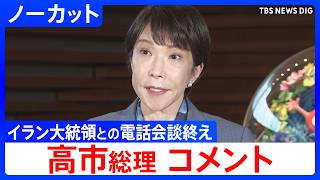
TOKYO - Prime Minister Sanae Takaichi’s food-tax cut plan cleared a major ruling party hurdle on August 5, intensifying debate over whether her government can deliver household relief without weakening fiscal credibility or drawing the Bank of Japan deeper into the administration’s economic agenda.
The Liberal Democratic Party’s General Council unanimously approved the government’s plan to reduce the consumption tax on food from 8% to 1% for two years from April 2027, pending parliamentary approval. The government also plans to provide households with payments to cover the remaining 1%, effectively making food tax-free during the period.
The measure is the centerpiece of Takaichi’s response to rising living costs and a sharp fall in public support. Food prices have become one of the most politically sensitive issues for the administration, especially as the weak yen continues to raise import costs for households and small businesses.
The tax cut would mark the first reduction in Japan’s consumption tax since the system was introduced in 1989. That makes it politically powerful but fiscally risky. The plan is estimated to create a revenue shortfall of about 5 trillion yen, and the government has pledged not to rely on deficit-financing bonds to cover the cost.
Instead, the administration says it will use non-tax revenue, state funds, foreign reserves and spending reforms. That explanation may help Takaichi argue that the policy is fiscally responsible, but it is unlikely to end questions over whether the funding is durable enough for a two-year nationwide tax cut.
The timing also creates a political challenge. Starting the cut in April 2027 gives retailers, tax authorities and local governments time to prepare, but it leaves households waiting more than half a year for relief. Opposition parties are likely to argue that direct cash benefits would reach struggling families faster.
The two-year limit may also become a problem. Takaichi has said she will take responsibility for restoring the rate after the period ends, but once households become used to a near-zero food tax, returning the rate to 8% could be attacked as a major tax increase. The government is trying to present the measure as temporary relief, but politically it may be hard to reverse.
The approval also came after bipartisan talks collapsed and dissent emerged inside the ruling party over unclear funding sources. That makes the unanimous LDP approval important for party discipline, but it does not remove the risk that lawmakers will become uneasy if bond yields rise or markets react negatively.
The Bank of Japan debate deepened at the same time. A Jiji Press report said Takaichi asked BOJ Governor Kazuo Ueda at a May meeting to increase government bond purchases if needed to control rising long-term interest rates. Ueda reportedly acknowledged the request but stressed that any BOJ action would need to take market reactions into account.
The report is politically sensitive because the government has spent weeks trying to reassure investors that it respects BOJ independence. Earlier wording in Takaichi’s economic blueprint had already raised concern that the administration wanted the central bank to support its growth strategy by keeping financial conditions loose. The final version clarified that specific monetary policy tools remain under the BOJ’s authority.
The reported bond-buying request revives exactly the concern the government was trying to calm. If markets believe the prime minister is asking the BOJ to suppress long-term yields, investors may question whether monetary policy is being kept independent from fiscal and political pressure.
That concern matters because Takaichi’s broader agenda is expensive. Her government is promoting a 370 trillion yen public-private investment roadmap through fiscal 2040, targeting strategic sectors including artificial intelligence, semiconductors, shipbuilding, energy, space, quantum technology and advanced manufacturing. It is also pursuing defense expansion and now a large food-tax cut.
Each policy has its own logic. Strategic investment is meant to revive growth. Defense spending is framed as national resilience. The food-tax cut is designed to help households. But together they create a major question: how much can the government promise before markets demand a clearer fiscal anchor?
Long-term bond yields are the key signal. If investors believe the government is weakening fiscal discipline, yields could rise further, increasing the cost of financing public debt. If yields rise too sharply, pressure may grow on the BOJ to buy more bonds, which would reinforce concerns that monetary policy is being pulled back toward government financing.
The yen adds another layer. Japan and the United States recently carried out a rare joint yen-buying intervention after the currency fell to 40-year lows. The action temporarily stabilized the yen, but it did not solve the underlying problem of interest-rate gaps, fiscal concern and import-driven inflation.
U.S. Treasury Secretary Scott Bessent has since emphasized support for Japan while also making clear that BOJ policy matters for yen stability. His comments have strengthened expectations that the BOJ may need to raise rates again, possibly as early as September, to reinforce market confidence and contain inflation pressure.
That puts Takaichi in a difficult position. Higher interest rates could support the yen and reduce import inflation, helping households. But they would also raise borrowing costs and make the government’s investment and tax-relief agenda harder to finance. Lower rates would support growth and borrowing, but could weaken the yen and worsen food and energy prices.
The U.S. role makes the politics even more delicate. Washington’s support for yen intervention helps Takaichi show that Japan is not acting alone, but American pressure for credible monetary tightening could limit the government’s room to push the BOJ toward bond-market support.
For the BOJ, the issue is also reputational. The central bank kept its policy rate at 1% at its July 30-31 meeting after raising rates in June to their highest level in more than three decades. It wants to keep the option of further rate hikes open, while avoiding the appearance that it is being pushed by either the Japanese government or U.S. officials.
The opposition now has a clear line of attack. It can argue that Takaichi is promising tax relief, industrial investment and defense expansion while quietly leaning on the BOJ to contain the market consequences. The government will respond that household relief is necessary, that investment will raise long-term growth, and that the BOJ remains legally independent.
The household politics remain central. Voters are unlikely to judge the government by bond-market theory or central-bank language. They will judge it by food prices, wages, energy bills and whether relief arrives quickly enough. That gives Takaichi a reason to push ahead with the tax cut even if fiscal conservatives and investors remain skeptical.
The August 5 political picture is therefore one of apparent progress but deeper risk. Takaichi has secured LDP backing for her flagship household-relief policy, but the same day brought renewed questions over whether her administration is asking too much of the BOJ. The government wants to show it can cut food taxes, invest for growth and stabilize the yen. Markets want proof that those goals do not conflict.
The central question is whether Takaichi can turn the food-tax cut into a controlled relief package rather than a symbol of fiscal strain. If she can explain the funding, protect BOJ independence and keep the yen stable, the policy could help rebuild public support. If bond yields rise or the yen weakens again, the tax cut may instead deepen the market test facing her government.
What To Watch Next
The cabinet’s final decision on the food-tax plan will be closely watched for funding details, timing and whether additional household payments are included.
The autumn Diet session will determine whether the tax cut can pass quickly or become the next major battleground between the ruling bloc and opposition parties.
Reaction to the reported Takaichi-Ueda meeting will matter for perceptions of BOJ independence, especially if bond yields rise.
The BOJ’s September 17-18 policy meeting is becoming the next major market and political test, with pressure building for another rate hike.
The yen remains the most immediate signal of confidence. Any renewed slide toward pre-intervention levels could increase pressure for further action by Japan and the United States.
Bond yields should be watched closely as investors judge whether Takaichi’s tax cut, investment roadmap and defense agenda can coexist with fiscal discipline.
Opposition parties are likely to frame the food-tax plan as delayed relief with unclear funding, while also pressing the government over whether it is relying on the BOJ to absorb fiscal pressure.