News On Japan

Defense Minister Koizumi Among Four Ministers to Visit Yasukuni Shrine

TOKYO - Defense Minister Shinjiro Koizumi and three other Cabinet ministers visited Yasukuni Shrine in Tokyo on August 15, the anniversary of the end of World War II, while Prime Minister Sanae Takaichi refrained from going in person and instead offered prayers from the Nippon Budokan.

Koizumi visited the shrine in Kudan-kita, Tokyo, marking the first confirmed visit by a serving defense minister since Minoru Kihara went there on August 15, 2024.

Hitoshi Kikawada, minister responsible for Okinawa and Northern Territories affairs, Minoru Kiuchi, minister for economic and fiscal policy, and Kimi Onoda, minister for economic security, also visited the shrine.

Three senior Liberal Democratic Party officials, including Secretary-General Shunichi Suzuki, visited Yasukuni together.

Takaichi was expected to refrain from visiting the shrine herself. Instead, she made a private monetary offering for a tamagushi ritual offering in her capacity as LDP president, with Suzuki acting on her behalf.

The prime minister attended the national memorial ceremony for the war dead at the Nippon Budokan in Tokyo.

While in the Budokan parking area, Takaichi faced in the direction of Yasukuni Shrine and performed the Shinto ritual of bowing twice, clapping twice and bowing once, offering prayers to the shrine from a distance.

Source: Kyodo

News On Japan
POPULAR NEWS

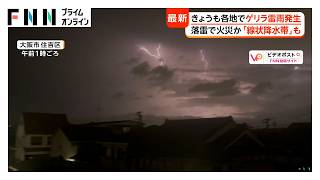
Severe thunderstorms brought torrential rain, lightning, hail and a tornado to Hokkaido on August 28, disrupting rail and air travel and leaving some passengers stranded overnight at New Chitose Airport, as unstable atmospheric conditions triggered intense downpours across Japan.

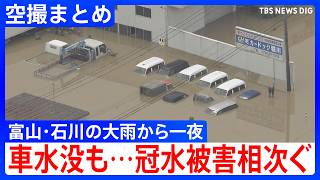
Residents in Ishikawa and Toyama prefectures began clearing mud and debris on August 28 as authorities worked to restore access to communities cut off by landslides and flooding following torrential rain that prompted temporary Level 5 heavy rain emergency warnings a day earlier.

JR Kyushu plans to restore full service on the Kyushu Shinkansen from the first train on September 18, nearly two months after the Kumamoto earthquake caused extensive damage to tracks and stations and forced the suspension of services on part of the line.

A 9-minute, 13-second drone video filmed inside Aeon Mall Kumamoto two days after the deadly explosion has provided a detailed view of the destruction, showing collapsed ceilings, heavy dust and widespread damage that may have affected between one-third and nearly half of the shopping center.

Strong Typhoon No. 18 was moving northwest through the East China Sea on the night of August 26, gradually pulling away from Okinawa and the Amami Islands as lingering rain, strong winds and high waves were expected to ease. As of 9 p.m. on August 26, the typhoon was over waters north-northwest of Kume Island and moving northwest.

MEDIA CHANNELS
         

MORE Politics NEWS

Prime Minister Sanae Takaichi moved on August 28 to contain market concern over her government’s spending plans, saying Japan will aim to cap new government bond issuance at around 40 trillion yen in the fiscal 2027 budget while still pursuing food-tax relief, growth investment and measures to support households facing higher prices.

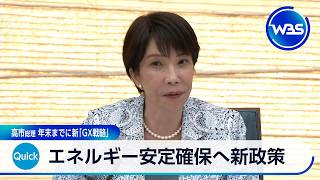
Japan has drawn up a new policy package aimed at strengthening energy security in response to developments in the Middle East, including support for alternative oil pipelines that would bypass the Strait of Hormuz and greater use of nuclear power to reduce dependence on fossil fuels.

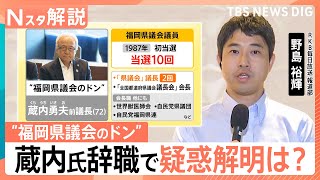
Former Fukuoka Prefectural Assembly speaker Isao Kuranouchi, long regarded as the dominant power in the chamber, resigned as an assembly member on August 25, intensifying scrutiny of allegations involving financial transactions, costly overseas inspection trips and policies backed by public funds while raising broader questions about how he accumulated such influence.

Japan's Digital Agency launched a new smartphone app on August 25 that combines identity verification and administrative procedures, allowing users to access both government and participating private-sector services through a single application.

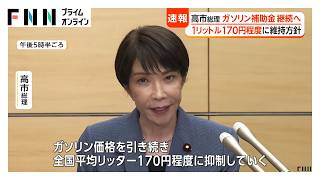
Prime Minister Takaichi said the government will continue using subsidies to keep the nationwide average gasoline price at around 170 yen per liter, drawing on reserve funds set aside to respond to developments in the Middle East.

The Japanese government plans to reuse low-radioactivity soil generated by decontamination work after the Fukushima nuclear accident at government office complexes in Saitama and Sendai, marking the first such reuse outside Tokyo.

Japan's GX Promotion Organization has invested about 3 billion yen in two startups developing nuclear fusion and plastic recycling technologies, with combined public and private investment expected to reach around 20 billion yen as the government seeks to accelerate the commercialization of advanced decarbonization technologies.

Japan's Internal Affairs and Communications Ministry has begun considering reductions in postal services, including fewer mailboxes and less frequent deliveries, as the country's postal business continues to suffer losses following a prolonged decline in letters and New Year's cards.