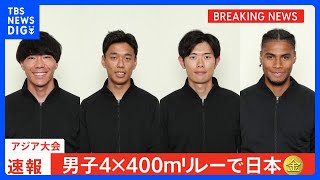


NAGOYA - Japan captured the men's 4x400-meter relay gold medal in driving rain on September 29, clocking 3 minutes, 0.75 seconds to win the Asian Games title for the first time in 12 years as the athletics program came to a dramatic conclusion at Mizuho Park Athletics Stadium in Nagoya.
Fuga Sato, Shinya Hayashi, Kenki Imaizumi and Yuki Joseph Nakajima combined to defeat Qatar, which took silver in 3:00.93, while India finished third in 3:01.61.
The victory was Japan's first in the event since the 2014 Incheon Games and provided an emphatic finish to a seven-day athletics competition in which the host nation collected 10 gold medals and 32 medals overall.
Japan had entered the Games holding the Asian record of 2:58.33, set at the Paris Olympics in 2024.
In the September 28 heats, Japan used Sato on the opening leg, Kentaro Shirahata second, Imaizumi third and Hayashi on anchor. The quartet won its heat in 3:03.48 to qualify comfortably for the final.
Nakajima, the Japanese 400-meter record holder who had already won bronze in the individual event, replaced Shirahata for the final.
Japan rearranged the order with Sato leading off, Hayashi second, Imaizumi third and Nakajima running anchor.
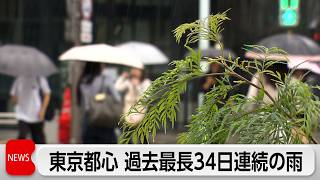
Heavy rain fell throughout the race.
Sato accelerated aggressively on the first leg and moved Japan into contention before handing the baton to Hayashi in third place.
Hayashi produced the decisive early move, surging into the lead around the 200-meter point and giving Imaizumi the baton with Japan ahead.
The third leg developed into a tightly packed contest, but Imaizumi resisted pressure from the chasing teams and maintained Japan's narrow advantage before handing over to Nakajima.
Nakajima remained in front through the opening half of the anchor leg.
The opposition closed as the race entered its final bend, but Nakajima, known for his strength late in the 400 meters, found another gear down the finishing straight and crossed first to secure the gold.
Nakajima said the victory helped ease some of his disappointment at taking bronze in the individual 400 meters.
"I couldn't get the result I wanted individually, so I'm really happy that we were able to win the gold medal here," he said. "My own run wasn't particularly good, but I think the first three runners really helped me."
Sato said Japan had entered the final in strong condition after its convincing performance in qualification.
"We were feeling good from the heats, so it was great that we were able to finish it off and win," he said.
He nevertheless felt his own opening leg could have been stronger.
"I slowed toward the end. I was closing on the teams I could see, but once I handed over I realized they had also closed on us, so I probably made the second leg work harder than I wanted."
Hayashi said his task was simply to build on Sato's opening effort.
"I took the momentum Fuga gave me and just ran with everything I had to get the baton to Kenki," he said.
Imaizumi, who protected Japan's lead on the third leg, said maintaining first place had been central to the team's plan.
"We wanted to take the lead and not give it away," he said. "I also wanted to show that this team isn't just about Joseph. Overall, I think we created a very good flow."
Japan's relay squad has increasingly targeted medals at global championships after breaking the national and Asian record in Paris.
Nakajima said the next objective would be competing for a podium place at the 2027 World Athletics Championships in Beijing.
"We've been aiming for a medal in the mile relay and have been just short," he said. "Botswana, the United States and other very strong teams are there, so each of us has to become stronger individually, get into that fight and somehow win a medal. I want us to help bring more excitement to Japanese athletics."
The relay victory capped a highly successful athletics campaign for Japan.
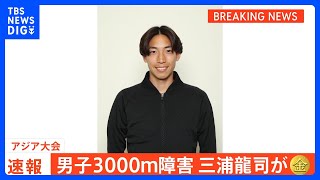
One day earlier, Ryuji Miura and Ryoma Aoki had delivered a historic one-two in the men's 3,000-meter steeplechase.
Miura won in a Games record of 8:17.36, becoming the first Japanese champion in the event in 28 years, while Aoki took silver in a personal-best 8:17.60.
Japan had also won the men's 1,500 meters through Kazuto Iizawa, while Nozomi Tanaka collected silver in the women's 5,000 meters.
Mako Fukube won the women's 100-meter hurdles, with Hitomi Nakajima second, and Yuma Maruyama took the decathlon title.
Ichitaka Yamashita won the men's marathon, Hayato Katsuki prevailed in the men's marathon race walk and Japan collected medals across hurdles, jumps, throws and relays during one of its strongest recent Asian Games athletics performances.
September 29 also produced two major victories for Japan away from the track.
Kanoa Igarashi and Mirai Ikeda completed a Japanese sweep of the inaugural Asian Games surfing titles at the Pacific Long Beach venue in Tahara, Aichi Prefecture.
Igarashi, the Tokyo Olympic silver medalist, won the men's shortboard competition after overcoming Indonesian opposition in the final.
The 28-year-old scored 12.87 points to secure gold and, with it, an individual qualification place for the Los Angeles Olympics in 2028.
The result gives Igarashi an opportunity to compete at a third consecutive Olympic Games.
His road to the final included a dramatic quarterfinal against Indonesia's highly rated Meidy Bronsen, when Igarashi overturned the contest with around one minute remaining to advance by 2.67 points.
Ikeda then gave Japan a second surfing gold in the women's event.
The 18-year-old defeated China's Yang Siqi 11.64 to 7.57 in the final, securing her own place at Los Angeles 2028.
The two surfers became the first athletes in their sport to secure qualification for the 2028 Olympics.
Surfing is making its Asian Games debut in Aichi-Nagoya, with the continental champions receiving direct Olympic qualification.
The Japanese double victory was particularly valuable because Olympic surfing places are tied directly to the winning athletes rather than being quota positions that can later be reassigned.
Badminton brought Japan another medal, although Akane Yamaguchi was unable to overcome world No. 1 An Se-young in the women's singles final.
An defeated the Japanese world No. 3 21-17, 21-9 in Ichinomiya to retain her Asian Games title.
Yamaguchi began strongly and led 4-1 in the opening game before An gradually established control.
The Japanese player recovered from 13-16 to draw level at 16-16, but An won the closing points to take the first game.
Yamaguchi briefly led 5-4 in the second before the South Korean produced eight consecutive points and pulled away decisively.
The silver nevertheless represented Yamaguchi's first Asian Games women's singles medal and added to Japan's already substantial badminton haul.
An became the first woman to win consecutive Asian Games badminton singles championships.
Women's soccer also produced an important development as Nadeshiko Japan advanced to the Asian Games final.
Japan faced South Korea in the September 29 semifinal at Shizuoka Stadium Ecopa and progressed to the championship match, keeping alive its bid for an unprecedented third consecutive women's soccer title.
North Korea will provide the opposition in the October 2 final after defeating China 2-0 in the other semifinal.
Japan had reached the last four without conceding a goal.
It opened the tournament with an 8-0 victory over Thailand, followed with another 8-0 win against Vietnam and defeated Chinese Taipei 4-0 to finish first in its group.
Japan then beat the Philippines 4-0 in the quarterfinals, scoring all four goals before halftime.
The final against North Korea will give Japan the opportunity to extend a period of Asian Games dominance that includes gold medals at both the 2018 Jakarta-Palembang Games and the 2023 Hangzhou Games.
Elsewhere, Japan's softball team continued its unbeaten start to the tournament.
The defending Olympic champion entered September 29 after beating the Philippines 10-0 in its opening match and recording consecutive 15-0 victories over Hong Kong, China, and Thailand on September 28.
Japan was scheduled to face Singapore before moving into a more difficult closing sequence against South Korea, Chinese Taipei and China.
The competition uses a round-robin system before the medal games, meaning the matches against the region's strongest programs will determine positioning for the October 3 final.
Men's volleyball was also completing its preliminary round.
Japan had opened with a straight-sets victory over Uzbekistan and continued its campaign against Kazakhstan before meeting Pakistan on September 29.
The Japanese team entered the Asian Games only weeks after winning the Asian Men's Volleyball Championship and securing qualification for the 2028 Los Angeles Olympics.
The Asian Games tournament provides another major test for a national program that has returned to the upper tier of international men's volleyball.
Track cycling began its medal program on September 29, including the men's and women's team sprint finals and the opening stages of the team pursuit.
Japan entered the track competition with considerable medal ambitions following its growing international success in sprint and endurance events.
The Izu Velodrome, which also staged Olympic competition in 2021, is hosting the Asian Games track program.
Sports climbing also began on September 29, adding another traditionally strong Japanese discipline to the second half of the Games.
Japan has developed some of the world's leading climbers, and the men's boulder qualification and women's speed competition marked the beginning of a program that will later include lead and combined events.
Tennis continued after persistent rain had disrupted the schedule during the previous two days.
Matches in men's and women's singles, doubles and mixed doubles were compressed into a demanding program as organizers attempted to recover from the backlog.
The poor weather also caused major problems for cricket.
Both men's quarterfinals scheduled for September 29 were abandoned because the ground remained unplayable.
Sri Lanka and Bangladesh advanced to the semifinals on the basis of their higher rankings after their matches against Nepal and Malaysia were washed out.
The cancellations followed similar problems in the previous quarterfinals, with India and Pakistan also progressing without completing their scheduled matches.
Repeated rain has become one of the most persistent logistical challenges of the Games.
Competitions including tennis, surfing, equestrian events and cricket have all been disrupted at various stages, forcing organizers to revise schedules and, in some cases, determine progression using competition regulations rather than results on the field.
In weightlifting, China's Li Wenwen won the women's heaviest division with a total of 310 kilograms, while Iran's Ali Davoudi captured the men's super-heavyweight title after a dramatic contest in which Iraq's Ali Ammar set a world record in the snatch.
The performances added to China's commanding position in the overall medal standings.
Japan, however, continued to accumulate medals across an unusually wide range of sports.
The September 29 relay victory gave the host nation a memorable final moment in athletics, while Igarashi and Ikeda's surfing triumphs carried significance beyond the Asian Games because they also secured places at the Los Angeles Olympics.
Yamaguchi's badminton silver and Nadeshiko Japan's progression to the women's soccer final added further depth to the day's results.
Japan's focus now shifts toward the remaining team sports and the expanding second-week program.
The men's soccer team plays its semifinal on September 30, while softball continues its round-robin campaign and track cycling, sports climbing, tennis, boxing, archery and other sports move deeper into their medal rounds.
With athletics now complete, Japan's medal challenge will increasingly depend on sports scheduled during the final five days of the Games.
But September 29 delivered one of the defining images of the home Games: Nakajima driving through the rain in Nagoya with three teammates waiting beyond the finish line as Japan reclaimed the men's 4x400-meter relay title after a 12-year wait.
Source: TBS