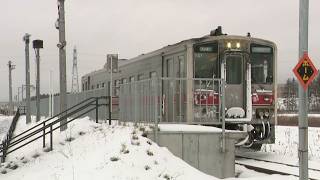


HOKKAIDO - Japan's first significant snowfall of the season has brought winter conditions to Hokkaido and northern Honshu, with snow depths exceeding 10 centimeters in several mountain and inland locations on October 28, while a fresh wave of cold air is expected to bring further snowfall over the weekend of October 31 and November 1.
As of 11 a.m. on October 29, the Japan Meteorological Agency had confirmed the season's first snow cover on numerous mountains extending from Hokkaido through Tohoku and into the Japanese Alps, marking a significant advance of winter weather across the country.
Hokkaido experienced some of the heaviest snowfall on October 28 as a strong winter pressure pattern carried cold air southward from the Asian continent. Snow was recorded in Sapporo, Hakodate, Muroran, Obihiro, Kushiro and Abashiri, with several cities experiencing their first snowfall earlier than the seasonal average.
Sapporo's first snow arrived on October 28, matching the average date but five days later than last year. Kushiro recorded its first snowfall 10 days earlier than normal and 14 days earlier than last year, highlighting the uneven arrival of winter conditions across Japan's northernmost island.
Snowfall was particularly pronounced in Hokkaido's mountainous interior. At 1 p.m. on October 28, snow depth had reached 18 centimeters in Sounkyo, a mountain resort area in the Daisetsuzan range, while Wassamu, at an elevation of approximately 150 meters, recorded 12 centimeters, its highest October accumulation on record. Further south, Sukayu in Aomori Prefecture, a location known for some of Japan's deepest winter snow, reported 19 centimeters.
The snowfall also transformed mountain landscapes across northeastern Japan. Mount Iwate, the highest peak in Iwate Prefecture at 2,038 meters, received its first recorded summit snow cover of the season on October 28. Snow also appeared on Mount Iwaki in Aomori, Mount Gassan and Mount Zao in Yamagata, and Mount Azuma in Fukushima, as well as Mount Hakusan and Mount Tateyama farther south.
In Iwate Prefecture, the cold air brought temperatures below freezing in some inland locations. Yabukawa, in Morioka, recorded a minimum of minus 0.9 degrees Celsius on October 28, while the city of Morioka reached a daytime high of just 9.3 degrees, its lowest temperature of the season. Snow covered vegetation and road signs in mountain communities, providing an unusually wintry landscape before November.
The early snowfall has already affected mountain transportation. In Fukushima Prefecture, the Bandai-Azuma Skyline scenic road was closed on October 28 after snow and ice developed along the high-altitude route. Visitors traveling to view autumn foliage were confronted with snow-covered scenery and freezing conditions, illustrating how quickly mountain weather can change at this time of year.
For Japan's ski industry, the snowfall represents an encouraging early development, particularly in Hokkaido, although it is too early to determine whether the accumulations will provide a lasting foundation for the winter season.
A forecast issued on October 25 by SnowBrains projected cumulative snowfall of approximately 8 to 12 centimeters around Kiroro and 8 to 11 centimeters at Niseko Grand Hirafu during the October 27-29 period. Furano was forecast to receive 6 to 10 centimeters, Rusutsu 6 to 9 centimeters and Tomamu 6 to 8 centimeters. These figures were forecasts rather than confirmed resort measurements.
In northern Honshu, the same forecast projected 5 to 7 centimeters around Appi Kogen in Iwate Prefecture, with lighter accumulations of 1 to 5 centimeters around Shiga Kogen, Zao Onsen and Hakuba. Snowfall at higher elevations does not necessarily translate into skiable conditions at resort bases, and most ski areas are still preparing for their regular winter openings.
The immediate outlook suggests that the first substantial snowfall will be followed by fluctuating temperatures rather than a continuous period of winter weather. Conditions are expected to improve temporarily on October 29 before another frontal system moves across Japan on October 30.
According to an October 29 forecast from Weathernews, a winter pressure pattern is expected to develop again on October 31, bringing colder northwesterly winds and renewed precipitation to northern Japan. Snow is possible in parts of Hokkaido and the mountainous regions along the Sea of Japan side through November 1, while lower elevations may experience rain.
The renewed cold weather could add to existing mountain snow cover, although rising temperatures between weather systems may cause substantial melting, particularly at lower elevations. Forecasters expect considerable temperature fluctuations during the transition into November, making sustained snow accumulation uncertain outside the highest mountain areas.
The broader outlook for the 2026-2027 winter season remains less favorable for widespread heavy snowfall. The Japan Meteorological Agency's three-month forecast released on October 20 indicated a greater probability of warmer-than-average temperatures across much of Japan, with the continuing El Niño phenomenon expected to influence atmospheric conditions through winter.
For the Sea of Japan side of Hokkaido and Tohoku, the agency assigned a 40% probability to below-normal snowfall, a 40% probability to near-normal snowfall and a 20% probability to above-normal snowfall. The outlook does not rule out intense individual snowstorms, but suggests that the overall seasonal pattern may be less consistently cold than in some recent winters.
For motorists and travelers, the immediate concern is the possibility of icy roads and rapidly changing conditions in mountainous districts. Snow that partially melts during the day can refreeze overnight, creating hazardous surfaces on mountain passes and roads serving popular autumn sightseeing destinations.
Although Japan's main ski season is still several weeks away, the October snowfall has provided the first substantial indication of winter's arrival, with Hokkaido and the mountains of northern Honshu likely to remain the focus of further snow activity as November approaches.