News On Japan

Govt. report promotes investment in science, technology

Jun 14, 2022 (NHK) - A Japanese government report called for creating a 10-trillion-yen, or about 74-billion-dollar, fund for university research in a bid to reverse a decline in the country's science and technology capability.

The annual white paper on science, technology and innovation approved by the Cabinet on Tuesday highlighted challenges to Japan becoming a science-and-technology-oriented nation. The push to improve research is a pillar of the government's growth strategy.

The report notes that two decades ago, Japan ranked fourth globally in terms of research-paper quality. Japan was overtaken by India in 2018 in the rankings and now has fallen into 10th place.

The white paper says one of the factors behind the drop was that Japanese universities and businesses did not see much of an increase in research and development expenses over the past 20 years.

Expenses in universities increased 23.4-fold in China in that period, 4.7-fold in South Korea, 2.6-fold in the United States, but only 0.9-fold in Japan.

The report notes that in Japan, universities produce more than 70 percent of research papers.

The paper also called for other efforts to strengthen research at universities and to support young researchers. It says top-level researchers in Japan should be given backing to conduct joint studies with their overseas counterparts.

The paper also says that as cutting-edge science and technology becomes the core competition area among countries, the government must intensely promote research in areas including quantum computing and artificial intelligence.

News On Japan
POPULAR NEWS

As of 10 p.m. on August 4, large and very strong Typhoon No. 13 (Dolphin) was moving west southwest of Chichijima, bringing severe weather to the Ogasawara Islands before an expected approach toward the Daito Islands and Okinawa later in the week.

The death toll from the Kumamoto earthquake has risen to 38, while more than 8,200 people remained in evacuation shelters on August 4, one week after the disaster struck.

Japan's Immigration Services Agency on August 4 released draft guidelines that would tighten the requirements for foreign nationals seeking permanent residency, including new income and pension standards designed to ensure applicants have economic conditions equal to or better than those of Japanese people.

Six airlines, including All Nippon Airways, Japan Airlines and Air Do, will move the baggage check-in deadline for domestic flights at Haneda Airport to 30 minutes before departure from September 1.

The conflict involving Iran, the United States and Israel may be entering a more dangerous phase, with Tehran appearing increasingly willing to initiate attacks rather than merely respond to US strikes, while disruptions around the Strait of Hormuz threaten oil and liquefied natural gas supplies worldwide.

MEDIA CHANNELS
         

MORE Politics NEWS

Prime Minister Sanae Takaichi’s government faced a widening policy test on August 4 as officials tried to calm inflation concerns after rare U.S.-Japan yen intervention, while the latest defense white paper framed Japan’s military buildup as part of a broader strategy for economic growth and national resilience.

The conflict involving Iran, the United States and Israel may be entering a more dangerous phase, with Tehran appearing increasingly willing to initiate attacks rather than merely respond to US strikes, while disruptions around the Strait of Hormuz threaten oil and liquefied natural gas supplies worldwide.

Prime Minister Sanae Takaichi entered August facing a sharper test of her economic leadership after Japan and the United States carried out a rare coordinated currency intervention to support the yen, turning the government’s cost-of-living agenda, fiscal policy and relationship with the Bank of Japan into one of the most politically sensitive issues of her administration.

U.S. President Donald Trump said the United States intervened to buy yen because of its strong relationship with Japan, describing the action as a sign of friendship and pledging that Washington would always support the country.

Japan and the United States conducted coordinated yen-buying intervention in the foreign exchange market to curb the currency's excessive decline, with Finance Minister Satsuki Katayama expected to announce the move on August 3, according to people familiar with the matter.

US Treasury Secretary Scott Bessent said the yen is undervalued, making an unusually direct assessment of the currency and signaling that Washington is unwilling to accept excessive weakness.

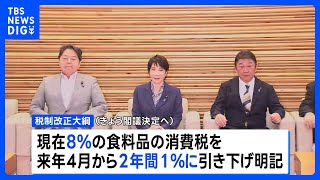
Prime Minister Sanae Takaichi announced that Japan will cut the consumption tax rate on food and beverages to 1% from April 2027, pledging to secure the necessary funding without relying on deficit-financing bonds and to restore the rate to 8% after two years.

Prime Minister Sanae Takaichi moved on July 30 to turn food-tax relief from a campaign promise into government policy, instructing the ruling Liberal Democratic Party to proceed with a temporary cut in the sales tax on food as the Bank of Japan began a policy meeting that could shape the next phase of Japan’s currency, inflation and fiscal debate.