
News On Japan

How Wide is the Kanto v. Kansai Cultural Divide?

TOKYO - The cultural tapestry of Japan is rich and diverse, with the Kanto and Kansai regions offering a fascinating study in contrasts, from convenience store rice balls to public bath customs. What are the differences?
How Wide is the Kanto v. Kansai Cultural Divide?

Kumazaki Futo, a broadcaster, dives into one of the more delicious differences: the seaweed used in convenience store onigiri (rice balls). In Kanto, Seven-Eleven sells onigiri wrapped in "grilled nori" (seaweed), while in Kansai, the preference often leans towards "seasoned nori," depending on the filling.

Inoue Takahiro, another broadcaster, shares a personal preference for "seasoned nori," a sentiment echoed by many from the Kansai region, including obstetrician Song Mi Hyun. The seasoned nori's advantage? It adds flavor from the first bite, even if the filling is not immediately noticeable.

Seven-Eleven's public relations department notes that the preference for seasoned nori in Kansai led to a trial introduction of seasoned nori onigiri in the Kinki region in 2006, with a full-scale launch ten years later, in 2016.

Road Signs and Public Baths: Marking Regional Differences

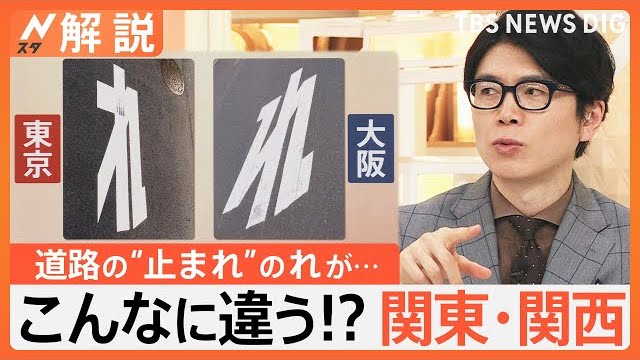
Even road signs bear the mark of regional identity, with differences in the typeface of the "Stop" sign observed between Tokyo and Osaka. Automotive critic Kuniyoshi Mitsuhiko explains that variances in font styles across prefectures were due to a lack of national uniformity. Although the National Police Agency standardized the "Stop" sign font in 2014, Osaka retains some old signs, citing budget and time constraints.

Public baths, too, reflect regional distinctions. In Kanto, baths are typically installed against the wall, whereas, in Kansai, they occupy the center of the bathhouse. The size of the iconic "Kerorin" bucket also varies: it's slightly larger in Kanto than in Kansai. Hiromichi Miyamae, president of the Osaka Prefecture Public Bath Association, suggests these differences stem from bathing habits—Kanto residents traditionally wash before soaking, while Kansai residents may soak before washing.

These cultural nuances underscore the diversity of Japan's regions, with each area offering its own unique traditions and preferences.

Source: TBS

News On Japan
POPULAR NEWS

Tokyo's Fuchu Prison is adapting its meals and living arrangements to a growing foreign inmate population, with about one in four prisoners coming from overseas and staff balancing religious, cultural and dietary needs against tight budgets and the demands of running one of Japan's largest prisons.

Tesla unveiled its Cybercab in Japan for the first time on September 11, showcasing an AI-powered autonomous taxi designed without a steering wheel or pedals.

China will sharply raise visa fees for Japanese nationals entering the country from September 14, with the cost of a single-entry visa increasing to 16,750 yen, about 7.4 times the current level.

Tada Shrine in Kawanishi, Hyogo Prefecture, has filed for protection under Japan's Civil Rehabilitation Act, becoming the first shrine in the Kansai region and only the third nationwide to enter bankruptcy proceedings, according to Teikoku Databank.

Japan has asked for changes to an Equal Earth world map that depicts the Russian-controlled Northern Territories in the same color as Russia, prompting the map's creator to say the Japanese-language version will be revised while the English version will remain unchanged.

MEDIA CHANNELS
         

MORE Society NEWS

Newly recovered video from a passenger's digital camera has revealed conditions aboard the Kazu I sightseeing boat before it sank off Hokkaido's Shiretoko Peninsula in April 2022, a disaster that left 20 passengers and crew members dead and six passengers still missing more than four years later.

Police have rearrested a 30-year-old senior member of an organization affiliated with the Sixth Yamaguchi-gumi on suspicion of directing a loosely organized criminal group that stole smartphones and other goods worth about 4.15 million yen from stores in Chiba and Kanagawa prefectures.

High-end bonsai are being stolen from gardens across Japan in a growing series of thefts, with some trees later appearing on social media overseas and industry officials saying more than 100 cases are now reported each year.

Three people have been arrested in Kyoto on suspicion of operating an unlicensed underground banking service for Chinese clients, with police believing the group handled transactions worth about 600 million yen in total.

Two 14-year-old junior high school students in Aichi Prefecture have been arrested on suspicion of obstructing traffic while performing dangerous bicycle stunts linked to group rides known on social media as Nagoya Ride.

Seven Myanmar nationals working at an agricultural corporation in Hokkaido under Japan's Specified Skilled Worker status have accused their employer of repeated violence, intimidation and financial penalties, with some workers saying they were also called by numbers instead of their names and threatened with having their residence status revoked.

Police are investigating whether a dispute between a 70-year-old man and the female owner of a cake shop in Motosu, Gifu Prefecture, was connected to a murder and arson case that left three people dead and two others injured during a middle school reunion.

Women now make up a growing share of customers at Akihabara maid cafes, reflecting a shift in Japan's "oshi-katsu" fan culture as visitors increasingly seek not only someone to support, but also a sense of two-way connection with the maids they admire.