

TOKYO - Prime ministers and presidents from Canada, France, Germany, Italy, Japan, the United Kingdom and the United States each arrived in the light rain.
TOKYO - Prime ministers and presidents from Canada, France, Germany, Italy, Japan, the United Kingdom and the United States each arrived in the light rain.


A section of stone wall at Hikone Castle, one of Japan’s few surviving original Edo-period castles and a National Treasure whose main keep remains intact more than 400 years after its construction, collapsed after heavy rain caused by Typhoons No. 7 and No. 8, Hikone city officials said.
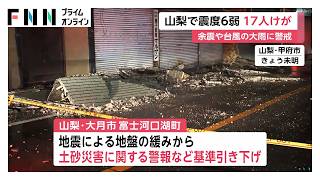
Japan’s weather agency carried out field inspections in Yamanashi Prefecture on June 28 after a powerful earthquake struck the Fuji Five Lakes area late on June 26, registering a lower 6 on Japan’s seismic intensity scale in Fujikawaguchiko and injuring six people.

According to updates on June 28, the double-typhoon system that brought record rain, flooding, landslides and fallen trees to parts of Japan has moved away, but Kanto remains under cloudy rainy-season skies, with intermittent rain still possible and saturated ground keeping the risk of landslides high in areas hit by heavy rain.

Japan advanced to the knockout stage of the World Cup after a 1-1 draw with Sweden on June 25, finishing second in Group F and setting up a Round of 32 clash with Brazil in Houston.

A powerful earthquake with a maximum seismic intensity of upper 6 struck off Iwate Prefecture at around 7:30 a.m. on June 25, shaking parts of Aomori Prefecture and leaving Hachinohe, which was hit by a similarly strong quake last December, facing fresh damage.


Chinese and Russian bombers and other military aircraft flew around Japan on June 27, prompting Defense Minister Shinjiro Koizumi to describe the joint activity as a show of force directed at Japan.

Defense Minister Koizumi met with South Korean Defense Minister Ahn Gyu-back in Seoul on the morning of June 28, with the two ministers agreeing to continue cooperation between Japan and South Korea, as well as among Japan, the United States and South Korea.
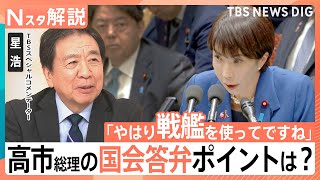
Japan’s political agenda on June 26 was dominated by national security, election regulation and Prime Minister Sanae Takaichi’s push to reshape the country’s long-term economic strategy, as the Diet advanced measures that point to a broader shift in how the government is preparing for defense, technology and political campaigning.

The Takaichi government said on June 24 that public and private investment in 17 strategic fields, including AI and semiconductors, is expected to exceed 370 trillion yen by 2040, as it seeks to draw out private-sector spending and turn advanced technologies into economic growth.
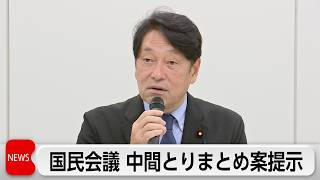
A cross-party national council discussing a reduction in the consumption tax on food will present a draft proposal on June 24 calling for the rate to be lowered to 1% from April next year.

The speakers and vice speakers of both houses of the Japanese Diet approved on June 22 the government’s outline for revising the Imperial Household Law and related measures aimed at securing the number of imperial family members, following what has been described as the consensus of the legislature.

Centrist Reform Alliance leader Ogawa has secured agreement from the leaders of the Constitutional Democratic Party of Japan and Komeito to establish a consultative body to discuss a possible merger of the three parties.

A bill to revise the national referendum law, which sets procedures for constitutional amendments, was approved by the House of Representatives plenary session and is expected to enter deliberation at the House of Councillors Commission on the Constitution on June 24.