News On Japan

M6.2 earthquake hits Hokkaido, northern Japan

Jun 11, 2023 (NHK) - An earthquake with an estimated magnitude of 6.2 has hit Hokkaido, northern Japan. Authorities say there is no threat of tsunami.

The quake struck at around 6:55 p.m. on Sunday. The Meteorological Agency says the focus was 140 kilometers deep, off the coast of Urakawa Town.

The jolt registered an intensity of lower 5 on the Japanese seismic scale of zero to 7 in Chitose City, Atsuma Town, and Urakawa Town.

An intensity of 4 was recorded in other municipalities of Hokkaido, including the cities of Hakodate, Muroran and Kushiro, as well as some municipalities of neighboring Aomori Prefecture.

News On Japan
POPULAR NEWS

The family of James "Weston" Higginbotham, a 20-year-old American student who went missing while traveling in Kyoto, announced on June 7th that he has been found dead after a volunteer search-and-rescue group located his body in a mountainous area outside the city.

Japan's Meteorological Agency announced on June 7th that the rainy season is believed to have begun in the Tokai and Kanto-Koshin regions, marking the seasonal shift to wetter weather across a broad area of the country.

Expectations for Japan are unusually high heading into the 2026 World Cup, with the team now aiming not merely to reach the knockout stage but to finally break through the Round of 16 and advance to the quarterfinals for the first time.

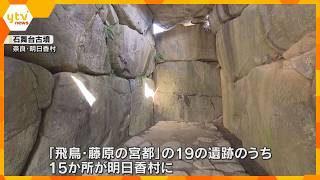
Residents in Nara Prefecture are celebrating after UNESCO's advisory body recommended the archaeological complex known as the Asuka-Fujiwara Ancient Capitals for inscription as a World Heritage site, bringing the historic birthplace of Japan's ancient state one step closer to international recognition.

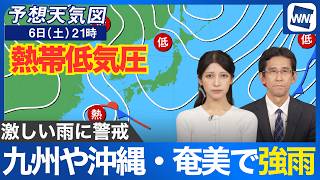
A tropical depression is expected to move northward this weekend and could bring another round of heavy rain to parts of Japan, following a week in which Typhoon Jangmi (Typhoon No. 6) caused significant rainfall and left some areas vulnerable to further weather-related damage.

MEDIA CHANNELS
         

MORE Sci-Tech NEWS

The Japanese government has unveiled a draft target to replace between two and five nuclear reactors by the 2040s, marking the first time numerical goals for nuclear power development have been presented since the Fukushima Daiichi nuclear disaster 15 years ago.

The video explains how a tiny, remote Japanese island called Minami Torishima (Marcus Island) could become one of the most strategically important locations in the world due to enormous deposits of rare earth elements buried in deep-sea mud beneath the Pacific Ocean.

A large solar power facility built on a mountainside in Fukushima City is generating reflected sunlight for far longer than originally projected, with a city survey finding that glare at some locations lasted up to 53 minutes per day—more than ten times the maximum duration predicted by the operator.

Japan’s largest space business exhibition opened at Tokyo Big Sight on May 27th, showcasing a growing wave of companies from outside the traditional aerospace sector entering the rapidly expanding space industry.

JR Tokai held its first-ever resident briefing session in Shizuoka City on May 26th regarding construction of the Linear Chuo Shinkansen, outlining measures for water resource management and environmental conservation as the company seeks to gain local support ahead of the start of construction in Shizuoka Prefecture.

A seasonal spectacle has begun on the Miwasaki coast in Shingu, Wakayama Prefecture, where tiny male chigogani crabs are emerging from their burrows at low tide and rhythmically waving their claws in a movement resembling a dance.

A small onshore wind turbine collapsed in Oga, Akita Prefecture, in March, raising fresh concerns among local residents following a series of wind turbine-related accidents in the city over recent years.

Japan's next-generation homegrown supercomputer, Fugaku NEXT, is being developed with a radically different strategy from its predecessors, abandoning the single-minded pursuit of the world's fastest calculation speed in favor of artificial intelligence capabilities expected to accelerate breakthroughs in fields ranging from drug development and batteries to disaster prevention and food production.