News On Japan

Ministry of Agriculture Promotes Efforts to Reduce Environmental Impact

Paving the Way for Greener Farming: Japan's New Initiatives

TOKYO - NHK reports that in an effort to realize sustainable practices, the Ministry of Agriculture, Forestry and Fisheries of Japan has announced that, starting from April this year, it will promote practices that reduce environmental impact by including the minimal use of pesticides and chemical fertilizers as a requirement for receiving certain subsidies to farmers.

The government has set goals for sustainable, environmentally-friendly agriculture to be achieved by 2050, aiming to reduce pesticide use by 50% and chemical fertilizer use by 30%. To meet these targets, the Ministry will require farmers to demonstrate their efforts to reduce environmental impact as a condition for receiving some subsidies from April onward.

Specifically, farmers applying for subsidies will need to fill out a checklist indicating whether they are using fertilizers and pesticides beyond what is necessary, and whether they have reduced the use of fossil fuels that lead to carbon dioxide emissions. This checklist must then be submitted to the government. From the fiscal year 2027, the Ministry is considering expanding these practices to all subsidies and verifying whether the actions recorded on the checklist are actually being implemented.

Additionally, starting this April, the Ministry plans to appoint officials in local agricultural administration offices across the country to promote environmentally considerate agriculture. Through this series of policies, the Ministry aims to reduce the environmental burden caused by agriculture.

News On Japan
POPULAR NEWS

Typhoon No. 26 (Surigae) remained a strong typhoon south of Japan early on September 29, moving east-northeast at 15 kilometers per hour as it gradually weakened ahead of an expected approach to the southern Izu Islands from September 30 through October 1, where heavy thunderstorms, sudden gusts and high waves are forecast.

Ryuji Miura led a Japanese one-two finish in the men's 3,000-meter steeplechase on September 28, winning gold in a Games record of 8 minutes, 17.36 seconds as Ryoma Aoki surged late to take silver in 8:17.60 at Mizuho Park Athletics Stadium in Nagoya.

Beaujolais Nouveau, France's newly produced wine traditionally associated with autumn, arrived in Japan on September 28 about a month earlier than usual after a record-breaking heatwave accelerated this year's grape harvest.

Yokozuna Onosato captured his sixth career championship at the Autumn Grand Sumo Tournament on September 27, defeating Ukrainian ozeki Aonishiki in a winner-takes-all showdown at Tokyo's Ryogoku Kokugikan to finish the 15-day competition with 12 wins and three losses, ending a year-long title drought after a dramatic final weekend.

A fire broke out at the observation deck of Chubu Electric Power MIRAI TOWER in central Nagoya on Saturday, prompting 30 visitors to evacuate, although no injuries were reported.

MEDIA CHANNELS
         

MORE Sci-Tech NEWS

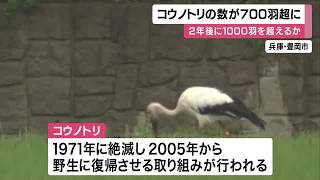
Japan's wild population of Oriental storks has exceeded 700 birds following decades of conservation efforts, with successful breeding across the country putting the population on track to surpass 1,000 within two years.

A rare pod of around 50 dolphins was spotted swimming through the Seto Inland Sea off Ozu, Ehime Prefecture, with dozens of dorsal fins repeatedly breaking the surface as the animals moved together.

Tesla unveiled its Cybercab in Japan for the first time on September 11, showcasing an AI-powered autonomous taxi designed without a steering wheel or pedals.

Large volumes of floodwater poured into the Metropolitan Area Outer Underground Discharge Channel in Kasukabe, Saitama Prefecture, following heavy rain on September 7, prompting the massive underground flood-control facility known as the "Underground Temple" to go into operation.

Fluorescent lamps that have illuminated Japanese homes and workplaces for decades are approaching the end of production, with Panasonic preparing to wind down a business it has operated since 1951 while experts warn that incorrectly replacing some fixtures with LEDs could create a fire risk.

Osaka-based spray nozzle maker IKEUCHI is expanding applications for its proprietary "Dry Fog," an ultra-fine mist that can cool, humidify and create visual effects without leaving surfaces wet, with the technology now being used in factories, livestock farming, crop cultivation and tourist attractions in Japan and overseas.

Japanese companies are moving closer to commercializing photonics-electronics convergence technology that replaces part of conventional electrical data transmission with optical signals, potentially allowing huge volumes of data to move with lower latency while sharply reducing power consumption as artificial intelligence drives rapid growth in electricity demand from data centers.

A new generation of optoelectronic integration technology developed over four decades by Japanese companies is moving closer to commercialization, offering a way to transmit huge volumes of data with low latency while sharply reducing the electricity consumed by data centers as artificial intelligence drives explosive growth in computing demand.