
News On Japan

New Tokyo Water Commute Connects Gotanda and Tennozu in 35 Minutes for 900 Yen

TOKYO, May 14 (News On Japan) - Tokyo's push for river-based commuting is gaining momentum with the launch of a new weekday evening ferry route connecting Gotanda and Tennozu.

Starting May 14th, the 35-minute journey along the Meguro River costs 900 yen one way. The route offers commuters an alternative to packed trains, with a scenic ride that includes views of riverside greenery and, in spring, cherry blossoms.

The Tokyo Metropolitan Government has been developing water transport options since fiscal 2023 to promote smoother travel and waterfront revitalization. This is the third such route, following earlier services linking Nihonbashi and Toyosu in October 2023, and Harumi and Hinode in May 2024. The new line is aimed at workers heading home in the evening, with operations scheduled from late afternoon into the night.

While some users praise the relaxing alternative—citing open-air views, a refreshing sea breeze, and crowd-free seating—cost and time remain hurdles. The new Gotanda-Tennozu route takes more than twice as long and costs over twice as much as the rail alternative, which involves a 15-minute trip on the Yamanote and Rinkai lines for about 420 yen. Additionally, the boats have no roof and may be suspended in poor weather.

Despite these drawbacks, Tokyo Governor Koike sees long-term value in water commuting. On May 12th, she emphasized its potential in disaster response, noting that river transport can avoid road congestion and serve as an emergency tool. A Tokyo official also stated that the goal is to expand river travel from tourism into everyday life while boosting the vibrancy of waterfront districts.

Though the initiative still leans heavily toward leisure use, the city hopes it will grow into a viable commuting option with broader benefits for urban mobility and community development.

Source: FNN

News On Japan
POPULAR NEWS

The Ministry of Land, Infrastructure, Transport and Tourism has announced plans to draw up guidelines for the introduction of a so-called dual pricing system that differentiates between foreign visitors and local residents.

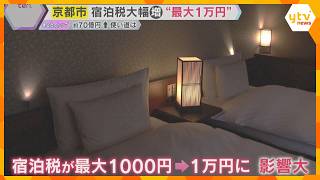
Kyoto City significantly raised its lodging tax from March 1st, increasing the maximum charge per person per night from 1,000 yen to as much as 10,000 yen, in a move aimed at tackling overtourism and funding the preservation of cultural assets, even as questions remain about its impact on visitors and the local economy.

A former emergency responder and foreign tourists worked together to rescue a woman in her 80s who was trapped inside an overturned light vehicle in Hakuba Village, Nagano Prefecture.

Tokyo Metro and Toshiba have launched Japan’s first demonstration test allowing passengers to pass through ticket gates without touching them by using their smartphones’ Bluetooth function.

The admission fee for the World Heritage-listed Himeji Castle in Himeji, Hyogo Prefecture, was revised on March 1st for the first time in 11 years, introducing a dual pricing system that significantly raises costs for visitors from outside the city.

MEDIA CHANNELS
         

MORE Travel NEWS

The Imperial Hotel Kyoto is set to open on March 5th in the heart of Gion, one of Kyoto’s most renowned districts, with the interior unveiled to the media on March 2nd ahead of its debut.

Tokyo Metro and Toshiba have launched Japan’s first demonstration test allowing passengers to pass through ticket gates without touching them by using their smartphones’ Bluetooth function.

The admission fee for the World Heritage-listed Himeji Castle in Himeji, Hyogo Prefecture, was revised on March 1st for the first time in 11 years, introducing a dual pricing system that significantly raises costs for visitors from outside the city.

As the number of foreign visitors to Japan continues to rise, two uniquely Japanese cultural phenomena — food replicas and capsule toys, known as gacha — are drawing growing attention as unexpected tourist attractions and potential new souvenir staples.

Japan is known for keeping tradition amidst modernization. While travelers visit temples that date back centuries, they will also see modern day neon skyscrapers.

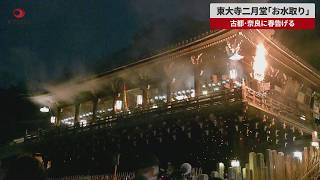
The main rites of the Buddhist practice known as "Shunie," widely referred to as "Omizutori," began on March 1st at Nigatsudo Hall of Todaiji in Nara, marking the arrival of spring in the ancient capital.

Yōkōkan Teien is a traditional Edo-period stroll garden (kaiyū-shiki teien) located in Fukui City, Fukui Prefecture. (Japanese Garden Collection)

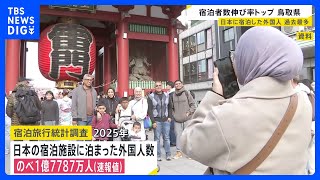
The number of foreign visitors staying at accommodation facilities across Japan reached a record 177.87 million guest nights last year, marking the highest level ever recorded and highlighting a continued shift toward regional destinations.