
News On Japan

Osaka Launches Cleanup Cart to Tackle Mounting Trash

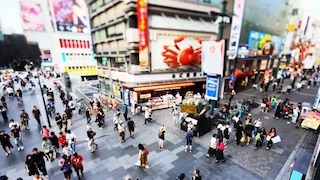
OSAKA, Dec 06 (News On Japan) - Osaka’s Minami district, one of the busiest entertainment areas in Kansai, is grappling with a worsening garbage problem as the sharp increase in foreign visitors coincides with a rise in litter throughout the area, and when the reporting team walked through the neighborhood last week they found trash piling up in abandoned bicycle baskets and food containers tossed into alleyways just off the main shopping streets.

A tourist walking near Dotonbori said they struggled to find a place to throw things away, while a visitor from Thailand noted that the district has far fewer trash bins than cities back home. According to the Osaka Convention & Tourism Bureau, an estimated 14.53 million foreign tourists visited Osaka from January to October this year, marking a record high for the period.

Taniuchi, the secretary general of the Dotonbori Shopping District Association, said the amount of trash has grown even faster than the crowd size, commenting that while foot traffic is up by around 30%, litter has increased by about 50%. Public trash cans were removed from sidewalks across Osaka roughly 20 years ago due to security concerns and to prevent illegal dumping of household waste, and although the shopping district asked the city for permission to reinstall them, approval was not granted.

In 2023, the city finally allowed the installation of ten high-tech trash bins that automatically compress waste, but managing and collecting trash from these units costs roughly 1 million yen per month — a burden entirely shouldered by the shopping district. Osaka City has also begun monthly cleanups around Dotonbori this year, but the growing volume of waste has made these efforts feel like “a drop in the bucket.”

On December 5th, the city launched a new initiative: the “Gomi Zero Cart,” a mobile trash-collection cart funded at about 2.3 million yen. Staff members patrol Dotonbori during crowded weekend and holiday hours, calling out to visitors and collecting cans, bottles, and other waste directly from tourists. Soon after the rollout, an American visitor handed over trash and said they would like to see more bins in the area because they do not want to litter in Japan, calling the initiative a positive step.

Osaka Mayor Yokoyama said the garbage issue spans multiple city departments and stressed the need for the entire municipal government to work together to improve conditions in Minami. With both the city and local businesses searching for solutions, the district now faces the challenge of whether it can restore cleanliness ahead of future tourism demand, and sustained efforts will be necessary to address the long-standing problem.

Source: YOMIURI

News On Japan
POPULAR NEWS

The Ministry of Land, Infrastructure, Transport and Tourism has announced plans to draw up guidelines for the introduction of a so-called dual pricing system that differentiates between foreign visitors and local residents.

Kyoto City significantly raised its lodging tax from March 1st, increasing the maximum charge per person per night from 1,000 yen to as much as 10,000 yen, in a move aimed at tackling overtourism and funding the preservation of cultural assets, even as questions remain about its impact on visitors and the local economy.

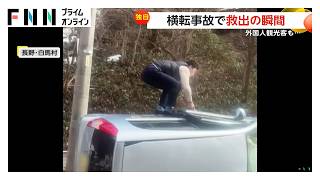
A former emergency responder and foreign tourists worked together to rescue a woman in her 80s who was trapped inside an overturned light vehicle in Hakuba Village, Nagano Prefecture.

Tokyo Metro and Toshiba have launched Japan’s first demonstration test allowing passengers to pass through ticket gates without touching them by using their smartphones’ Bluetooth function.

The admission fee for the World Heritage-listed Himeji Castle in Himeji, Hyogo Prefecture, was revised on March 1st for the first time in 11 years, introducing a dual pricing system that significantly raises costs for visitors from outside the city.

MEDIA CHANNELS
         

MORE Travel NEWS

The Imperial Hotel Kyoto is set to open on March 5th in the heart of Gion, one of Kyoto’s most renowned districts, with the interior unveiled to the media on March 2nd ahead of its debut.

Tokyo Metro and Toshiba have launched Japan’s first demonstration test allowing passengers to pass through ticket gates without touching them by using their smartphones’ Bluetooth function.

The admission fee for the World Heritage-listed Himeji Castle in Himeji, Hyogo Prefecture, was revised on March 1st for the first time in 11 years, introducing a dual pricing system that significantly raises costs for visitors from outside the city.

As the number of foreign visitors to Japan continues to rise, two uniquely Japanese cultural phenomena — food replicas and capsule toys, known as gacha — are drawing growing attention as unexpected tourist attractions and potential new souvenir staples.

Japan is known for keeping tradition amidst modernization. While travelers visit temples that date back centuries, they will also see modern day neon skyscrapers.

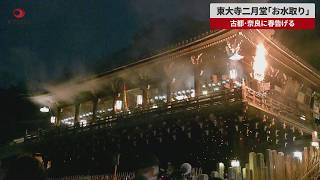
The main rites of the Buddhist practice known as "Shunie," widely referred to as "Omizutori," began on March 1st at Nigatsudo Hall of Todaiji in Nara, marking the arrival of spring in the ancient capital.

Yōkōkan Teien is a traditional Edo-period stroll garden (kaiyū-shiki teien) located in Fukui City, Fukui Prefecture. (Japanese Garden Collection)

The number of foreign visitors staying at accommodation facilities across Japan reached a record 177.87 million guest nights last year, marking the highest level ever recorded and highlighting a continued shift toward regional destinations.