News On Japan

AI Technology Detects Aging Water Pipes

TOKYO, Apr 05 (News On Japan) - As Japan faces a growing infrastructure crisis driven by aging water systems installed during the period of rapid economic growth, a new AI-driven solution is emerging to predict deterioration and prevent failures before they occur.

Leading this effort is Masaaki Ihara, COO of Fracta Japan, who is working to address the challenges posed by water pipes that have exceeded their 40-year service life and are increasingly prone to deterioration. Until now, accurately diagnosing pipe conditions required excavation, making inspections costly and inefficient.

The system developed by Ihara and his team, known as "AlEyes," combines pipe data with environmental factors such as ground conditions and weather patterns, using proprietary AI to visualize the probability of water leaks. The technology has already been adopted by numerous municipalities grappling with labor shortages and population decline, helping to streamline maintenance and improve repair efficiency.

As Japan seeks to safeguard its critical infrastructure, writer Hideo Aiba takes a closer look at the innovator working to transform how water systems are managed.

Source: テレ東BIZ

News On Japan
POPULAR NEWS

The Japan Meteorological Agency announced it will significantly revamp its disaster-related weather information system from April 28th, introducing a new category called “Danger Warning” in addition to existing warnings and advisories.

The body discovered in a forested area of Nantan, Kyoto Prefecture, on April 12th has been identified as that of Adachi Yuki, an 11-year-old elementary school student who had been missing since March 23rd, with authorities saying the cause of death remains unknown.

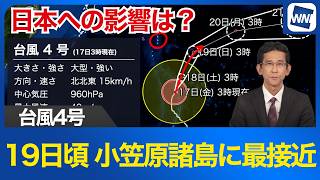
Typhoon No. 4 (Sinlaku), a large and extremely powerful system, is moving west-northwest over the Mariana Islands and is expected to make its closest approach to Saipan on April 15th while maintaining its intense strength.

The Japan Maritime Self-Defense Force will withdraw from Antarctic research vessel operations after nearly six decades, with private-sector entities expected to take over following the retirement of the icebreaker Shirase in fiscal 2034.

A growing shortage of products derived from naphtha is beginning to affect everyday industries, as instability surrounding supply routes linked to tensions involving Iran raises concerns across Japan’s economy.

MEDIA CHANNELS
         

MORE Web3 NEWS

Nissan Motor on April 14th unveiled its long-term vision, aiming to equip approximately 90% of its vehicle lineup with AI-powered autonomous driving technology as it seeks to rebuild its business.

Nara City has unveiled the results of its efforts to integrate artificial intelligence into municipal operations, aiming to address labor shortages and better respond to increasingly diverse citizen needs.

SoftBank, NEC, Honda, and Sony Group have jointly established a new company aimed at developing domestically produced artificial intelligence, as Japan seeks to regain competitiveness in the rapidly advancing global AI sector.

The Japanese government approved a bill on April 10th to revise the Financial Instruments and Exchange Act, aiming to classify crypto assets such as Bitcoin as financial products subject to regulation.

Humanoid AI robots, evolving at an astonishing pace, are now demonstrating not only remarkable athletic ability but also increasingly delicate and humanlike movements, as the latest generation of machines begins to move closer to everyday life.

A record number of companies went bankrupt due to labor shortages, spotlighting AI and avatar solutions showcased at the EC and Store Week Spring exhibition held at Tokyo Big Sight on April 8th.

If you are asking, 'Can I buy crypto with PayPal?', the real question behind it is usually more specific: can you do it without verification?

With the full-scale rollout of Google’s “AI Overviews,” a new “zero-click era” is emerging in which AI selects a handful of optimal products from tens of thousands of options and effectively makes purchasing decisions on behalf of users, raising a critical question for companies: how can their products be chosen as AI-recommended options.