TOKYO - Prime Minister Sanae Takaichi has delivered her second policy speech since taking office, placing economic growth and investment at the center of her agenda as her government enters a critical period dominated by plans to cut the consumption tax on food, controversy surrounding Agriculture Minister Yanagi, and a packed diplomatic schedule in November.
The latest session of the Diet, the 222nd, was convened on October 5 and is scheduled to run until December 12 unless extended. Takaichi's policy speech ran to 24 pages, with 13 pages devoted to the economy, three to diplomacy and two to disaster preparedness, alongside sections on defense and constitutional issues.
Takaichi said she intends to govern according to the principle of "keisei saimin," an expression meaning to manage the affairs of the nation and improve the lives of its people. Her economic emphasis was also reflected in the language of the speech, with the word "investment" appearing 35 times, "growth" 24 times and "economy" 18 times.
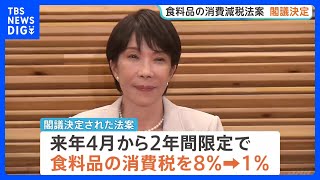
One of the government's biggest legislative priorities is a plan to reduce the consumption tax on food for two years. The measure will require legislation to pass the Diet, leaving Takaichi with only a limited period in which to secure agreement before her diplomatic schedule becomes increasingly demanding in November.
Personnel choices within the government also suggest that tax policy has been placed near the top of the agenda. Several ministers, including those responsible for digital affairs, the environment and public safety, have experience on the Liberal Democratic Party's Tax System Research Commission. Senior figures within the commission have largely remained in place, giving the government a group of lawmakers familiar with the technical and political difficulties of changing the consumption tax.
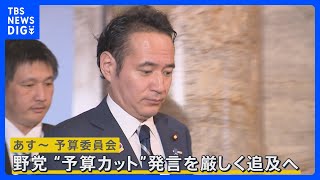
The timetable has been further complicated by controversy surrounding Agriculture Minister Yanagi, who apologized at the Diet on October 5 over remarks made during an election campaign.
Yanagi had said that road budgets were cut in municipalities where voters did not support the LDP. Audio recordings of the remarks later circulated online and were obtained by media organizations.
Yanagi acknowledged that the recordings were authentic but said he had never asked government ministries or agencies to reduce budgets. That effectively meant the claim he made during the election campaign was false.
He withdrew the remarks and apologized, saying he would work to restore public trust by carrying out his duties. He indicated that he intends to remain in office.
The controversy is particularly sensitive because it concerns the allocation of government funds and is expected to be raised during Diet budget deliberations, where Takaichi herself could face questioning.
Senior ruling-party figures had already expressed concern that Yanagi's claim to have "cut" a budget suggested an exercise of authority he did not possess. The remarks also risked being interpreted as a warning to voters that communities could lose government funding if they failed to support him.
Yanagi has repeatedly said his remarks had caused misunderstanding, but that explanation also drew criticism within the ruling camp. The political question now is whether his apology will be enough to contain the issue or whether opposition parties will continue pursuing it and disrupt the Diet schedule.
The electoral background adds another layer to the controversy. Yanagi represents Tochigi's 3rd district, an area that for many years was regarded as a stronghold of the Watanabe political family.
The constituency had long been associated with senior LDP politician Michio Watanabe and later his son Yoshimi Watanabe. After the family's dominance weakened, Yanagi emerged as one of the politicians competing for control of the district.
The seat has been closely contested. Yanagi won an election two years ago by just 178 votes, while his rival prevailed in an election in February. Because both camps draw support from conservative and former LDP voters, comments that appear to threaten communities over their voting behavior are particularly sensitive.
The government is also under pressure from the limited amount of parliamentary time available. If opposition parties slow or halt deliberations over the Yanagi affair, the government could struggle to advance its tax agenda before Takaichi begins spending substantial periods overseas.
November is expected to become a major month for diplomacy. Takaichi is scheduled to attend a series of international gatherings, subject to Diet approval for her travel, including ASEAN meetings, the Asia-Pacific Economic Cooperation summit hosted by China and the Group of 20 summit in Florida.
The China-hosted APEC meeting is expected to be especially important because of continuing tensions involving China, Taiwan and regional security.
Relations with Beijing have remained difficult following earlier remarks by Takaichi concerning Taiwan. China had previously demanded that Japan withdraw the remarks, although more recent Chinese language has shifted toward calling on Japan to "correct" its position rather than completely retract it.
Former Foreign Minister Takeshi Iwaya has also visited China through the Japan-China Economic Association and related channels, prompting debate over whether unofficial political contacts could help reopen dialogue or allow Beijing to exploit divisions within Japan.
Contacts between senior Japanese political figures and China had already been developing since May, suggesting Beijing was seeking alternative channels of communication even before Iwaya's visit.
Takaichi's government also sees its relationship with U.S. President Donald Trump as an important diplomatic asset. Takaichi spoke with Trump around recent U.S.-China summit diplomacy, giving Tokyo a direct channel to Washington at a time when Japan is closely watching changes in U.S.-China relations.
Tokyo's calculations, however, also depend heavily on Trump's domestic political strength. With U.S. midterm elections approaching, Trump has begun an intensive campaign schedule across dozens of states, creating uncertainty over how much political leverage he will retain.
Japan is also watching political developments in Brazil, where a presidential runoff later in October could affect the balance of power in South America. A victory by a Trump-aligned candidate could shift the region's political direction and potentially influence Brazil's relationship with China, Russia and the BRICS framework.
Such a shift could also matter economically for Japan because South America holds large reserves of strategically important resources, including rare minerals.
Despite these potential advantages abroad, Takaichi continues to face a difficult parliamentary position at home. The ruling camp remains four seats short of a majority in the House of Councillors, meaning the government's ability to turn its promises into legislation will depend not only on opposition cooperation but also on discipline and unity inside the LDP.
Takaichi used her policy speech to stress "decision, challenge and execution." Whether she can put those principles into practice will depend heavily on how quickly she can advance the consumption tax proposal, contain the controversy surrounding Yanagi and navigate a demanding month of diplomacy without losing control of the Diet agenda.
Source: YOMIURI