News On Japan

Bulleting Up Mount Fuji? Just Don't Do It!

TOKYO - Japan has re-opened to overseas tourists, summer is here and the official climbing season for Mount Fuji is about to start, but authorities are urging caution when making an assault on Japan’s highest mountain.

Restrictions on movement that applied during the COVID-19 pandemic have been lifted and authorities are expecting a surge in climbers when the iconic symbol of Japan officially opens its scaling season on July 1.

Local authorities fear dangan tozan, literally bullet mountain climbing, which is the term used to describe scaling the 3,776.24 m-high mountain overnight without taking a rest.

Opponents of the rest-free climbs, which the Council for the Promotion of the Proper Use of Mt. Fuji estimates account for one third of all people who scale Japan’s highest mountain, say that it increases the likelihood of altitude sickness and accidents, as well as leads to crowding on the mountain trails. And some say the bullet climbers make the mountain dirtier because they leave their trash there.

Most bullet climbers are looking to climb to the top of the mountain to watch the sunrise from the summit or thereabouts, so start climbing in the early evening to time their arrival for the following dawn. Climbs usually take several hours to complete, and though getting up Mount Fuji is not extreme in terms of mountaineering ability, it is physically demanding. This year marks the first unrestricted climbing season on Mount Fuji since 2019.

Bullet climb opponents are urging people to leave early and stay in one of the huts on the mountain trails, getting a good rest and acclimatizing, and then waking early to resume climbing to watch the sun come up the following morning.

“We’re delighted that lots of people want to climb, but it all becomes nothing if there is an accident,” Osamu Nakamura, chairman of the Mt. Fuji Yoshidaguchi Ryokan Kumiai, an association of managers of huts on Mount Fuji, told Sankei News. “Have fun without overdoing it.”

The association website argues that: “Climbing overnight increases the risk of accidents and altitude sickness because of exhaustion.”

The mayor of Fujiyoshida, the municipality where most of Mount Fuji is located, has formally requested the Tourism Agency to ensure people take steps to climb safely and end the bullet climbing practice. And Yamanashi Prefectural Police are urging people to prepare properly for the climb and not treat it as little more than an extended walk in the park.

Mount Fuji is Japan’s most sacred mountain. June 22 marks the 10th anniversary since Mount Fuji was added to UNESCO’s World Heritage Site list.

The official climbing season for Mount Fuji starts on July 1 and ends on September 10.

News On Japan
POPULAR NEWS

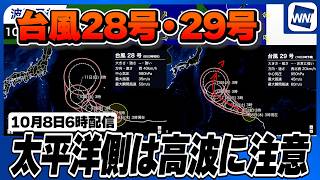
Typhoon Nos. 28 and 29 are expected to remain well away from Japan, but waves of 3 to 4 meters could reach parts of the country's Pacific coast from around October 10, with Typhoon No. 28 moving west near Minamitorishima at about 40 kilometers per hour as of 6 a.m. on October 8.

Tokyo University of Science professor emeritus Kenzo Soai has been awarded this year's Nobel Prize in Chemistry together with French chemist Henri B. Kagan for discoveries that transformed scientists' understanding of how chemical reactions can favor one of two mirror-image forms of a molecule.

The US military suspended activities by all forces stationed in Okinawa for 48 hours from noon on October 7, an unusual measure following the arrest of a US Marine in connection with a robbery and murder case that has renewed scrutiny of crimes involving American service members.

A core member of the international ransomware group Qilin was detained in Japan and handed over to German authorities, according to people familiar with the case, as Japanese companies and institutions face a growing wave of cyberattacks that has exposed nearly 15 million pieces of personal information this month alone.

New Year postcards for 2027 arrived at post offices across Hokkaido on October 6, with designs featuring sheep for the upcoming Year of the Sheep as Japan's traditional New Year card market continues to shrink.

MEDIA CHANNELS
         

MORE Travel NEWS

Tokyo's Bunkyo Ward will expand restrictions on private lodging businesses across the entire ward from January 2027 after the ward assembly approved an ordinance amendment on October 7 aimed at tightening controls on minpaku short-term rentals.

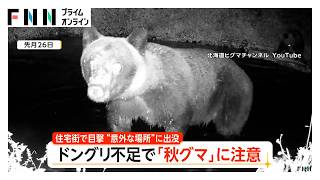
Bears are becoming increasingly active across Japan ahead of winter, with poor acorn harvests in parts of the country raising concerns that hungry animals may venture closer to homes and tourist areas in search of food.

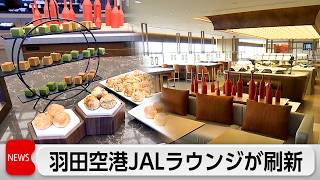
Japan Airlines has revamped its domestic lounge at Tokyo's Haneda Airport, adding private workspaces, meal options timed to passengers' departures and facilities for families as it seeks to meet the needs of an increasingly diverse range of travelers.

Fans from across Japan gathered in Furano, Hokkaido, on October 3 to visit filming locations from the television drama "From the Northern Country," marking the first weekend since the death of the series' screenwriter, So Kuramoto.

Young men leaped onto horses racing at full speed through the grounds of Kasuga Shrine in Takahama, Aichi Prefecture, on October 3 as the city's traditional Takahama Omanto Festival got underway.

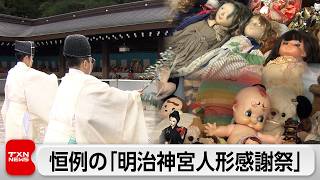
Around 38,000 dolls, including traditional Japanese dolls and stuffed animals, were brought to Meiji Shrine in Tokyo's Shibuya Ward for the annual Doll Appreciation Festival, where visitors bid farewell to old and damaged dolls in a ceremony expressing gratitude for the years they had been cherished.

Nearly one year after the Osaka-Kansai Expo closed, the former exhibition grounds were opened to the media on October 2, revealing that around 90% of the pavilions and other facilities have been demolished, while the Forest of Tranquility remains a peaceful green space at the center of the site.

Osaka will launch regular nighttime sightseeing cruises on October 3, offering visitors a new way to enjoy the city's illuminated waterfront, including the historic architecture of Nakanoshima and the skyline surrounding Osaka Castle.