News On Japan

Japan Emerges as Key Hub in Asia’s Expanding Data Center Industry

TOKYO - With the AI development race intensifying and Meta announcing a trillion-yen investment, data centers are gaining increasing attention.

Japan’s data center industry is entering a new phase of prominence, and a recent roundtable program shed light on the key players, rising demand, and structural challenges shaping the sector. KDDI, one of the nation’s largest telecom operators, underscored its role as a global leader, running more than 45 data centers across major cities worldwide. With over three decades of accumulated expertise, the company positions its experience as a decisive competitive strength. Executives explained that its facilities are widely used by internet-based firms and content providers, including some of the world’s biggest technology companies such as GAFA. They also noted that foreign clients make up a particularly large share of the business. While details about the type of information stored remain confidential, the company acknowledged that data centers play an essential role in protecting highly sensitive material, highlighting their strategic importance not just for commercial needs but also for broader security concerns.

Alongside operators, consultants are playing a critical role in mapping out the industry’s trajectory. Sugiura Hidetaka, who heads RSI, a firm specializing in data center consulting, pointed out that Asia is one of the most closely watched regions in the global market. Excluding China, Japan stands out as the country attracting the greatest interest, reflecting both its economic stability and the rising appetite for secure and advanced digital infrastructure. The discussion also turned to the immense costs involved in expanding capacity. When asked how much it might cost to build a data center with the footprint of four soccer fields, estimates ranged between 20 billion and 40 billion yen, and that figure covers only the construction of the building itself. Such figures underline the sheer scale of financial commitment required to sustain the industry’s growth.

The program further explored the technological backbone of modern data centers, particularly in the era of artificial intelligence. One central theme was the fierce global competition to acquire NVIDIA’s cutting-edge GPUs, essential for running AI workloads. The latest Blackwell line has achieved nearly 1,000-fold performance improvements over the past eight years, driving companies worldwide into an intense procurement race. At the same time, experts stressed that hardware is only one part of the equation. Finding suitable locations for new facilities is becoming just as critical, given the massive amounts of electricity data centers consume. Northern Kanto was cited as one area where development potential still exists, with land and energy resources considered promising for future construction projects.

Industry observers also emphasized that the landscape is no longer limited to established giants. In Japan, new domestic firms are beginning to enter the sector, some aiming to build large-scale facilities for the first time. This trend signals a diversification of players and suggests that competition and innovation within the market will intensify. The roundtable made clear that as data becomes the essential infrastructure of the digital economy, Japan is positioning itself as a critical hub, balancing global demand, national security considerations, and the technological race underpinning the AI era.

Source: テレ東BIZ

News On Japan
POPULAR NEWS

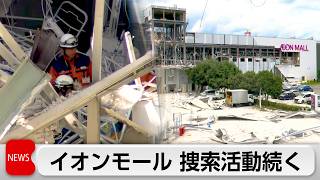
Three women have been confirmed dead and four employees remain unaccounted for after a powerful explosion tore through Aeon Mall Kumamoto in Kashima, Kumamoto Prefecture, following the magnitude 7.1 earthquake that struck the region on July 28.

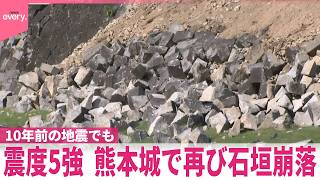
A powerful earthquake that registered the maximum seismic intensity of 7 in Kumamoto Prefecture on July 28 caused stone walls to collapse at 28 locations within Kumamoto Castle, reviving painful memories among residents who experienced the devastating earthquakes a decade ago.

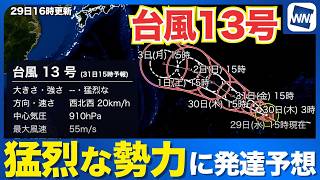
Typhoon No. 13 (Dolphin) continued to intensify over the Marshall Islands on July 29 and is forecast to become a violent typhoon by July 31 before approaching the Ogasawara Islands early next week, potentially bringing severe winds, high waves and other effects to Japanese territory.

Prime Minister Sanae Takaichi said on July 29 that 13 people had died following the powerful earthquake that registered the maximum seismic intensity of 7 in Kumamoto Prefecture, including cases still being investigated for a possible connection to the disaster.

Temples that have long shaped Japanese life and culture are increasingly closing and being put up for sale as falling numbers of parishioners and a shortage of successors leave many religious institutions unable to continue operating.

MEDIA CHANNELS
         

MORE Business NEWS

Tokyo stocks diverged sharply on July 29, with the Nikkei 225 closing at 61,434.19, down 930.73 points, or 1.49%, as selling in artificial intelligence and semiconductor-related heavyweights continued, while the broader TOPIX rose as investors bought back banks, domestic-demand shares and selected value stocks.

Japan's national average minimum wage is set to rise by 55 yen, or 4.9%, to 1,176 yen per hour in fiscal 2026 after a labor ministry panel agreed on guidelines for this year's increase.

The Nikkei Stock Average plunged 2,566.27 yen, or 3.9%, to close at 62,364.92 on July 28 as a sharp fall in South Korean stocks and growing concerns over intensifying competition in the global semiconductor industry triggered heavy selling in artificial intelligence and chip-related shares.

Japan is unlikely to end its heavy reliance on Middle East crude oil, even as geopolitical tensions expose the risks of depending on the region for more than 90% of its imports, leaving the country to pursue a gradual mix of diversification, electrification, renewable energy and technological innovation.

Tokyo stocks rebounded on July 27, with the Nikkei 225 closing at 64,931.19, up 320.04 points, or 0.50%, as easing concern over the Middle East conflict supported broad buying across domestic-demand and value shares, although semiconductor weakness continued to cap the market’s recovery.

Honda Motor and Nissan Motor have entered final-stage negotiations to jointly develop an operating system that will serve as the core software for their next-generation vehicles, with an agreement targeted by the end of August.

Japanese investors may be starting to redirect money from semiconductor and memory-related stocks toward automakers and other value shares, as concerns grow that soaring memory prices, increased Chinese production and the search for cheaper suppliers could weaken the technology rally.

Japanese business leaders voiced concern over new additional tariffs imposed by the administration of U.S. President Donald Trump, warning that the measures could damage global manufacturing and undermine free trade.