News On Japan

What is Hitachi's Strategy Under Trump's Tariffs?

TOKYO, Sep 17 (News On Japan) - Hitachi has opened a new railcar factory in Maryland that showcases how Japanese companies are adapting to U.S. trade policies under President Trump. The plant departs from traditional track-based assembly, using laser-guided vehicles that carry train bodies freely around the floor.

This approach allows more flexible production and safer working conditions by removing fixed rails and reducing the need for cranes.

The facility also makes extensive use of digital technology and artificial intelligence. A Boston Dynamics robot inspects completed car bodies for scratches, offering consistent quality checks while reducing reliance on human judgment. Three-dimensional scanners are used to confirm whether complex parts are manufactured in line with design specifications, improving precision and efficiency.

Hitachi invested about $100 million, or 15 billion yen, in the Maryland plant, with roughly 30 percent dedicated to digital systems. The factory will supply 256 railcars for the Washington Metro and more than 600 units across North America.

Beyond railcars, Hitachi is expanding its U.S. presence. On September 5th, the company announced an additional $1 billion (about 150 billion yen) investment. Of this, $457 million will go toward building a new plant in Virginia to produce large power transformers, responding to growing demand from data centers and other industries. The move signals Hitachi’s broader strategy of leveraging tariffs as a chance to strengthen its position in the American market.

Source: テレ東BIZ

News On Japan
POPULAR NEWS

The Japanese government on April 21 revised the Three Principles on Transfer of Defense Equipment and related guidelines, in principle allowing the export of weapons with lethal capabilities. The move marks a major turning point in Japan's postwar security policy.

Footage released by the Nagano Prefectural Police mountain rescue unit captured the moment an earthquake struck during an operation to save two climbers who had fallen on a steep slope of Mount Shirouma in the Northern Alps.

Japan's weather agency and the Cabinet Office issued a 'Hokkaido-Sanriku Offshore Subsequent Earthquake Advisory' after an earthquake measuring upper 5 on Japan's seismic intensity scale struck off Sanriku.

JR East has launched a preview version of its new online Shinkansen booking platform, JRE GO, promising reservations in as little as one minute and easier handling of sudden schedule changes.

A bear that had remained in a residential area in central Sendai since early Sunday morning was euthanized last night in an emergency cull. No injuries were reported.

MEDIA CHANNELS
         

MORE Business NEWS

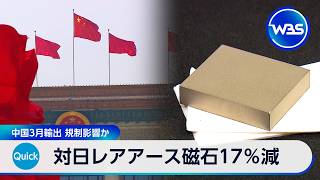
China's exports of rare-earth magnets to Japan in March fell 17.3% from the previous month to 184 tons, China's General Administration of Customs said on April 20.

A shortage of naphtha, a key petrochemical feedstock used in a wide range of products, is pushing up the cost of housing materials in Japan and raising concerns that home prices could climb by as much as 30%.

Running a business with integrity and good values is the highest road most owners strive to be on. However, sometimes being good isn’t enough to spare you from legal trouble.

TOTO said on April 16 that it will gradually resume new orders for its unit bath products from April 20 after securing a clearer outlook for raw material procurement.

Tokyo’s and Osaka’s flagship theme parks are both marking their 25th anniversaries this year, raising expectations that milestone celebrations could provide a boost to visitor numbers and earnings.

As tensions in the Middle East continue, 42 vessels linked to Japan remain stranded in the Persian Gulf, raising concerns over supply chains for naphtha, a key raw material used in plastics and coatings, with manufacturers warning that prolonged disruptions could drive up prices for everyday goods and housing materials.

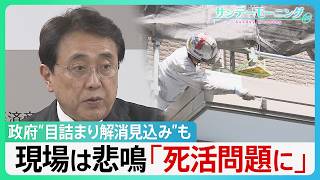
The Japan Painting Contractors Association has requested the government to secure stable supplies of materials, warning that concerns over shortages of paint and thinner derived from naphtha have become increasingly severe.

Crude oil futures surged sharply as concerns over supply disruptions intensified amid renewed uncertainty surrounding the situation in Iran, pushing prices above $105 per barrel on April 12th and driving Japan long-term interest rates—represented by the benchmark 10-year government bond yield—to their highest levels in nearly three decades.