TOKYO - Amid deepening labor shortages, AI and robots are undergoing rapid and remarkable advances, raising a pressing question for businesses and workers alike: are they a threat that will take jobs, or partners that expand human potential?
At one of Japan’s largest robot exhibitions held last month at Tokyo Big Sight, a humanoid robot developed by a Chinese company drew particular attention as it delivered swift punches and agile movements, while a four-legged robot demonstrated the ability to traverse rough terrain and obstacles with ease. Their high mobility has already led to deployment in real-world operations, with construction firm Noikegumi introducing such robots to survey tunnel construction sites, replacing workers in hazardous inspections and improving safety at worksites. Company officials said that as labor shortages intensify across industries, robots capable of performing tasks on behalf of humans will become increasingly commonplace, pointing toward a future in which people and robots work side by side.
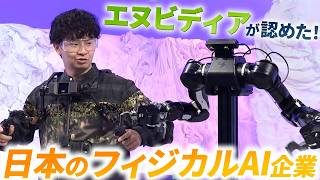
Japanese companies are also pursuing their own strategies in a field led by the United States and China. Startup Donut Robotics has developed a robot called Cinnamon 1 that can be controlled entirely through gestures, allowing operators to direct it in noisy environments such as factories and construction sites without voice commands. The robot approaches when beckoned, stops on signal, and retreats when waved away. While the unit costs about 18 million yen to purchase outright, leasing options are available for a monthly fee comparable to a human salary, with the added advantage of 24-hour operation.
According to Jun Inoue, a professor at Komazawa University, the progress of AI is already beginning to affect employment, particularly in clerical and programming roles. He described the United States as having entered an “AI unemployment era” around 2025, with reductions seen especially among younger office workers. Inoue defines advanced AI as a system capable of performing many tasks typically handled by an average office worker on a computer, suggesting further changes are likely as technology advances.
AI is also spreading into creative fields. CyberAgent has developed a system that predicts the effectiveness of advertising by analyzing elements such as composition, layout, and background, automatically generating optimized ads. Since introducing AI into banner production, the number of ads produced per creator has increased sevenfold, significantly boosting productivity. Company staff said AI should not be viewed as replacing creative work but as a tool that expands creativity.
The technology is even entering recruitment. Startup Props has developed an AI interviewer named Miku that generates questions and evaluations in real time based on a company’s hiring policies and job requirements. The system is already in use at more than 40 firms and is valued for drawing out honest responses from applicants, who may feel less pressure to tailor answers compared with interviews conducted by human recruiters.
Elsewhere, AI is being used to refine human skills. Technology developed by Aculity captures motion data from four cameras and converts full-body movements into numerical data. Mazda has adopted this motion-capture system to train workers in metal-processing techniques required to achieve the company’s signature smooth vehicle designs. By analyzing the movements of experienced craftsmen and comparing them with those of beginners, Mazda aims to shorten the time needed to master such skills from about 20 years to five.
Inoue noted that while AI can generate ideas, it cannot determine whether they are truly beneficial for people, making human judgment essential. He emphasized that deciding what is needed for society and proposing new products or services remain key human roles in the AI era.
Recent developments in the United States have underscored concerns about AI’s impact on employment. Shares in some software companies fell sharply after an AI startup released tools capable of automating tasks traditionally handled by IT service firms, raising fears that certain types of software could become unnecessary. Government data also suggests that occupations such as general office work, accounting, reception services, programming, and graphic design are highly susceptible to AI substitution, while jobs requiring physical presence, such as policing, firefighting, construction, and cooking, are less likely to be affected.
Although hiring for software developers and clerical roles in the United States has declined since peaking in 2022, some analysts argue that while AI will replace certain tasks quickly, broader employment impacts across the economy may take longer to materialize. The key challenge, they say, will be ensuring that workers can transition smoothly into new roles and that companies can harness AI to enhance productivity rather than simply replace labor.
As AI and robots continue to advance, the debate over whether they will displace workers or complement them is likely to intensify, leaving businesses, policymakers, and employees grappling with how best to adapt to a rapidly changing workplace.
Source: TBS