News On Japan

Japan Faces Shortage of Medical Supplies

TOKYO, Apr 07 (News On Japan) - Rising tensions in the Middle East are raising concerns over potential disruptions to medical supplies in Japan, particularly due to uncertainty surrounding naphtha used in products such as gloves and gowns, with hospitals warning that a halt in supply could significantly impact medical care while authorities move to reassure that stockpiles are sufficient for the time being.

At Chiba University Hospital, where large volumes of medical materials are stored, hospital director Seiji Otori pointed to everyday items such as gloves as examples of products heavily reliant on petroleum-based raw materials.

Otori: "These are standard gloves, but they are representative of petroleum-based, naphtha-derived products."

Naphtha is a key raw material used in plastics, and concerns have emerged that instability in the Middle East could affect its supply, prompting unease within the medical sector.

Otori: "Gloves are changed for each patient contact, so we use them in enormous quantities. If supply were to stop, it would not be an exaggeration to say that all medical care could come to a halt."

While there are currently no disruptions to supply, the hospital has received notifications from suppliers indicating the possibility of shipment restrictions for items such as gloves and gowns.

Otori: "We have not yet been told that we are short of supplies, but there is a possibility going forward, so it is important to establish a system for sharing information."

Amid these concerns, Health, Labour and Welfare Minister Kenichiro Ueno announced on April 7th that a consultation service for medical institutions will be established.

Ueno: "We have been informed that for naphtha, including medical use, at least four months’ worth of domestic demand for chemical products overall has been secured."

He added that increasing imports of naphtha from regions outside the Middle East could extend stockpiles to more than six months.

However, medical institutions are also increasingly concerned about rising costs, as procurement prices for medical products may increase.

In Japan, medical service fees are set by the government, meaning hospitals cannot freely raise consultation fees even if costs rise, leaving many institutions vulnerable to financial strain.

With inflation already placing pressure on hospital management, Chiba University Hospital has implemented measures such as reducing electricity usage.

Otori: "I do not think prices will suddenly rise, but if they do, there is a possibility that hospitals will fall back into structural deficits. I feel this is a crisis in healthcare."

Source: TBS

News On Japan
POPULAR NEWS

JR East has launched a preview version of its new online Shinkansen booking platform, JRE GO, promising reservations in as little as one minute and easier handling of sudden schedule changes.

A 37-year-old father arrested over the alleged abandonment of his son's body in a forest in Kyoto Prefecture may have contacted associates to say the child had gone missing before the boy's school informed the family, investigators said.

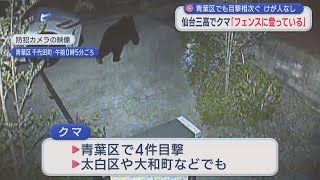
A bear that had remained in a residential area in central Sendai since early Sunday morning was euthanized last night in an emergency cull. No injuries were reported.

Police investigating the death of an 11-year-old boy whose body was found in a forest in Kyoto Prefecture believe his father moved the remains between several locations over a number of days in an apparent attempt to conceal the crime.

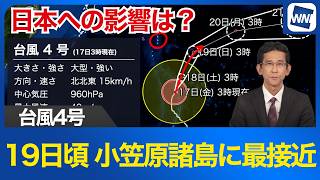
A large and powerful Typhoon No. 4, internationally named Sinlaku, was located near the Mariana Islands and moving north-northeast as of the latest update. The storm is expected to gradually shift its course eastward and pass southeast of the Ogasawara Islands around April 18, before making its closest approach around April 19.

MEDIA CHANNELS
         

MORE Sci-Tech NEWS

Japan's logistics sector is struggling with a severe driver shortage, driving efforts to develop autonomous trucks as a potential solution to a growing freight transport crisis.

The fleet of 190 EV buses introduced for the Osaka-Kansai Expo has been withdrawn from plans for reuse on regular routes, with Osaka Metro abandoning efforts to redeploy the vehicles after the event.

Chinese smartphone maker OPPO announced it will release its foldable smartphone “OPPO Find N6” in Japan on April 15th, marking the company’s first entry into the country’s foldable device segment.

An event aimed at bringing the mysteries of the deep sea closer to the public was held in Nago City, where a researcher who has explored oceans around the world delivered a talk.

The Japan Maritime Self-Defense Force will withdraw from Antarctic research vessel operations after nearly six decades, with private-sector entities expected to take over following the retirement of the icebreaker Shirase in fiscal 2034.

As temperatures rise, concerns about body odor return, drawing attention to a lesser-known scientific field that examines the invisible gases emitted from human skin, with Tokai University professor Yoshika Sekine leading research that could even help detect disease and stress levels.

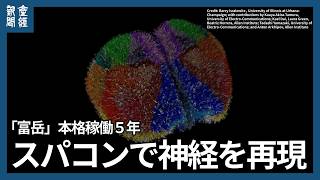
Five years have passed since Japan’s flagship supercomputer Fugaku, based in Kobe, began full-scale operations, achieving a series of breakthroughs by simulating complex phenomena on a massive and highly precise scale, ranging from the formation of galaxies to the behavior of nerve cells.

Rising tensions in the Middle East are raising concerns over potential disruptions to medical supplies in Japan, particularly due to uncertainty surrounding naphtha used in products such as gloves and gowns, with hospitals warning that a halt in supply could significantly impact medical care while authorities move to reassure that stockpiles are sufficient for the time being.