News On Japan

Japan's Supercomputer 'Fugaku' Expands Frontiers in Science After Five Years

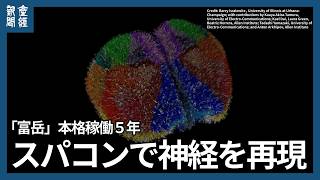
KOBE, Apr 07 (News On Japan) - Five years have passed since Japan’s flagship supercomputer Fugaku, based in Kobe, began full-scale operations, achieving a series of breakthroughs by simulating complex phenomena on a massive and highly precise scale, ranging from the formation of galaxies to the behavior of nerve cells.

Developed jointly by RIKEN and Fujitsu, Fugaku was designed to handle complex phenomena at unprecedented scale, enabling researchers to analyze processes that are difficult or impossible to observe directly. The system, named after Mount Fuji, reflects Japan’s ambition to lead in next-generation computing.

At the core of Fugaku is Fujitsu’s A64FX processor, an ARM-based chip that integrates high-bandwidth memory, allowing the system to achieve both speed and efficiency without relying heavily on GPUs. With more than 150,000 compute nodes, Fugaku delivers peak performance of approximately 442 petaflops, placing it among the most powerful supercomputers ever built.

Fugaku gained global recognition in 2020 by ranking first in all four major supercomputer benchmarks, including the TOP500 for overall performance, highlighting its balanced capabilities in simulation, artificial intelligence, and data analytics.

The system has played a central role in a wide range of research areas, including simulations of galaxy formation, detailed modeling of proteins and viruses, and high-resolution studies of neural networks. In Japan, it has also been used to improve disaster preparedness through earthquake and tsunami simulations tailored to local conditions.

Fugaku drew widespread public attention during the COVID-19 pandemic, when it was used to simulate the spread of airborne droplets in indoor environments, contributing to guidance on mask usage and ventilation.

Beyond academia, Fugaku has been made available to private-sector users, supporting applications such as drug discovery, automotive design, and climate risk analysis, reflecting a broader push to integrate high-performance computing into industry.

Looking ahead, development has begun on a successor system tentatively named Fugaku NEXT, aimed at achieving exascale performance and further advancing the integration of artificial intelligence and large-scale simulation, with expectations that it will open new frontiers in both scientific research and industrial innovation.

Source: 産経ニュース

News On Japan
POPULAR NEWS

JR East has launched a preview version of its new online Shinkansen booking platform, JRE GO, promising reservations in as little as one minute and easier handling of sudden schedule changes.

A 37-year-old father arrested over the alleged abandonment of his son's body in a forest in Kyoto Prefecture may have contacted associates to say the child had gone missing before the boy's school informed the family, investigators said.

A bear that had remained in a residential area in central Sendai since early Sunday morning was euthanized last night in an emergency cull. No injuries were reported.

Police investigating the death of an 11-year-old boy whose body was found in a forest in Kyoto Prefecture believe his father moved the remains between several locations over a number of days in an apparent attempt to conceal the crime.

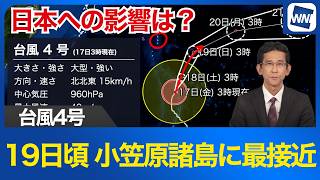
A large and powerful Typhoon No. 4, internationally named Sinlaku, was located near the Mariana Islands and moving north-northeast as of the latest update. The storm is expected to gradually shift its course eastward and pass southeast of the Ogasawara Islands around April 18, before making its closest approach around April 19.

MEDIA CHANNELS
         

MORE Sci-Tech NEWS

Japan's logistics sector is struggling with a severe driver shortage, driving efforts to develop autonomous trucks as a potential solution to a growing freight transport crisis.

The fleet of 190 EV buses introduced for the Osaka-Kansai Expo has been withdrawn from plans for reuse on regular routes, with Osaka Metro abandoning efforts to redeploy the vehicles after the event.

Chinese smartphone maker OPPO announced it will release its foldable smartphone “OPPO Find N6” in Japan on April 15th, marking the company’s first entry into the country’s foldable device segment.

An event aimed at bringing the mysteries of the deep sea closer to the public was held in Nago City, where a researcher who has explored oceans around the world delivered a talk.

The Japan Maritime Self-Defense Force will withdraw from Antarctic research vessel operations after nearly six decades, with private-sector entities expected to take over following the retirement of the icebreaker Shirase in fiscal 2034.

As temperatures rise, concerns about body odor return, drawing attention to a lesser-known scientific field that examines the invisible gases emitted from human skin, with Tokai University professor Yoshika Sekine leading research that could even help detect disease and stress levels.

Five years have passed since Japan’s flagship supercomputer Fugaku, based in Kobe, began full-scale operations, achieving a series of breakthroughs by simulating complex phenomena on a massive and highly precise scale, ranging from the formation of galaxies to the behavior of nerve cells.

Rising tensions in the Middle East are raising concerns over potential disruptions to medical supplies in Japan, particularly due to uncertainty surrounding naphtha used in products such as gloves and gowns, with hospitals warning that a halt in supply could significantly impact medical care while authorities move to reassure that stockpiles are sufficient for the time being.