News On Japan

Burger King Japan’s V-Shaped Recovery

TOKYO, Apr 10 (News On Japan) - In November 2025, a major development shook Japan’s food service industry when U.S. financial giant Goldman Sachs acquired all shares of BK Japan Holdings, which runs Burger King’s Japan operations, for 80 billion yen.

The price marked a more than 50-fold increase from the roughly 1 billion yen valuation when a Hong Kong investment fund acquired the business in 2017, highlighting the brand’s remarkable turnaround over just eight years.

Behind this resurgence lies a marketing strategy that smaller companies can also learn from, built on what is known as the “five principles of BK-style marketing.”

Burger King first entered Japan in 1993 but struggled for years, with franchise rights repeatedly changing hands before the company fully withdrew from the market in 2001, earning a reputation as a failed foreign brand. Although it re-entered Japan in 2007, it remained unprofitable for years.

The turning point came around 2019, when sales began to grow steadily, and the number of stores expanded to 337, achieving a V-shaped recovery after years of losses.

This comeback was led by Kazuhisa Nomura, CEO of BK Japan Holdings, who implemented a marketing strategy centered on social media.

The first principle is “If you lack money, use creativity.” When opening a new store in Shimokitazawa with limited advertising budget, the company spotted a social media post from a user asking Burger King to open a branch there. Burger King replied in Kansai dialect, “We’re building it,” and turned the exchange into a large poster displayed at the construction site, generating major buzz at zero cost.

The second principle is “Ask customers.” Instead of spending heavily to find new locations, Burger King offered 100,000 yen to anyone who introduced a suitable vacant property via social media. The campaign drew around 78,000 submissions nationwide, directly contributing to store expansion.

The third principle is “Embrace being teased.” A deformed prototype burger was humorously marketed as the “Ugly Burger,” turning self-deprecation into a hit product by creating authenticity and relatability.

The fourth principle is “Exaggerate and provoke.” On the day a nearby McDonald’s outlet closed, Burger King displayed a “Thank You” poster. However, when read vertically, it revealed a hidden message: “Our victory,” sparking attention with its bold challenge to the dominant competitor.

The fifth principle is “Support strategy with logic.” Burger King’s defining strength lies in its flame-grilling method, which competitors cannot easily replicate. To emphasize this authenticity, the company avoids using computer graphics in its advertisements, instead showcasing real, flame-grilled products.

This blend of playful creativity and calculated strategy has enabled Burger King to turn its fortunes around, demonstrating how unconventional marketing can deliver tangible results even in a highly competitive market.

Source: テレ東BIZ

News On Japan
POPULAR NEWS

JR East has launched a preview version of its new online Shinkansen booking platform, JRE GO, promising reservations in as little as one minute and easier handling of sudden schedule changes.

A 37-year-old father arrested over the alleged abandonment of his son's body in a forest in Kyoto Prefecture may have contacted associates to say the child had gone missing before the boy's school informed the family, investigators said.

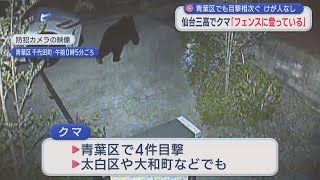
A bear that had remained in a residential area in central Sendai since early Sunday morning was euthanized last night in an emergency cull. No injuries were reported.

Police investigating the death of an 11-year-old boy whose body was found in a forest in Kyoto Prefecture believe his father moved the remains between several locations over a number of days in an apparent attempt to conceal the crime.

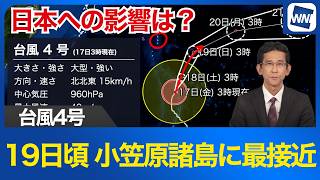
A large and powerful Typhoon No. 4, internationally named Sinlaku, was located near the Mariana Islands and moving north-northeast as of the latest update. The storm is expected to gradually shift its course eastward and pass southeast of the Ogasawara Islands around April 18, before making its closest approach around April 19.

MEDIA CHANNELS
         

MORE Business NEWS

A shortage of naphtha, a key petrochemical feedstock used in a wide range of products, is pushing up the cost of housing materials in Japan and raising concerns that home prices could climb by as much as 30%.

Running a business with integrity and good values is the highest road most owners strive to be on. However, sometimes being good isn’t enough to spare you from legal trouble.

TOTO said on April 16 that it will gradually resume new orders for its unit bath products from April 20 after securing a clearer outlook for raw material procurement.

Tokyo’s and Osaka’s flagship theme parks are both marking their 25th anniversaries this year, raising expectations that milestone celebrations could provide a boost to visitor numbers and earnings.

As tensions in the Middle East continue, 42 vessels linked to Japan remain stranded in the Persian Gulf, raising concerns over supply chains for naphtha, a key raw material used in plastics and coatings, with manufacturers warning that prolonged disruptions could drive up prices for everyday goods and housing materials.

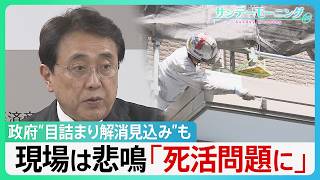
The Japan Painting Contractors Association has requested the government to secure stable supplies of materials, warning that concerns over shortages of paint and thinner derived from naphtha have become increasingly severe.

Crude oil futures surged sharply as concerns over supply disruptions intensified amid renewed uncertainty surrounding the situation in Iran, pushing prices above $105 per barrel on April 12th and driving Japan long-term interest rates—represented by the benchmark 10-year government bond yield—to their highest levels in nearly three decades.

Bank of Japan Governor Kazuo Ueda warned on April 14th that rising crude oil prices driven by escalating tensions in the Middle East could act as a drag on Japan’s economy, signaling growing concern within the central bank over external cost pressures.