News On Japan

How Should Society Navigate the AI Era?

TOKYO - Generative artificial intelligence is rapidly becoming part of everyday life, helping people with everything from studying and work-related tasks to choosing travel destinations and seeking relationship advice, raising questions about how society should engage with a technology that is evolving faster than ever.

Interviews conducted across Japan revealed that AI is now being used in a remarkably wide range of situations. Students rely on it to help with schoolwork, office workers use it to streamline tasks, and others turn to it for recommendations on where to go, what to eat, and even how to handle personal relationships.

While some users acknowledged that AI occasionally provides inaccurate information, many said they continue to depend on it because of its accessibility and convenience.

"When you ask people the same question over and over, they get annoyed," one respondent said. "AI never gets angry."

Others described AI as a judgment-free companion that is available at any time and capable of providing instant answers, making it increasingly attractive as a source of advice and information.

For some, AI has become deeply integrated into daily life. A 52-year-old man involved in computer-generated animation production said he regularly consults AI throughout the day using voice-enabled earphones. He asks for recommendations on where to shop, what to eat for lunch, and which restaurants to visit.

On one occasion, he even followed AI recommendations at a conveyor-belt sushi restaurant, ordering dishes in the exact sequence suggested by the system. He said allowing AI to make such decisions had become part of the experience.

At the same time, he eventually realized there were limits to what AI could provide.

"Even if I tell AI things I could never tell another person, it doesn't truly solve my problems," he said. "It can offer advice, but it can't resolve the issues individuals face in their lives."

Experts warn that as AI becomes more deeply embedded in everyday routines, excessive reliance on the technology could erode people's ability to think independently and make their own judgments.

The rapid spread of AI has also created new risks. In the United States, criminals have used AI-generated voices and other synthetic media in impersonation scams designed to deceive victims, prompting companies to develop technologies capable of detecting fake audio and other AI-generated content.

As AI continues to evolve and become an increasingly influential part of society, the challenge is no longer whether people will use it, but how they can do so responsibly. Finding the right balance between convenience and critical thinking may prove to be one of the defining issues of the AI age.

Source: FNN

News On Japan
POPULAR NEWS

As of 9 p.m. on June 20, Typhoon No. 7 (Mekkhala) was gradually developing over waters far south of Japan and is expected to strengthen into a strong typhoon early next week before possibly moving toward the Sakishima Islands, while moist air around the storm could later feed a rainy season front stalled near Honshu and raise the risk of heavy rain across western and eastern Japan.

Japan will face Tunisia in its second match of the FIFA World Cup 2026 on June 21 in Monterrey, a northern Mexican city known for its mountains, modern skyline and unexpectedly strong connections with Japan.

Mosquitoes are appearing earlier than usual this year, raising fears of a major summer outbreak as experts warn that warm May weather and repeated light rain have created ideal breeding conditions across residential areas.

Bear attacks and sightings are increasing across Japan, with multiple people injured on June 17 and experts warning that bears are becoming more accustomed to human environments, potentially leading to more dangerous and unpredictable encounters in the years ahead.

JR Central and JR West on June 17 announced pricing and service details for the new private-room seating that will be introduced on the Tokaido and Sanyo Shinkansen from October, creating a new top-tier class above the existing Green Car service.

MEDIA CHANNELS
         

MORE Web3 NEWS

Osaka General Medical Center in Osaka's Sumiyoshi Ward has begun introducing artificial intelligence to strengthen its system for accepting patients during disasters, using electronic medical records to visualize in real time each patient's risk of deterioration and other key information so hospital beds can be coordinated more quickly.

Online entertainment holds attention because it blends speed, choice, and emotion in one screen.

A Tokyo exhibition is offering a look at 50 possible professions that could emerge in the AI age, from skin bacteria pharmacists who analyze microbes on the skin to ad walkers who use electronic textiles to deliver advertising while moving through the city.

IVS2026, one of Japan's largest startup events, will open in Kyoto on July 1, bringing together entrepreneurs and investors from Japan and abroad, with OpenAI, the U.S. developer of ChatGPT, taking part for the first time.

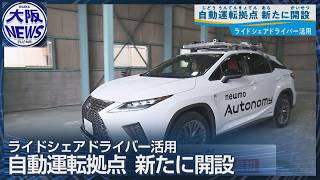
Taxi operator newmo has opened a data collection hub for autonomous driving in Osaka's Joto Ward, launching what the company says is Japan's first initiative to use ride-share services to gather road data for AI training.

When Token Extensions launched on Solana in early 2024, most coverage framed it as an incremental upgrade to the SPL token standard.

As international competition over artificial intelligence intensifies, Japan must pursue a strategy that secures its own technological independence while remaining connected to the global innovation ecosystem, according to a new policy proposal compiled by the ruling Liberal Democratic Party.

Artificial intelligence is being rapidly adopted by local governments across Tokyo, with municipalities using the technology for crime prevention, public services, and disaster management.