News On Japan

Japan Land Values Jump on Tourism Boom and Urban Renewal

TOKYO - Japan’s average roadside land price rose 2.9% from a year earlier, marking the steepest increase on record, as inbound tourism and redevelopment pushed up land valuations across the country.

The roadside land price, used as a benchmark for assessing land values and often seen as a barometer of the economy, has continued to climb each year. In Tokyo’s Ginza district, the assessed value in front of Kyukyodo stood at 53.36 million yen per square meter.

Kenichiro Yume, chief researcher at Urban Future Research Institute, said the scale of the increase was comparable to the period of Japan’s Heisei-era asset bubble. This year’s rise was the largest since 2010.

The area with the highest rate of increase nationwide was Hakuba Village in Nagano Prefecture, where land values rose 32.7% from the previous year. Hakuba is known as one of Japan’s leading ski destinations, and the increase is believed to have been driven by inbound tourism. The number of foreign visitors to Japan reached a record high last year.

In Tokyo, the biggest increase was recorded in Asakusa, another area popular with foreign tourists, where land values rose 27.5%. The growth in foreign visitors is believed to have lifted assessed values in tourist destinations around the country.

Other parts of Tokyo saw sharp gains for different reasons. Kitasenju in Adachi Ward ranked second in the capital with a 24.2% rise, while Nakano ranked third with a 22.4% increase.

Takao Kato, who has run Nogata Seika, a greengrocer in Nakano, for half a century, said the neighborhood has changed dramatically. "Nakano has changed completely. Atre is huge. With redevelopment, buildings have gone up, condominiums have gone up. It has changed. It makes you say, wow."

Footage of the Nakano area from about 30 years ago shows a streetscape far different from today. In addition to its convenient access, continuous redevelopment has increased Nakano’s value as a residential area, pushing up roadside land prices.

The rise is also affecting residents. A woman in her 30s said the rent for the condominium where she lives is being raised by about 50,000 yen. A university student in her 20s who gave up moving to the area said, "I thought it would be very convenient if I lived here," but added, "There were no properties left."

Eikichi Maeda, a room adviser at real estate company Layout, said condominium prices have also risen. "For condominiums, the price per tsubo is 7.259 million yen, up about 20%. Investors and buyers are often making purchases. There are also many people who continue living here with expectations for redevelopment."

Kitasenju, which ranked second in Tokyo, is also in the middle of redevelopment, with a series of tower condominiums being built. The question now is how long the rise in roadside land prices will continue.

Source: TBS

News On Japan
POPULAR NEWS

Dangerous heat is expected across a wide area from western to eastern Japan today, prompting authorities to issue heatstroke warning alerts for 17 prefectures, the highest number so far this year.

Japan has become an unexpected base of operations for Russian intelligence agents since Moscow’s invasion of Ukraine, with spies allegedly using the country to procure and smuggle high-tech equipment and other goods to Russia, The New York Times reported on July 12.

Convenience store operators in Japan are strengthening safety measures as bear-related damage grows more serious, with Lawson expanding the use of bear repellent spray and considering drone-based remote monitoring.

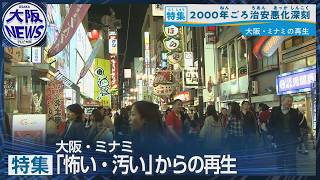
Osaka’s Minami district, now entering another period of major change with the planned opening of the Naniwasuji Line, the redevelopment of Midosuji and improvements around Nankai Namba Station, has transformed from an area once described as "scary" and "dirty" into one of Japan’s leading tourist destinations.

A 10-ton hoko float was pulled through central Kyoto on July 12 in a trial run ahead of the Yamahoko Junko procession during the Gion Festival's early parade.

MEDIA CHANNELS
         

MORE Business NEWS

Mitsubishi UFJ Financial Group became Japan's most valuable company for the first time on the Tokyo stock market on July 13, overtaking Toyota Motor as expectations grow that higher interest rates will lift bank earnings.

A debate over whether shorts belong in the workplace is spreading in Japan after Tokyo Governor Yuriko Koike encouraged metropolitan government employees to wear cooler clothing, including shorts, as part of efforts to cope with intensifying summer heat.

A 65-year-old man who spent 40 years working for a company was shocked to learn that his pension would amount to 168,000 yen a month, raising fresh concern over whether retirees in Japan can live on public pension payments alone.

Small supermarkets offering lower prices than convenience stores and closer access than full-size supermarkets are expanding rapidly across the Tokyo metropolitan area, as retailers race to meet demand from older consumers, single-person households and shoppers under pressure from rising prices.

A welfare facility in Fukuchiyama, Kyoto Prefecture, has begun preparations to sell about 220 giant stag beetles, one of Japan’s largest species, from July 13.

NTT Docomo will begin offering banking services under the new "Docomo Bank" brand in August, with plans to build a network of more than 1,500 locations by fiscal 2030, far exceeding the branch networks of Japan's major banks.

Japanese stocks rose for a second straight session on Friday, July 10, with the Nikkei Stock Average climbing 813.88 points to close at 68,557.73 after strong gains in U.S. technology and semiconductor stocks fueled renewed buying of AI-related shares.

Japan’s domestic Corporate Goods Price Index, which measures prices charged for goods traded between companies, rose 7.1% from a year earlier to 135.4 in June, the Bank of Japan said on July 10.