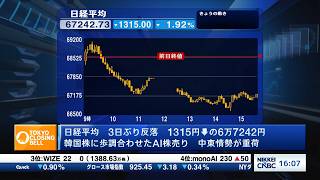
TOKYO - Tokyo stocks staged a sharp intraday reversal on July 3, with the Nikkei 225 rebounding from an early drop of more than 1,100 points to close more than 1,000 points higher as investors bought back semiconductor and AI-related shares while rotating into lagging value stocks.
The Nikkei 225 Stock Average closed at 69,744.07, up 1,010.92 points, or 1.47%, according to Nikkei Indexes. The index opened lower and briefly fell to 67,609.49 in morning trading before reversing course and rising to an intraday high of 69,788.03 late in the session.
The broader TOPIX rose 49.62 points, or 1.24%, to 4,064.60, extending its winning streak to five sessions and ending the week higher every day. The move showed that buying was not limited to Nikkei heavyweight technology shares, with money also flowing into banks, exporters, domestic demand names and stocks that had lagged earlier in the year.
Trading was extremely active. Prime Market turnover reached 10.8978 trillion yen, while 1,238 stocks rose and 295 declined, meaning nearly 80% of Prime Market issues advanced. The breadth confirmed that the July 3 rebound was broad despite continued volatility in semiconductor names.
Nikkei CNBC and NQN framed the session as a dramatic reversal from an overextended selloff. Tokyo shares initially followed weakness in U.S. semiconductor stocks after the Philadelphia Semiconductor Index fell about 5%, with SanDisk dropping 14% and Micron Technology falling 5%. But dip buyers soon emerged, especially in Japanese chip-related names that had been sold heavily the previous day.
Kioxia became the symbolic stock of the session. The memory chipmaker was down about 10% in the morning but reversed sharply to finish about 9% higher. Its intraday price range was around 17,000 yen, the second-largest on record, underscoring how speculative and short-term trading has become in Japan’s AI and memory-chip names.
The rebound in Kioxia helped lift the Nikkei after the stock had fallen more than 30% from its June high. Market participants said technical factors appeared to support the stock after it tested key moving-average levels, while expectations for earnings growth and interest in memory demand remained strong despite recent concerns about supply and valuations.
Tokyo Electron, Advantest and other semiconductor-related shares also recovered from early losses, while SoftBank Group showed resilience after morning weakness. SoftBank remains one of the most important sentiment gauges for Japan’s AI trade because of its exposure to OpenAI and global AI infrastructure investment.
At the same time, investors continued to buy lagging shares outside the semiconductor sector. Toyota Motor rose as automakers drew support from the weak yen, while Aeon gained about 4% after being one of the worst-performing Nikkei stocks so far this year. Sumitomo Pharma, real estate shares and trading houses also attracted buying as investors looked for companies that had been left behind during the first-half AI rally.
The rotation also extended to software and systems-related stocks, including NEC, Fujitsu and Nomura Research Institute. These shares had lagged while money concentrated in semiconductor names, but investors began buying them back as part of a return-reversal trade. U.S. gains in Microsoft, Salesforce and other non-chip technology names also helped support the shift.
Airline shares remained in focus after Nomura Securities upgraded Japan Airlines and ANA Holdings to buy, citing improved profitability from lower fuel procurement costs and continued price increases. Lower crude oil prices helped support fuel-sensitive stocks, even as the weak yen continued to raise import costs for Japan.
Banks were another major area of strength as Japanese government bond yields rose. The long-term yield climbed to around 2.810%, increasing expectations of improved lending margins and supporting buying in megabanks and regional banks. Large bank shares rose around 4%, while some regional bank stocks reached new highs.
The yen remained a central risk for markets. The dollar stayed around the 161-yen range after the Japanese currency recently touched its weakest level in about 40 years. Traders remained alert for possible Ministry of Finance intervention, especially as the weak yen continues to raise the cost of imported fuel, food and raw materials.
The bond market’s rise reflected the difficult policy mix facing the Bank of Japan. Investors are weighing whether the central bank will continue raising rates after lifting its policy rate to 1% in June. Some market participants are concerned that if the BOJ moves too slowly, inflation and yen weakness could become harder to control, but faster tightening could increase pressure on bonds and highly leveraged sectors.
On the economy, Japan’s services sector returned to growth in June. The S&P Global services purchasing managers’ index rose to 52.2 from 50.0 in May, while the composite PMI rose to 52.8, its strongest level in three months. The data pointed to improving domestic demand, transport activity and event-related spending.
However, cost pressures remained strong. Input prices rose at the fastest pace since June 2022, driven by higher energy, oil, food and labor costs. TV Tokyo’s business coverage has continued to focus on how prices, wages and import costs are affecting households and companies, particularly as yen weakness keeps pressure on living costs.
The global backdrop improved after the latest U.S. employment report was seen as “just right” for markets. Nonfarm payrolls increased by 57,000 in June, below market expectations of about 115,000, while previous months were revised lower. The unemployment rate remained low at 4.2%, suggesting the labor market was slowing but not collapsing.
The figures eased concern that the Federal Reserve would need to raise rates again, while avoiding a sharp increase in recession fears. U.S. long-term yields were little changed, the Dow Jones Industrial Average rose, and buying spread into consumer and industrial names such as McDonald’s, Disney, Boeing, Amgen and Honeywell.
That broader U.S. rotation helped Tokyo investors look beyond semiconductor volatility. South Korea’s Kospi also rebounded by about 6%, supporting sentiment across Asia and reinforcing the view that the previous day’s selloff had been at least partly a short-term position adjustment rather than a full market breakdown.
The main points to watch next are whether the Nikkei can reclaim and hold the 70,000 level, whether Kioxia and other semiconductor shares can stabilize after their violent swings, whether TOPIX continues to benefit from rotation into broader sectors, and whether the yen’s weakness prompts stronger warnings or direct action from the Ministry of Finance.
For Tokyo investors, the key question is whether the July 2 selloff was a temporary shakeout in an overheated AI trade or the start of a more volatile phase in which money rotates from semiconductor leaders into banks, exporters, software, airlines, trading houses and other value-oriented sectors.