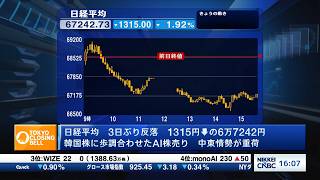
TOKYO - Tokyo stocks ended mixed on July 6 as profit-taking in AI and semiconductor-related shares kept the Nikkei 225 nearly flat, while broader buying in banks, value stocks and domestic demand names lifted the TOPIX to a fresh record high.
The Nikkei 225 Stock Average closed at 69,737.69, down 6.38 points, or 0.01%, according to Nikkei Indexes. The index opened at 69,973.34 and briefly climbed to 70,384.59 in early trading, but it failed to hold above the 70,000 line and later fell as low as 68,904.41 before recovering most of its losses by the close.
The broader TOPIX rose 37.36 points, or 0.92%, to 4,101.96, setting a fresh high and highlighting the continued rotation out of crowded technology names and into a wider range of Japanese shares. The divergence showed that investor money was not leaving the Tokyo market, but was becoming more selective after the recent AI-driven rally.
Nikkei CNBC framed the session as another test of whether the Nikkei can sustain a move above 70,000. After the sharp rebound on July 3, investors took profits in some of the stocks that had driven the first-half surge, while continuing to buy companies seen as beneficiaries of higher interest rates, lower oil prices and domestic demand.
AI and semiconductor-related shares remained under scrutiny after last week’s violent swings. Kioxia, Tokyo Electron, Advantest and SoftBank Group stayed in focus as investors watched whether the sector could stabilize after a sharp round of position adjustments linked to concerns over AI valuations and chip supply-demand conditions.
The broader market was supported by banks and other financial shares as Japanese government bond yields remained elevated. Higher long-term yields improve the earnings outlook for lenders by widening lending margins, helping megabanks and regional banks attract buying.
The yen remained one of the main risks for Japanese markets. Reuters reported that the currency hovered around 162.26 per dollar, close to its weakest level in about 40 years, as traders remained alert for possible intervention by Japanese authorities. The yen’s decline has been driven by the wide interest-rate gap between Japan and the United States and by expectations that Japan’s policy tightening will remain gradual.
The weak yen continues to create a difficult policy mix. It supports exporters and companies with large overseas earnings, but it also raises the cost of imported fuel, food and raw materials. That adds pressure on households and smaller companies, especially in sectors with limited ability to pass on higher costs.
Japanese government bond yields also remained a focus after recent rises in long-term rates. The bond market is weighing whether the Bank of Japan will continue normalizing policy after raising its benchmark rate to 1% in June, while the government tries to maintain growth momentum and encourage private investment.
On wages, Reuters reported that Japanese companies agreed to average pay increases of 5.01% in 2026, according to Rengo’s final tally. It was the third straight year that wage hikes topped 5%, supporting the BOJ’s view that Japan is moving toward a more durable wage-price cycle.
Even so, households remain under pressure from inflation. TV Tokyo’s business coverage has continued to focus on household budgets, asset protection, food prices and the impact of yen weakness, as consumers face higher costs even while nominal wages rise.
Oil prices offered some relief. Reuters reported that Brent crude fell toward a near four-month low after OPEC+ agreed to raise output by 188,000 barrels per day from August. Lower oil prices ease inflation pressure for Japan, which relies heavily on imported energy, and support fuel-sensitive sectors such as airlines, transport and logistics.
The global backdrop was cautiously positive. European stocks and U.S. futures edged higher as investors looked toward corporate earnings season, particularly for AI-related firms, while markets also awaited Federal Reserve minutes and U.S. services data. Technology shares remained a key risk after recent volatility in chipmakers.
The main points to watch next are whether the Nikkei can break decisively above 70,000, whether the TOPIX continues to lead through broader sector rotation, whether Kioxia and other semiconductor names stabilize, and whether the yen’s weakness forces stronger warnings or action from the Ministry of Finance.
For Tokyo investors, the July 6 session showed that Japan’s equity rally is changing shape. The market is no longer being driven only by AI and semiconductor leaders. Banks, insurers, exporters, domestic demand companies and fuel-sensitive shares are increasingly carrying the broader advance.
Source: CNBC