News On Japan

Japan Targets Breakthrough in Race for Solar Power From Space

TOKYO - Japan is moving closer to testing technology designed to generate solar power in space and transmit the electricity wirelessly to Earth, with researchers now conducting final checks on a flight model for an upcoming satellite experiment.

Koji Tanaka, an associate professor at the Japan Aerospace Exploration Agency, said the project seeks to demonstrate the key technologies needed for a future giant solar power station in orbit. Such a system would collect sunlight in space, convert it into electricity and transmit the energy to receiving facilities on the ground.

Tanaka said wireless power transmission could allow electricity to be directed to different locations, provided that each site had the necessary receiving and charging equipment. Unlike conventional solar panels, which remain fixed after installation, a space-based system could potentially switch the destination of its power beam.

The central technological challenge is ensuring that the beam reaches its intended target with extreme precision. Tanaka described the task as comparable to aiming at a target about 3 centimeters wide from a distance of 1 kilometer.

Although he acknowledged the difficulty, Tanaka said continued experimentation could make such precision achievable. He noted that phased-array antenna technology, which electronically controls the direction of radio waves, is already widely researched and has been put into practical use in fields including radar.

Researchers must also determine how conditions in space may affect wireless power transmission. The planned satellite experiment will examine factors such as the influence of ionospheric plasma on the beam.

Tanaka said the project must evaluate both how the space environment affects the system and how the transmission technology could affect its surroundings. Those issues must be thoroughly examined well before any commercial deployment.

The project has advanced to the stage where a flight model has been built and entered final testing ahead of launch, Tanaka said. The satellite experiment is expected to provide important data on beam control, transmission accuracy and environmental effects, bringing Japan a step closer to determining whether large-scale power generation in space can become commercially viable.

Beyond the technical challenges, efforts to realize space-based solar power will also require international rules governing activities in space and substantial funding for development. Japan's ability to compete in the emerging field will depend not only on engineering advances but also on building international cooperation and securing long-term investment.

宇宙太陽光発電競争で日本が技術革新へ

日本は宇宙空間で太陽光発電を行い、電力を無線で地上に送る技術の実証に近づいており、研究チームは衛星実験に向けたフライトモデルの最終確認を進めている。

日本力争太空太阳能发电技术突破

日本正在推进利用太空太阳能发电并将电力无线传输至地面的技术测试,研究团队目前正对即将用于卫星实验的飞行模型进行最终检查。

News On Japan
POPULAR NEWS

Authorities ended the five-day search and rescue operation at Aeon Mall Kumamoto on August 1 after confirming that all people reported missing had been accounted for, leaving seven dead and five others injured in an explosion that devastated the shopping complex shortly after the powerful Kumamoto earthquake.

Very strong Typhoon No. 13 (Dolphin) was moving west-northwest near Minamitorishima as of 9 p.m. on August 1 and is forecast to pass near the Ogasawara Islands before approaching Okinawa's Daito Islands later in the week.

Kyushu Shinkansen services between Hakata and Kumamoto resumed on a reduced schedule on July 31 after a three-day suspension caused by the earthquake, while extensive rail damage has left no timetable for reopening the section south to Kagoshima-Chuo.

Rescue operations continued across Kumamoto Prefecture as the critical 72-hour period approached following the July 28 earthquake that registered the maximum seismic intensity of 7, with authorities confirming 34 deaths by July 30.

The Kego Fault Zone running through central Fukuoka could produce an earthquake with a maximum seismic intensity of 7, leaving 1,800 people dead, 800 disaster-related deaths and 319,000 evacuees, according to prefectural damage estimates, as experts warn that an unruptured section may remain under stress.

MEDIA CHANNELS
         

MORE Sci-Tech NEWS

The Kego Fault Zone running through central Fukuoka could produce an earthquake with a maximum seismic intensity of 7, leaving 1,800 people dead, 800 disaster-related deaths and 319,000 evacuees, according to prefectural damage estimates, as experts warn that an unruptured section may remain under stress.

The powerful earthquake that struck Kumamoto Prefecture on July 28 was caused by essentially the same mechanism as the devastating earthquakes that hit the region 10 years ago, according to a leading seismologist, who warned residents to prepare for strong aftershocks and take precautions against heatstroke even during the night.

Multiple rare earth elements essential for high-tech products have been confirmed in mud extracted from the deep seabed off Minamitorishima, Japan's easternmost island.

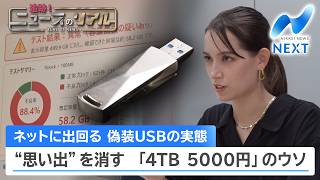
Low-cost USB drives advertised online with enormous storage capacities are exposing users to the risk of lost data, malware infections and information theft, with tests finding that some products contain only a fraction of the memory shown on their labels.

Ammonia, commonly associated with its pungent odor and its presence in urine, is gaining recognition as one of humanity's most important inventions and a potential foundation for a new energy system that could reduce the world's dependence on oil.

The Japan Aerospace Exploration Agency conducted a ground firing test of the second-stage engine for its Epsilon S small solid-fuel rocket at the Tanegashima Space Center in Kagoshima Prefecture on July 23.

PorMedTec, a Meiji University startup, has begun producing genetically modified pigs for a clinical trial that could start in Japan in 2028 and transplant pig kidneys into patients with kidney failure.

Japan is moving closer to testing technology designed to generate solar power in space and transmit the electricity wirelessly to Earth, with researchers now conducting final checks on a flight model for an upcoming satellite experiment.