
News On Japan

Students Design Future Lunar City in Minecraft Using JAXA Materials

SHIZUOKA - University students in Shizuoka have designed a future lunar city using the globally popular game Minecraft and educational materials supervised by the Japan Aerospace Exploration Agency, combining programming and spatial design to explore how people could live safely and sustainably on the moon.

Students from the Faculty of Art and Design at Tokoha University presented their virtual vision of a future lunar society on July 28.

The teams were asked to consider the dangers and practical challenges of living on the moon while designing homes, public spaces and other elements of a comfortable settlement.

"Our group designed housing on the lunar surface," said second-year student Sora Akahori. "Because there is also a risk from meteorites on the moon, we placed the homes underground to ensure safety."

Another design featured a structure protected by materials intended to withstand the moon's harsh environment.

"It has a framework made using regolith and is covered by a reinforced glass dome that can withstand radiation and meteorite impacts," said second-year student Haruhi Mizuno.

Minecraft, developed in Sweden in 2009, allows players to freely create buildings, landscapes and entire worlds using blocks.

Tokoha University offers design and programming classes using the game, with Minecraft education specialist Shuichi Tatsunami serving as a visiting professor.

Working in teams, the students created their own visions of a future city while considering how a sustainable community could operate on the lunar surface.

"When I think of something I want to do and look into it, I find that there is code for it," said second-year student Ai Otani. "You can learn programming that goes beyond simply playing a game. I thought that was amazing."

Tatsunami said Minecraft encourages students to take an active role in their education.

"The students develop the motivation to learn, discover and create for themselves," he said. "I believe that is Minecraft's strength."

Through the course, the students studied programming and spatial design while developing creativity and problem-solving skills.

Source: SBSnews6

News On Japan
POPULAR NEWS

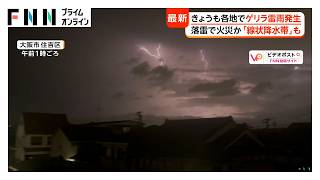
Severe thunderstorms brought torrential rain, lightning, hail and a tornado to Hokkaido on August 28, disrupting rail and air travel and leaving some passengers stranded overnight at New Chitose Airport, as unstable atmospheric conditions triggered intense downpours across Japan.

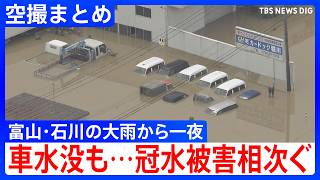
Residents in Ishikawa and Toyama prefectures began clearing mud and debris on August 28 as authorities worked to restore access to communities cut off by landslides and flooding following torrential rain that prompted temporary Level 5 heavy rain emergency warnings a day earlier.

JR Kyushu plans to restore full service on the Kyushu Shinkansen from the first train on September 18, nearly two months after the Kumamoto earthquake caused extensive damage to tracks and stations and forced the suspension of services on part of the line.

A 9-minute, 13-second drone video filmed inside Aeon Mall Kumamoto two days after the deadly explosion has provided a detailed view of the destruction, showing collapsed ceilings, heavy dust and widespread damage that may have affected between one-third and nearly half of the shopping center.

Strong Typhoon No. 18 was moving northwest through the East China Sea on the night of August 26, gradually pulling away from Okinawa and the Amami Islands as lingering rain, strong winds and high waves were expected to ease. As of 9 p.m. on August 26, the typhoon was over waters north-northwest of Kume Island and moving northwest.

MEDIA CHANNELS
         

MORE Sci-Tech NEWS

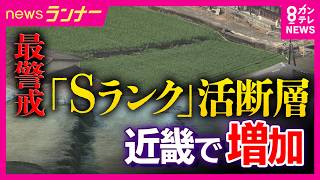
The Japanese government has revised its assessment of active faults across the Kinki region for the first time in about 20 years, increasing the number of fault zones considered at the highest level of concern for earthquakes of magnitude 6.8 or greater from three to eight.

Residents in Minoh, Osaka Prefecture, have asked the city to take a more active role in explaining and reviewing plans for a large data center to be built on the former site of Osaka University's Minoh Campus, citing concerns over low-frequency noise, loss of sunlight and other potential effects on daily life.

A magnitude 5.9 earthquake centered in southern Ibaraki Prefecture shook a wide area of the Kanto region at around 2 a.m. on August 23, registering a maximum intensity of lower 5 on Japan's seven-level seismic scale in parts of Ibaraki, Saitama, Chiba and Tokyo.

A cognitive trait known as aphantasia, in which people are unable to voluntarily form images in their minds despite knowing what objects look like, may affect about 4% of people, highlighting significant differences in how individuals experience memory, imagination and everyday tasks.

Dangerous heat returned across Japan on August 19, complicating disaster recovery efforts in earthquake-hit Kumamoto and flood-damaged Chiba while unusually low rainfall and limited snowfall pushed reservoirs in several regions toward critical levels.

Japanese researchers are developing a lithium-air battery that uses oxygen from the atmosphere to store and generate electricity, promising nearly five times the capacity of conventional lithium-ion batteries at less than half the weight and potentially opening the way to far longer electric vehicle driving ranges.

Security camera footage captured the moment part of the Hinagu Fault Zone broke through the ground during the Kumamoto earthquake on July 28, as strong shaking lifted the surface of a rice field and moved a nearby light truck violently.

New research is reshaping long-held assumptions about Tyrannosaurus rex, including suggestions that the giant predator may have lived to around 40 years rather than 28, while advances in fossil analysis are also offering new clues about dinosaur growth, posture and even color.