

Kumamoto - Dangerous heat returned across Japan on August 19, complicating disaster recovery efforts in earthquake-hit Kumamoto and flood-damaged Chiba while unusually low rainfall and limited snowfall pushed reservoirs in several regions toward critical levels.
Temperatures climbed sharply across the country, with some areas recording readings above normal body temperature.
At a beach in Kamogawa, Chiba Prefecture, children sought relief from the summer heat by diving into the sea. Some wore goggles and snorkels, while others cooled down with shaved ice at seaside stands.
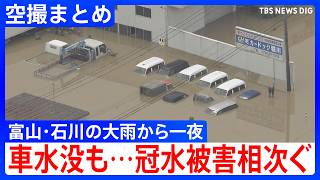
Elsewhere in Chiba, however, the heat added to the difficulties facing communities still recovering from record rainfall that struck the prefecture nearly a week earlier.
In Oamishirasato, where widespread flooding occurred, temperatures exceeded 30 degrees Celsius on August 19 as workers wearing fan-equipped jackets loaded water-damaged machinery and other equipment onto trucks.
At a temporary disaster waste collection site in the city, residents brought in household appliances, furniture and other items damaged by flooding.
"It helps enormously, really enormously," one resident using the collection site said.
Some areas of Chiba city remained without running water.
"There is absolutely no water. We can't cook meals, and we can't take a bath at all," one resident said.
People in affected areas are relying on water distributed by the city's waterworks bureau.
In Kumamoto, which was struck by an earthquake registering the maximum intensity of 7 on Japan's seismic scale, the temperature reached 38.7 degrees on August 19, marking the fourth consecutive day of temperatures of at least 35 degrees.
"It's extremely hot. Really hot. I can't do without a handheld fan," one Kumamoto resident said.
Another resident said, "I really didn't want to go outside, but my daughter is coming from Fukuoka today and asked me to buy some locally popular manju, so I came out. I'm going straight home."
A third resident said, "It's hot. There aren't many places to go and have fun, and the effects of the earthquake have made things very difficult."
In Yatsushiro, where temperatures rose to 37.6 degrees, workers were repairing homes damaged by the earthquake while sweating heavily in the heat.
Some were forced to take breaks in the shade of trees.
Asked whether working in such high temperatures was manageable, one worker said, "It's my job, so I just have to keep going and endure it. I've already drunk more than two liters of water."
As extreme heat grips the country, reservoirs in several regions are also facing increasingly serious drought conditions.
At the Miboro Dam in Shirakawa, Gifu Prefecture, areas that would normally be covered by water have dried out, leaving broad stretches of exposed ground.
Drone footage taken with permission over the upper reaches of the reservoir showed what appeared to be grassland where water would normally be present. A road shaped like a bridge had also emerged as the water receded.
Visitors expressed surprise at the unusual conditions.
"I can't imagine it looking like this. Usually it is full of water," one tourist said. "Maybe there isn't much water in the mountains either."
The water level was only about four meters above the minimum level at which releasing water downstream would become difficult.
Yoichi Kawamura, deputy director of the Toyama River and National Highway Office, said the reservoir level was about 40 meters lower than the average for the past 10 years.
"The reason is the low snowfall and low rainfall within the Miboro Dam watershed," Kawamura said.
Drought conditions are also affecting Katsurako, a lake near the border between Toyama and Gifu prefectures.
With little rainfall, water levels have continued to fall and the storage rate at the Sakaigawa Dam has dropped to 32.1%.
The shortage has forced a popular summer canoeing program to end about one month earlier than scheduled.
At the Sameura Dam in Kochi Prefecture, the roof of an old government building that is normally submerged has appeared above the surface.
Water-use restrictions at Sameura Dam were tightened from August 19. Water supplied to Tokushima Prefecture was reduced by about 18% on August 19, while supply to Kagawa Prefecture was cut by 50%.
Extreme heat is not the only weather concern facing Japan.
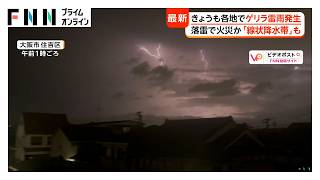
In Morioka, Iwate Prefecture, a sudden thunderstorm developed at around 3:30 p.m., bringing heavy rain that pounded rooftops.
Typhoon No. 18 has also formed over waters south of Japan. The storm is expected to move near the Ogasawara Islands on August 23 with a storm-force wind zone and could subsequently move north toward the Japanese archipelago, prompting authorities to urge the public to closely monitor further forecasts.
Source: FNN