News On Japan

Japan's Revised Labor Guidelines Focus on Workers' Health

TOKYO - Japan's labor ministry will revise its guidance on overtime from September 1, moving away from a uniform recommendation that workplaces keep overtime within 45 hours a month and placing greater emphasis on whether employers have adequate measures in place to protect workers' health.

Under the Labor Standards Act, employers and workers may conclude a so-called Article 36 agreement allowing overtime of up to 45 hours a month in principle.

If an agreement includes special provisions, additional overtime is permitted within statutory limits, including a requirement that overtime and work on holidays remain below 100 hours in a month.

Until now, labor standards inspection offices have generally instructed workplaces to keep overtime within 45 hours a month even when they have agreements containing such special provisions.

The Ministry of Health, Labor and Welfare said it will revise that approach from September 1.

Inspectors will instead focus on whether individual workplaces have sufficient measures in place to safeguard employees' health and will provide guidance according to the actual conditions at each business establishment.

The ministry said, however, that authorities will continue to provide necessary guidance in cases where workers face a high risk of health problems caused by excessive workloads.

Source: FNN

News On Japan
POPULAR NEWS

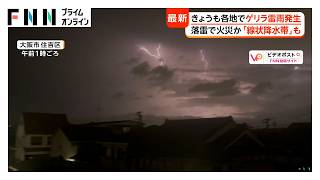
Severe thunderstorms brought torrential rain, lightning, hail and a tornado to Hokkaido on August 28, disrupting rail and air travel and leaving some passengers stranded overnight at New Chitose Airport, as unstable atmospheric conditions triggered intense downpours across Japan.

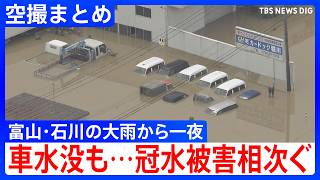
Residents in Ishikawa and Toyama prefectures began clearing mud and debris on August 28 as authorities worked to restore access to communities cut off by landslides and flooding following torrential rain that prompted temporary Level 5 heavy rain emergency warnings a day earlier.

JR Kyushu plans to restore full service on the Kyushu Shinkansen from the first train on September 18, nearly two months after the Kumamoto earthquake caused extensive damage to tracks and stations and forced the suspension of services on part of the line.

A 9-minute, 13-second drone video filmed inside Aeon Mall Kumamoto two days after the deadly explosion has provided a detailed view of the destruction, showing collapsed ceilings, heavy dust and widespread damage that may have affected between one-third and nearly half of the shopping center.

Strong Typhoon No. 18 was moving northwest through the East China Sea on the night of August 26, gradually pulling away from Okinawa and the Amami Islands as lingering rain, strong winds and high waves were expected to ease. As of 9 p.m. on August 26, the typhoon was over waters north-northwest of Kume Island and moving northwest.

MEDIA CHANNELS
         

MORE Business NEWS

Toyota Motor plans to introduce passenger vehicles equipped with advanced automated driving technology from 2028, allowing drivers to travel with almost no manual operation, including taking their hands off the steering wheel on ordinary roads.

Consumer prices in central Tokyo rose 1.8% in August from a year earlier, with the pace of inflation accelerating for a third consecutive month as higher food prices continued to put upward pressure on household costs.

Tokyo stocks rose on August 28, with the Nikkei 225 closing at 66,405.56, up 273.58 points, or 0.41%, as information-technology, software, automaker and selected semiconductor-related shares gained after a U.S. technology rally, while investors remained cautious before Federal Reserve Chair Kevin Warsh’s Jackson Hole speech.

Japan's toy market continues to expand despite the country's declining number of children, reaching a record 1.1664 trillion yen in fiscal 2025 as manufacturers increasingly target adults and introduce products reflecting social issues ranging from sustainability to investment.

Tokyo stocks slipped on August 27, with the Nikkei 225 closing at 66,131.98, down 130.18 points, as early buying in artificial intelligence and semiconductor-related shares following Nvidia’s strong earnings forecast faded into profit-taking, while the broader TOPIX edged higher for a sixth straight session.

Seven-Eleven Japan and Yamato Transport announced on August 26 that they will introduce self-service shipping machines allowing customers to send parcels without lining up at a staffed checkout counter.

Tokyo stocks rose on August 26, with the Nikkei 225 closing at 66,262.16, up 405.73 points, or 0.62%, as investors bought back selected semiconductor and financial shares, although trading was thin ahead of Nvidia’s earnings and uncertainty remained over artificial intelligence valuations, the yen and Bank of Japan policy.

Tokyo stocks fell on August 25, with the Nikkei 225 closing at 64,980.53, down 0.8%, as investors sold semiconductor and electronics shares ahead of Nvidia’s earnings while a weak yen, elevated bond yields and renewed U.S. pressure on Iran kept risk appetite subdued.