News On Japan

Survey: About 5% of COVID patients have aftereffects one month after onset

Dec 15, 2022 (NHK) - A new survey in Japan shows that more than 5 percent of people who were infected with the coronavirus continued to suffer aftereffects one month after developing symptoms.

The survey was jointly conducted by Osaka University, Toyonaka City in Osaka Prefecture and a tech firm.

More than 4,000 city residents who had been infected with the virus by the end of March responded in the survey by mail and through apps.

Of them, nearly 48 percent said they still had symptoms after 10 days of self-isolation.

About 5 percent said they had some aftereffects one month after developing symptoms, and nearly 4 percent did two months after.

Symptoms most frequently observed after one month were "difficulties in daily life," hair loss and coughing.

The survey also found that people who had severe symptoms are more likely to suffer aftereffects, and those who were vaccinated tend to have fewer. ...continue reading

News On Japan
POPULAR NEWS

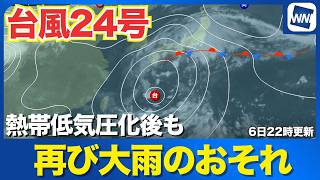
Typhoon No. 24 (Krovahn) was moving northeast about 50 kilometers west of Minami-Daito Island and was expected to make its closest approach by late September 7, bringing strong winds, high waves and rain before weakening into a tropical depression that could later intensify the autumn rain front and bring renewed heavy rainfall across western and eastern Japan.

Rail operators are warning of widespread disruptions through the morning of September 7 as heavy rain threatens Shinkansen services and commuter lines, with some trains to be canceled, services reduced and the final departure time brought forward on part of the Tokaido Line.

Tokyo has unveiled the design for a major redevelopment of the plaza outside Shinjuku Station's west exit, with a landmark tree, water-play area and event space planned as part of a transformation centered on "greenery, light and people" that is scheduled for completion in 2035.

A late former professor at Asahikawa Medical University has won the Ig Nobel Prize in Medicine for scientifically examining the proper way to blow the nose, extending Japan's streak of Ig Nobel winners to 20 consecutive years.

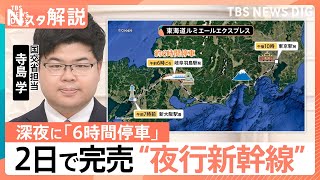
Night trains are making a comeback across Japan, with railway operators introducing new overnight services and even experimenting with overnight Shinkansen trains as demand grows for alternatives that combine transportation, accommodation and the experience of traveling through the night.

MEDIA CHANNELS
         

MORE Sci-Tech NEWS

A late former professor at Asahikawa Medical University has won the Ig Nobel Prize in Medicine for scientifically examining the proper way to blow the nose, extending Japan's streak of Ig Nobel winners to 20 consecutive years.

An autonomous ride-hailing service developed by British company Wayve launched in London on September 3, with the AI-powered technology also scheduled to begin trial operations in Tokyo by the end of 2026.

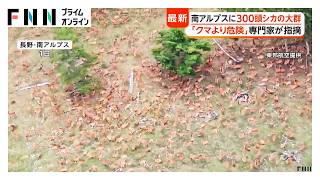
A herd of an estimated 200 to 300 deer has been filmed in the Southern Alps, highlighting a rapidly expanding population that experts warn is damaging mountain ecosystems, stripping vegetation, increasing landslide risks and creating problems across Japan ranging from crop losses to traffic accidents.

The Japanese government has revised its assessment of active faults across the Kinki region for the first time in about 20 years, increasing the number of fault zones considered at the highest level of concern for earthquakes of magnitude 6.8 or greater from three to eight.

Residents in Minoh, Osaka Prefecture, have asked the city to take a more active role in explaining and reviewing plans for a large data center to be built on the former site of Osaka University's Minoh Campus, citing concerns over low-frequency noise, loss of sunlight and other potential effects on daily life.

A magnitude 5.9 earthquake centered in southern Ibaraki Prefecture shook a wide area of the Kanto region at around 2 a.m. on August 23, registering a maximum intensity of lower 5 on Japan's seven-level seismic scale in parts of Ibaraki, Saitama, Chiba and Tokyo.

A cognitive trait known as aphantasia, in which people are unable to voluntarily form images in their minds despite knowing what objects look like, may affect about 4% of people, highlighting significant differences in how individuals experience memory, imagination and everyday tasks.

Dangerous heat returned across Japan on August 19, complicating disaster recovery efforts in earthquake-hit Kumamoto and flood-damaged Chiba while unusually low rainfall and limited snowfall pushed reservoirs in several regions toward critical levels.