News On Japan

Tokyo's Water Reservoir Lowest Since Heisei Era

TOKYO - Tokyo’s Ogouchi Dam, a key water source for the capital, has fallen to its lowest level since the Heisei era, raising concerns over potential water shortages as rising temperatures intensify pressure on supply.

Temperatures climbed across Japan on April 6th, with some areas recording summer-like conditions, while one of Tokyo’s main water reservoirs edged closer to a drought crisis.

Ogouchi Dam in Okutama, which can supply up to 40 days of drinking water for Tokyo residents when full, has dropped to less than half its capacity, equivalent to just 13.5 days of supply.

Nakamura Koichi, head of the Ogouchi Reservoir Management Office at the Tokyo Metropolitan Government’s Bureau of Waterworks, said the level is the lowest recorded since the Heisei era, warning that calls for water conservation could be issued if levels continue to fall.

A visible white line along the dam wall marks where water levels once stood, with the current level measured at 62.7 meters—nearly 25 meters below normal. Land that is usually submerged has now emerged, and a bridge that once floated on the reservoir is now accessible on foot.

The reservoir’s storage rate has fallen to 33.9 percent, far below the level needed to sustain normal supply.

Visitors expressed concern, with one saying the situation appeared serious and that stronger water-saving efforts would be necessary.

Even after moderate rainfall over the weekend, the water level rose by only about 60 centimeters, equivalent to roughly 0.28 days of supply—just seven hours of drinking water for Tokyo’s population.

The Tama River system, which includes Ogouchi Dam, accounts for about 20 percent of Tokyo’s water supply, while the Tone River system provides the remaining 80 percent and is currently recovering due to snowmelt inflows.

Nakamura noted that an immediate water shortage is unlikely, adding that prolonged dry conditions are also unlikely, and the city aims to maintain stable water supply.

However, other regions are already facing direct impacts from water shortages.

In Nara Prefecture, declining levels at Ohtaki Dam have led to water restrictions for the first time in 21 years, affecting approximately 880,000 people across 24 municipalities.

In Aichi Prefecture, Ure Dam reached a storage rate of zero percent in March, prompting Toyohashi and Toyokawa cities to switch to pre-washed rice for school lunches at 112 elementary and junior high schools starting April 27th.

As water shortages spread, temperatures rose nationwide on April 6th.

Nagano City recorded 25 degrees Celsius, marking its first summer day of 2026, while central Tokyo experienced early summer conditions with a high of 23.7 degrees at 11 a.m., comparable to mid-May.

People walking in the city were seen carrying parasols and wearing short sleeves, with some waiting for traffic lights in shaded areas, creating scenes reminiscent of midsummer.

At a park in Tokyo’s Sumida Ward crowded with cherry blossom viewers, some sought relief near fountains, with one visitor saying they had switched to short sleeves and were staying hydrated and resting in the shade.

Japan is expected to see an early start to summer in 2026, with temperatures projected to rise above average during peak season and an increase in extremely hot days anticipated.

Source: FNN

News On Japan
POPULAR NEWS

Japan’s World Cup campaign ended in the cruelest possible fashion on June 29, as Gabriel Martinelli scored in the fifth minute of stoppage time to give Brazil a 2-1 victory over the Samurai Blue in their knockout match in Houston. Japan had led in the first half and were still level at 1-1 in the final moments, but Martinelli’s late strike sent Brazil into the Round of 16 and eliminated Japan from the tournament.

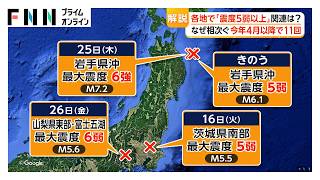
Strong earthquakes have continued to shake parts of Japan in recent weeks, with 11 temblors measuring lower 5 or above on the Japanese seismic intensity scale recorded across the country since April 2026.

A Kintetsu Railway train derailed inside Kyoto Station on the morning of June 29, forcing partial suspensions on the Kintetsu Kyoto Line for the rest of the day and causing long delays that hit commuters, students and tourists.

A section of stone wall at Hikone Castle, one of Japan’s few surviving original Edo-period castles and a National Treasure whose main keep remains intact more than 400 years after its construction, collapsed after heavy rain caused by Typhoons No. 7 and No. 8, Hikone city officials said.

Japan advanced to the knockout stage of the World Cup after a 1-1 draw with Sweden on June 25, finishing second in Group F and setting up a Round of 32 clash with Brazil in Houston.

MEDIA CHANNELS
         

MORE Business NEWS

Tokyo stocks edged higher on June 29 as investors bought back selected shares after a sharp AI-led selloff, but gains were capped by caution over high technology valuations, Middle East tensions and a weakening yen that fell to its lowest level against the dollar since 1986.

Tokyo stocks fell sharply on June 26 as investors locked in profits from Japan’s record-setting AI-driven rally, with SoftBank Group and chip-related shares leading a broad retreat after reports that OpenAI may delay its initial public offering.

Japanese households held 2,386 trillion yen in financial assets at the end of March, up 7.1% from a year earlier, as rising share prices, wider use of the new NISA investment program and the weaker yen lifted the value of assets held by individuals.

The sale of religious corporations that operate temples and shrines across Japan is drawing growing scrutiny from authorities, who fear the transactions could be used for tax evasion and money laundering, as brokers openly advertise properties and corporate status for tens or even hundreds of millions of yen.

The Nikkei Stock Average fell for a second straight session in Tokyo as investors locked in profits from a rapid rally in artificial intelligence and semiconductor-related shares, briefly sending the benchmark down more than 1,300 yen before bargain hunting helped it recover part of the loss.

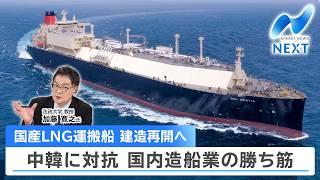
Imabari Shipbuilding, Kawasaki Heavy Industries, and Namura Shipbuilding are aiming to resume construction of liquefied natural gas carriers around 2035, as Japan’s shipbuilding industry looks for a path to recovery after losing much of the global market to lower-cost rivals in South Korea and China.

Finance Minister Katayama held online talks with U.S. Treasury Secretary Scott Bessent as the yen approached its weakest level in about 39 years, with the two sides believed to have discussed possible responses, including foreign exchange intervention.

Every year, thousands of people save money by buying through the Japanese auction process. But many do not realize they've paid too much until the vehicle arrives.