News On Japan

Kishida endorses new era of sustainable investing

TOKYO - Japanese Prime Minister Fumio Kishida has announced a plan aimed at diverting a significant portion of its massive savings towards sustainable investment vehicles.

By the end of 2023, Japan plans to introduce an impact investing programme to foster a conducive environment for impact investing both locally and globally.

Major pension funds in Japan will be urged to join the UN Principles for Responsible Investment (PRI).

Kishida has emphasised the government’s commitment to collaborate with seven of Japan’s largest pension funds to speed up their inclusion in the PRI. Japan’s Financial Services Agency (FSA) is in the process of drafting new guidelines which will be available for international application.

Under its G7 presidency, Japan has launched the Impact Investment Initiative for Global Health (IIIGH) aiming to bolster UN Sustainable Development Goal 3. Japan is poised to lead the charge in issuing sovereign climate transition bonds through its ‘GX’ Green Transformation policy, targeting a shift away from reliance on fossil fuels.

...continue reading

News On Japan
POPULAR NEWS

Airports and railway stations across Japan were crowded on September 23 as travelers returned from their hometowns and holiday destinations on the final day of the five-day Silver Week holiday, with international flight arrivals reaching their peak and many afternoon Shinkansen services fully booked.

Extensive railway disruption continued across Chiba Prefecture on September 23 as JR East warned that several lines damaged by Typhoon No. 25 would remain closed beyond the Silver Week holiday, even as flights returned toward normal, all typhoon-related expressway closures were lifted and some highway bus services resumed. The storm has left widespread damage to railway tracks and embankments, with flooding, landslides and fallen trees complicating restoration work.

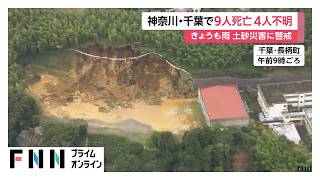
The death toll from Typhoon No. 25 rose to nine on September 23, with four people still missing in Chiba and Kanagawa prefectures, as renewed rainfall raised fears of further landslides in communities devastated by the storm.

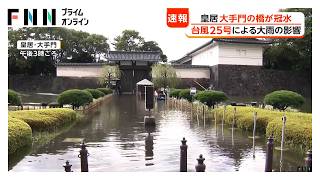
The road leading to Otemon Gate at Tokyo's Imperial Palace was flooded on September 22 after heavy rain from a typhoon caused water in the surrounding moat to overflow.

Japan came within two runs of producing one of international cricket's biggest upsets on September 22, pushing reigning T20 world champion India to the final ball before losing a rain-shortened match at Sano International Cricket Ground in Tochigi Prefecture.

MEDIA CHANNELS
         

MORE Business NEWS

Bankruptcies among Japan's bento shops are surging, with 83 businesses failing in the first eight months of 2026, putting the industry on course to surpass last year's record of 89 as rising ingredient costs and intensifying competition from supermarkets, convenience stores and drugstores squeeze smaller operators.

Tokyo’s stock market was closed on September 21 for Respect for the Aged Day, leaving the Nikkei 225 without a cash close after finishing the previous session at 65,019, while currency and futures markets focused on the yen, the Bank of Japan’s latest rate hike and intervention risks during Japan’s Silver Week holiday.

Japan's first five-day Silver Week holiday in 11 years has put renewed attention on household finances, with persistently high food prices and a weakening yen threatening to erode the benefits of the government's planned consumption tax cut on food.

A list of providers with identical promises turns selection into brute-force sorting. The differences do exist; they are just hidden somewhere other than the homepage.

The yen strengthened by more than 1 yen against the dollar in a short period late on September 18 after the Bank of Japan conducted a rate check, a step commonly taken in preparation for possible intervention in the foreign exchange market.

Tokyo stocks rose sharply on September 18, with the Nikkei 225 climbing to around 65,350 in afternoon trading after the Bank of Japan raised interest rates to 1.25%, as the yen weakened and investors bought artificial intelligence and semiconductor-related shares.

The Bank of Japan raised its policy interest rate from 1.0% to 1.25% on September 18, lifting borrowing costs to their highest level in 31 years as policymakers moved to contain growing inflation risks, but the yen weakened sharply after the decision as markets focused on two dissenting votes and uncertainty over the pace of further increases.

A market spread is generally the difference between two market prices. Most commonly, traders use the term to describe the bid-ask spread: the difference between the highest price a buyer is currently prepared to pay and the lowest price a seller is prepared to accept.