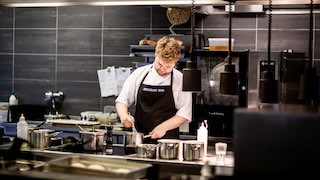


YOKOHAMA, Dec 06 (News On Japan) - A family-run ramen shop in Yokohama has become a national destination for fans of the Yoshimuraya lineage, drawing visitors from across Japan who line up daily for bowls of richly flavored ramen and the shop’s signature handmade chashu.
Located a six-minute walk southwest of Hakuraku Station on the Tokyu Toyoko Line in Kanagawa Ward, Ramen Suehiroya has built a reputation for uncompromising craftsmanship and a warm, family-centered approach to running the business.
Customers often arrive with a clear purpose—many say they come specifically for the chashu ramen. One visitor explained that the shop’s distinctive pork, which tightens over the steaming broth just before serving, is unforgettable. Another customer reacted simply: “It’s unbelievably good.” Laughter and smiles frequently fill the shop as diners enjoy their bowls, which the owner believes should offer not only flavor but also a sense of joy and emotional impact.
Owner Suehiro, now 55, begins his day at 6 a.m. After leaving a career as a company employee, he trained at the original Yoshimuraya, the center of the Iekei ramen tradition, and opened his own shop in his forties. Since then, Suehiroya has grown into an immensely popular establishment where long lines form every day, including visitors who travel from distant prefectures.
One of the shop’s main attractions is its carefully prepared chashu. On this day, Suehiro is preparing 130 kilograms of domestic pork, using fresh Japanese thigh meat. The shop’s pride is its specially made kettle used to produce its signature roasted chashu, which is also sold separately by reservation. Because different cuts vary in moisture, he must monitor the heat constantly to prevent burning. He adjusts angles, spacing, and placement inside the kettle while predicting how each piece will change shape as it cooks. Even with experience, mistakes happen daily, he says, adding that continued trial and error is essential to improving his technique.
Once the pork is hung, the kettle is sealed and the fire is lit. Fine adjustments to the flame require careful attention. Before stepping away, Suehiro bows toward the kettle, reflecting a personal ritual of respect and self-discipline as he hopes for a successful roast. Afterward, he thoroughly disinfects all surfaces where raw meat was handled.
This July marks Suehiroya’s thirteenth year in business. The shop is run with the support of his extended family—his eldest daughter, second daughter, youngest son, and his elder daughter’s husband—all of whom work alongside him. Their efforts, he says, are the foundation of the shop’s success.
As staff arrive, Suehiro announces the day’s release of whole roasted chashu blocks on social media, with reservations accepted by phone. Calls come in continuously, reflecting a strong base of repeat customers.
The kitchen also prepares various toppings, including flavored quail eggs made from domestic quail, which Suehiro insists on using despite their higher cost. The shop also serves onsen eggs, made from extra-large L-L grade eggs with particularly dense yolks. For marinated eggs, he uses even larger 3L eggs rarely seen in the market.
Rice is cooked using Koshihikari from Tochigi Prefecture, first soaked in water before steaming. Fresh spinach and komatsuna, sourced locally and cut in the morning, arrive in large bundles. Spinach is the shop’s most popular topping; on this day, 180 bundles of spinach and 30 of komatsuna are prepared, all of which will be consumed by the end of the day. The vegetables are blanched in a dedicated oversized pot fitted with a custom colander, and Suehiro evaluates their quality by color, noting that inferior greens tend to yellow.
Afterward, he cleans the refrigerator thoroughly, including hard-to-reach areas. Though longer operating hours could increase sales, he insists on a strict 9 p.m. closing time to prioritize deep cleaning. Because tonkotsu ramen preparation can quickly accumulate heavy grease, he believes daily cleaning is essential to maintaining the shop’s quality. Even the ventilation panels are polished front and back until they shine. Sponges and scrub pads are replaced frequently; he warns that cutting corners in small tasks leads to decline, especially in an industry where shortcuts are always tempting.
As preparations continue, 170 kilograms of pork bones arrive for the day’s broth. The raw bones show no discoloration or excess drip, which Suehiro says signals high quality. Other ingredients, including kikurage and fresh wakame from Sendai—both chosen for their superior texture—are readied. Spinach servings are divided and stored in containers, which are moved from the freezer to the refrigerator around 5 p.m. to maintain freshness until serving.
Once the chashu is roasted, it is removed from the kettle just before it reaches full internal doneness, then immersed in the shop’s tare. Four roasting styles are used depending on the day; today’s batch carries the shop’s second-strongest level of smokiness. The surface shows no burning, and the interior is heated evenly to the center. When sliced thinly and placed atop hot ramen, the meat tightens slightly, completing the bowl.
Whole roasted loin cuts are also prepared—these are fully cooked despite typically remaining rare in other methods—and are weighed down to ensure even marination. Smaller trimmings become snacks for the staff. Immediately after removing the chashu, the kettle is washed thoroughly. The filters are cleaned daily, as one roasting session produces significant buildup of fat and residue.
By this time, Suehiro has already been working for several hours before the main staff arrive at 9 a.m. Because all equipment—from burners to dishwashers to kettles—must operate simultaneously, preparation time cannot be shortened merely by working faster. The only solution, he says, is to sleep early and wake early. Even so, unexpected problems sometimes arise; he recalls a burner failing the previous day, forcing him to dismantle it alone and skip some tasks to keep essential preparation on schedule. Ensuring everything is ready before staff arrive, he adds, is his responsibility.
As the morning progresses, Suehiro, his son, and his son-in-law slice 40 kilograms of chashu by hand. Each slice is kept between one and two millimeters thick, allowing the meat to firm up perfectly when placed over steaming broth. Overcooked pork becomes tough and loses its delicate flexibility, while lightly roasted pork retains a supple texture reminiscent of prosciutto. Achieving uniform slices at this size is extremely difficult, he explains. The marbling must remain intact; if heated just five minutes longer, the fat would melt out and the meat would dry.
Early in the shop’s history, the chashu was far tougher—a memory that “makes my spine freeze,” Suehiro says. Years of trial and refinement have led to the current standard. To maintain precision, he uses a well-honed knife passed down from his training days at Atsugiya, another respected Yoshimuraya-line shop. After thirteen years, he feels he has only recently begun to develop the sharpening skill needed to match the quality he aspires to. The knife, he says, is a treasured tool.
As chashu reservations continue to come in, the team sorts meat by touch, separating pieces ideal for sales from those better suited for ramen bowls. Larger cuts retain moisture better and produce superior flavor, while smaller pieces tend to dry out more quickly. Careful handling ensures that no part goes to waste.
Source: Japanese Noodles Udon Soba Tokyo