News On Japan

Japan Intervention Fails to Reverse Yen’s Slide

TOKYO - The Japanese government and the Bank of Japan are believed to have conducted yen-buying intervention since the end of last month in an effort to slow the currency’s decline, though the broader trend of yen weakness has shown little sign of reversing.

Foreign exchange intervention is used by monetary authorities to curb excessive volatility in currency markets by buying or selling currencies directly. In Japan’s case, authorities buy yen and sell dollars when the yen falls rapidly against the U.S. currency.

The Ministry of Finance determines the timing and scale of intervention, while the Bank of Japan carries out the operations using funds from the Foreign Exchange Fund Special Account through transactions with private financial institutions.

Officials view intervention as a tool to counter speculative market movements and prevent exchange rates from moving sharply in one direction, particularly when negative sentiment toward Japan accelerates the yen’s decline.

At the same time, Japan faces limitations under the international framework governing currency markets. G7 nations broadly support market-determined exchange rates and discourage competitive currency devaluation policies designed to boost exports.

Japanese authorities maintain that the recent intervention is aimed at slowing excessive market volatility rather than artificially weakening or strengthening the currency for trade advantages.

The latest intervention is believed to have been conducted independently by Japan, although coordinated action involving multiple countries is generally considered more effective in influencing currency markets.

Attention has also focused on the United States following reports of a rate check earlier this year and recent statements emphasizing close financial coordination between Tokyo and Washington.

Because yen-buying intervention involves selling dollars, analysts say support or understanding from the U.S. government is considered important, even if not formally required.

Market observers have also pointed to concerns in Washington over the simultaneous rise in Japanese government bond yields alongside the yen’s depreciation.

Unlike yen-selling intervention, which can theoretically be financed through unlimited yen issuance, yen-buying intervention depends on Japan’s foreign currency reserves because authorities must sell dollar assets to purchase yen.

Japan currently holds nearly 1.4 trillion dollars in foreign exchange reserves, giving authorities significant capacity to continue intervening if necessary, although analysts caution that even large-scale intervention may have limited long-term impact if underlying interest rate differences between Japan and the United States remain unchanged.

Source: テレ東BIZ

News On Japan
POPULAR NEWS

As of 9 p.m. on May 30th, Typhoon No. 6 (Chanthu) was continuing to strengthen as it moved northwest over waters east of the Philippines, with Okinawa expected to face the worst conditions from June 1st to June 2nd as the storm passes nearby at strong intensity, while heavy rain is also forecast across western and eastern Japan, particularly along Pacific coastal regions.

A social media dispute between a 17-year-old high school student from Tokyo's Itabashi Ward and a 16-year-old boy from Edogawa Ward escalated into a planned group fight involving around 30 youths, some of whom allegedly brought weapons including a rusty saw, iron pipes, a special baton and even a shovel.

Japan's population stood at 123.05 million in 2025, according to preliminary results from the national census released by the Ministry of Internal Affairs and Communications, marking a decline of 3.097 million people over the past five years.

Volleyball player Shunichiro Sato, a member of Japan’s men’s national team, was arrested by the Tokyo Metropolitan Police Department on suspicion of possessing marijuana after allegedly leaving a bag containing the drug at a pachinko parlor in Tokyo.

The “naphtha shortage” triggered by escalating tensions in the Middle East is now spreading into Japan’s housing industry, with shortages of paint, thinner, insulation materials and other building products forcing construction delays across the country.

MEDIA CHANNELS
         

MORE Business NEWS

Toyota Motor has decided to halt development of the LF-ZC, a next-generation electric vehicle planned under its Lexus luxury brand, according to sources familiar with the matter.

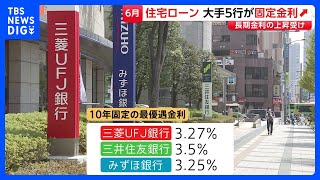
Fixed-rate mortgage costs in Japan are set to rise again in June as the country's five major banks increase home loan rates in response to higher long-term interest rates, with their flagship 10-year fixed-rate mortgages rising to preferential rates of 3.27% at Mitsubishi UFJ Bank, 3.5% at Sumitomo Mitsui Banking Corporation, and 3.25% at Mizuho Bank.

Japan is facing a growing transportation dilemma. While a record number of foreign visitors in 2025 has fueled congestion and traffic jams in major cities and tourist destinations, many rural communities are grappling with the opposite problem: shrinking populations and aging residents are making it increasingly difficult to maintain public transportation services.

Born with osteogenesis imperfecta, a rare disorder that makes bones fragile and prone to fractures, Toshiya Kakiuchi built a company with a mission to transform both the physical and emotional barriers faced by people with disabilities.

Finland is positioning economic resilience as a core pillar of national security, with Finnish Economic Affairs Minister Sakari Puisto emphasizing closer cooperation with Japan in advanced technologies, supply chain security and dual-use industries during a recent visit to Tokyo.

Bank of Japan Governor Kazuo Ueda said on May 27th that Japan's economy is facing an "oil price shock" as tensions in the Middle East drive up crude oil prices, speaking at an international conference hosted by the central bank.

The National Police Agency announced on May 28th that it will launch a new framework in cooperation with nine financial institutions aimed at rapidly tracing money stolen through special fraud schemes and other scams, as damages from such crimes reached a record high last year.

Toyota Motor has notified the Ministry of Land, Infrastructure, Transport and Tourism of a recall affecting about 43,300 vehicles across six models, including the Land Cruiser, after instrument panels were found to sometimes fail to start properly when the engine is turned on, causing parts of the display not to appear.