News On Japan

Japan Scrambles to Reshape Energy Imports

TOKYO - The arrival of the crude oil tanker Idemitsu Maru at Nagoya Port on May 25th marked the end of a weeks-long ordeal caused by the closure of the Strait of Hormuz, while also highlighting how dramatically Japan's oil procurement system has changed amid escalating tensions in the Middle East.

The tanker had departed Saudi Arabia on March 16th carrying around 2 million barrels of crude oil destined for Japan, but shortly afterward became trapped along with numerous other vessels when the Strait of Hormuz was effectively sealed off following the escalation of conflict involving Iran and the United States.

Crew members aboard stranded ships were reportedly forced to rely on supply runs from the Saudi coastline using smaller vessels to obtain food and drinking water as the blockade stretched on far longer than initially expected.

After finally passing through the Strait of Hormuz on April 29th, the Idemitsu Maru spent another four weeks at sea before arriving safely in Nagoya.

The shipment carried approximately 300 million liters of crude oil, yet that amount represents only around 0.6 days of Japan's total daily oil consumption, underlining the scale of the country's dependence on imported energy.

The crisis has triggered a major shift in Japan's energy procurement strategy. Before the conflict, nearly all crude oil imports from the Middle East passed through the Strait of Hormuz, one of the world's most strategically important chokepoints. Since the disruption, however, Japanese refiners and trading houses have increasingly turned toward crude supplies routed outside the strait, while imports of American crude oil have also risen sharply.

Industry analysts say Japan is now relying heavily on a combination of alternative shipping routes, emergency stockpile releases, and increased purchases from the United States in order to stabilize domestic fuel supplies.

Recent concerns surrounding refinery operations inside Japan have added further pressure to the country's energy security outlook. Earlier reports revealed operational issues and fire-related damage at key refining facilities, including disruptions affecting output at major domestic refineries. Experts warn that even if maritime routes fully normalize, damaged oil infrastructure across parts of the Middle East could take years to rebuild, delaying any return to pre-crisis supply conditions.

Another crude oil tanker, the ENEOS Endeavor, is currently heading toward Japan and is expected to arrive within about five days. The vessel is believed to be near Southeast Asia and carries a volume of crude similar to that of the Idemitsu Maru. However, its shipment also amounts to less than a single day's worth of Japan's oil consumption.

The situation has renewed debate over Japan's heavy reliance on imported fossil fuels and the vulnerability of supply chains tied to geopolitical flashpoints overseas. Energy specialists have increasingly warned that even temporary disruptions in the Strait of Hormuz can rapidly affect fuel prices, refinery operations, logistics networks, and broader economic activity across Japan.

Source: CBC

News On Japan
POPULAR NEWS

As of 9 p.m. on May 30th, Typhoon No. 6 (Chanthu) was continuing to strengthen as it moved northwest over waters east of the Philippines, with Okinawa expected to face the worst conditions from June 1st to June 2nd as the storm passes nearby at strong intensity, while heavy rain is also forecast across western and eastern Japan, particularly along Pacific coastal regions.

A social media dispute between a 17-year-old high school student from Tokyo's Itabashi Ward and a 16-year-old boy from Edogawa Ward escalated into a planned group fight involving around 30 youths, some of whom allegedly brought weapons including a rusty saw, iron pipes, a special baton and even a shovel.

Japan's population stood at 123.05 million in 2025, according to preliminary results from the national census released by the Ministry of Internal Affairs and Communications, marking a decline of 3.097 million people over the past five years.

Volleyball player Shunichiro Sato, a member of Japan’s men’s national team, was arrested by the Tokyo Metropolitan Police Department on suspicion of possessing marijuana after allegedly leaving a bag containing the drug at a pachinko parlor in Tokyo.

The “naphtha shortage” triggered by escalating tensions in the Middle East is now spreading into Japan’s housing industry, with shortages of paint, thinner, insulation materials and other building products forcing construction delays across the country.

MEDIA CHANNELS
         

MORE Business NEWS

Toyota Motor has decided to halt development of the LF-ZC, a next-generation electric vehicle planned under its Lexus luxury brand, according to sources familiar with the matter.

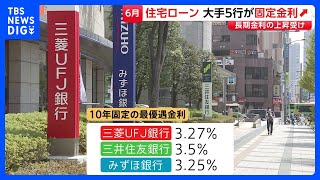
Fixed-rate mortgage costs in Japan are set to rise again in June as the country's five major banks increase home loan rates in response to higher long-term interest rates, with their flagship 10-year fixed-rate mortgages rising to preferential rates of 3.27% at Mitsubishi UFJ Bank, 3.5% at Sumitomo Mitsui Banking Corporation, and 3.25% at Mizuho Bank.

Japan is facing a growing transportation dilemma. While a record number of foreign visitors in 2025 has fueled congestion and traffic jams in major cities and tourist destinations, many rural communities are grappling with the opposite problem: shrinking populations and aging residents are making it increasingly difficult to maintain public transportation services.

Born with osteogenesis imperfecta, a rare disorder that makes bones fragile and prone to fractures, Toshiya Kakiuchi built a company with a mission to transform both the physical and emotional barriers faced by people with disabilities.

Finland is positioning economic resilience as a core pillar of national security, with Finnish Economic Affairs Minister Sakari Puisto emphasizing closer cooperation with Japan in advanced technologies, supply chain security and dual-use industries during a recent visit to Tokyo.

Bank of Japan Governor Kazuo Ueda said on May 27th that Japan's economy is facing an "oil price shock" as tensions in the Middle East drive up crude oil prices, speaking at an international conference hosted by the central bank.

The National Police Agency announced on May 28th that it will launch a new framework in cooperation with nine financial institutions aimed at rapidly tracing money stolen through special fraud schemes and other scams, as damages from such crimes reached a record high last year.

Toyota Motor has notified the Ministry of Land, Infrastructure, Transport and Tourism of a recall affecting about 43,300 vehicles across six models, including the Land Cruiser, after instrument panels were found to sometimes fail to start properly when the engine is turned on, causing parts of the display not to appear.